
Deadline: 26-Jun-2019 at 11:59:59 PM (Eastern Time – Washington D.C.)
The Ministry of Infrastructure of Ukraine in coordination with regional and city  administration/council owners of the Lviv International Airport,Kherson International Airport,Chernivtsi International Airport and Zaporizhia International Airport is interested in exploring options to bring private sector financing and expertise into the rehabilitation, expansion and operations of the country’s airport sector, in order to improve service and reduce subsidies. to that end, the Global Infrastructure Facility, the International Finance Corporation and the European Bank for Reconstruction and Development are supporting the MIU and the regional and city administration/councils in conducting a preliminary assessment of options to attract private sector participation in the rehabilitation and expansion of the Airports. IFC and EBRD will procure and manage specialized technical and legal consultants for the assessment, supervise their work,and manage interactions with the public sector clients.
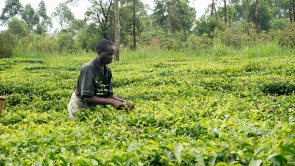 Bank to implement the second phase of the program on Securing Forest Tenure Rights for Rural Development (SFT). The overall objective of this phase is to test and refine a forest tenure assessment toll and its methodologies to make it practical, adaptable to different contexts, and demonstrate it can achieve traction in policy discussions. Phase 2 will be implemented as a step-wise collaborative process, in close coordination with country task teams and local consultants, supported by a SFT central task team.
 among poor people and communities can achieve outcomes that promote poverty reduction, enhanced welfare and create new and expanded employment opportunities. The final output would cover, the potential role of CE in development; case studies and assessment of market potential; different policy approaches for scaling CE, and; recommendations to governments. The consultancy will be based on desk review, economic modeling and detailed case studies that will be selected collaboratively. This EOI was tender for a smaller amount and is now being retendered with an updated amount and TOR.
 quantity and quality of livestock commodities produced in the county by the key value chain actors. More specifically, the LIFS project focuses on improved productivity across the red meat value chain from livestock production to slaughter, processing and access to markets.
 Improvement Project (DPTIP) by i) assessing and improving institutional regulatory framework and client capacity to increase private sector participation in the public transportation sector in Dhaka; and ii) assessing and recommending specific PPP options and business-financial models for the operation of the feeders associated with the BRT line from Gazipur to Mohakhali, for the associated BRT infrastructure and for the operations of the city-wide bus service. The extent of PPP potential must be well assessed and structured based on client capacity, similar experiences in Bangladesh, the relative appetite of banks and investors in Bangladesh to invest in the transport sector (including through the exploration of financing options such as leasing), and the cost/access to finance for private operators and investors.
 achieving sustainable RMNCAH results by strengthening the health systems and support progress towards universal health coverage (UHC).
 generation project at the Central de Abastos in Mexico City. This project will include the installation of solar panels and internal interconnection, as well as connection to the public network in common areas (existing ceilings and current roofless parking areas) with the objective of generating clean energy.
 Global Infrastructure Facility (GIF), administered by the World Bank, for the above-mentioned assessment.
 this activity is to develop, in a participatory manner, a Multi-sectoral Investment Plan (MSIP) for coastal risk reduction and climate change adaptation. The MSIP will be an action plan for the development of the Nigerian coastal zone, integrating climate change adaptation and disaster risk management considerations, and focused on but not limited to coastal erosion, flooding, and pollution. The MSIP will take into account all sectors involved in the zone and their contribution, in the medium and long term, for the strategic development of coastal areas in Nigeria. The activity should delineate objective, prioritized investment needs for integrated coastal zone management, providing indicative/estimated financing requirements for priority interventions, and developing a “pre-design” for the highest priority investment in each state (across four states).
 Netherlands for the World Bank
You must be logged in to post a comment.