
Deadline: 18-Dec-2018 at 11:59:59 PM (Eastern Time – Washington D.C.)
The DRFIP is undertaking a four-year DRF Analytics Project to improve the  understanding and to increase the capacity of governments to take informed decisions on DRF based on sound financial analysis. The objective of the project will be achieved through four outcomes:
i. Governments understand their financial risk related to natural disasters;
ii. Governments employ efficient financial/actuarial analysis, such as cost-benefit analyses, in the development of DRF strategies;
iii. Improved financial capacity to meet financial needs immediately following natural disasters; and
iv. Increased capacity in Governments to monitor and evaluate DRF strategies. Under this project a suite of interactive DRF quantitative tools will be developed which can be adapted and applied to support capacity building and decision making in countries.
 access to education and improving learning outcomes for the forcibly displaced and affected host communities (ii) to improve our effectiveness to facilitate the transition and uptake from humanitarian education responses to long-term solutions for sustainable access to quality education for the forcibly displaced. The TORs aims to select an agency with extensive experience in practical, empirically grounded and field-based research as well as operation in education policy preferably in forced displacement context to conduct research on
 following criteria (a) the size of PLN grid (5-150MW); (b) high average generation cost; and (c) electrification rate below 90%. The selected islands will be communicated to the Consultant before the start of the assignment. They are all located in the Eastern Islands and were divided into three groups, (i) islands with a small installed generation capacity and limited electrification, (ii) islands with an installed generation capacity of 50-150 MW with only diesel generation and very high average generation cost and (iii) islands with an installed generation capacity of 50-150 MW with diesel and coal generation and high average generation cost.
 San Salvador de Jujuy, Argentina, as part of the World Bank’s City Resilience Program. Specifically, the consultancy will focus in the Chijra River. The expected tasks include:
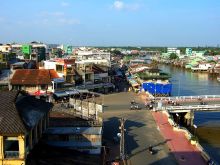 seven participating cities in the Mekong Delta under World Bank SUUP Project to incorporate universal accessibility to urban planning and infrastructure design. Main tasks include review of Vietnamese legal and regulatory framework on universally accessible infrastructure design and development, assessing baseline and needs in the cities, sharing global experiences, review and advising on detailed infrastructure design, preparation of design guidelines, providing training, and recommendations of incorporating universally accessible infrastructure principles and design into various city plans and regulations.
 following tasks: i) Component 1 – Provide meta advisory support for on-going hybrid annuity transactions being undertaken by different commercial transaction advisors in 13 cities, where IFC will provide overall quality assurance and supervisory support in such projects. Of these, inputs for project preparation will be required in 5 projects.
 Deadline: 04-Jul-2018 at 11:59:59 PM (Eastern Time – Washington D.C.)
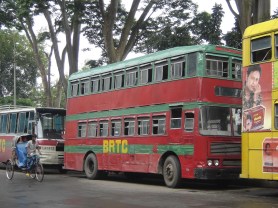 design business models and financial instruments, and provide policy recommendations to speed up clean bus implementation in 5 cities: Buenos Aires, Mexico City, Montevideo, Santiago, Sao Paulo. The consultancy firm will have to develop a detailed diagnosis, including i) detailed market study, including a diagnosis of supply and demand of bus financing, ii) a detailed investigation of bus operations, concessions agreements and procurement practices that hinder or facilitate the sector, iii) and the current regulations/subsidies schemes in each of the cities, defined both at local and national levels. From this diagnosis, the firm will design business models, propose financing mechanisms, provide policy recommendations, and training to relevant counterparts to disseminate the results and support the implementation of projects.
 providing risk capital/ patient capital that are otherwise extremely scarce. Established in 2008, the successful raise of a follow-on fund by the Central Africa SME Fund validated IFCs pioneering role, and IFC secured Boards approval to expand the program globally in 2015.
 Netherlands for the World Bank
You must be logged in to post a comment.