
WASHINGTON, D.C., August 26, 2026 — The World Bank Group will support the State of Paraná, Brazil, strengthen water security and protect farmers and rural communities from climate shocks through a new project. It is expected to generate and protect between 54,000 and 78,000 jobs across agriculture, water services, and associated economic activity in one of Brazil’s most economically vital regions.
Continue readingTag Archives: Brazil
World Bank to Build Flood Resilience and Protect Jobs in Brazil’s Santa Catarina State
WASHINGTON, D.C., JULY 2, 2026 – The World Bank Group has announced a new project to support the State of Santa Catarina, Brazil, to reduce the risk of devastating floods and strengthen the state’s capacity to manage weather-related disasters, mitigating impacts on the economy while protecting jobs and lives.
The US$ 119.2 million project will benefit approximately 420,000 people across 54 municipalities, many of them low-income residents living in high-risk areas who stand to gain the most from lasting, reliable flood protection.
Santa Catarina is home to a diversified economy with strong manufacturing, technology, and agribusiness sectors. At its economic heart lies the Itajaí Valley, which generates approximately one-third of all jobs in the state. The Port of Itajaí — the second largest in Brazil by container throughput — anchors this dynamism, serving as a critical hub for beef exports and international trade.
The valley is also one of the most disaster-prone regions in the country. Between 1991 and 2023, flooding and landslides caused more than US$7.2 billion in economic losses across Santa Catarina, affecting more than 20 million people. The catastrophic 2008 floods left the city of Itajaí 90% underwater, forcing vessels to divert to neighboring states for months, at an estimated cost of US$35 million per day in lost port revenue. In the Itajaí Valley, unmanaged flood risk is a direct threat to jobs.
“Continued job generation and local prosperity in the region will depend on sustainable strategies to adapt to growing flood risks,” says Jorge Coarasa, World Bank Acting Country Director for Brazil.
Flood mitigation infrastructure in the Itajaí Valley is at the core of the project. Investments include river improvement works such as channel dredging, reinforcement of embankments, and floodgates along the Itajaí-Mirim River. The project will also support the construction of a series of flood control dams upstream, as part of a multi-year government investment program to mitigate flood impacts.
Additionally, early warning systems will be expanded across the entire state, improving coordination between climate monitoring and local civil defense agencies, ensuring faster, better-coordinated responses when extreme weather strikes. Tools will be developed to expand flood control solutions to incorporate nature-based solutions alongside traditional flood control measures.
This investment forms part of Santa Catarina’s ambitious “Proteção Levada a Sério” (Protection Taken Seriously) program, a multi-year, US$1 billion commitment to climate resilience across the state. The project’s approach is designed to be replicated in other river basins in Santa Catarina and to serve as a model for other flood-exposed states across Brazil and Latin America.
The project was prepared with support from the Global Facility for Disaster Reduction and Recovery (GFDRR).
“Credit: World Bank Group. All rights reserved”
Harnessing AI and private innovation to close health gaps
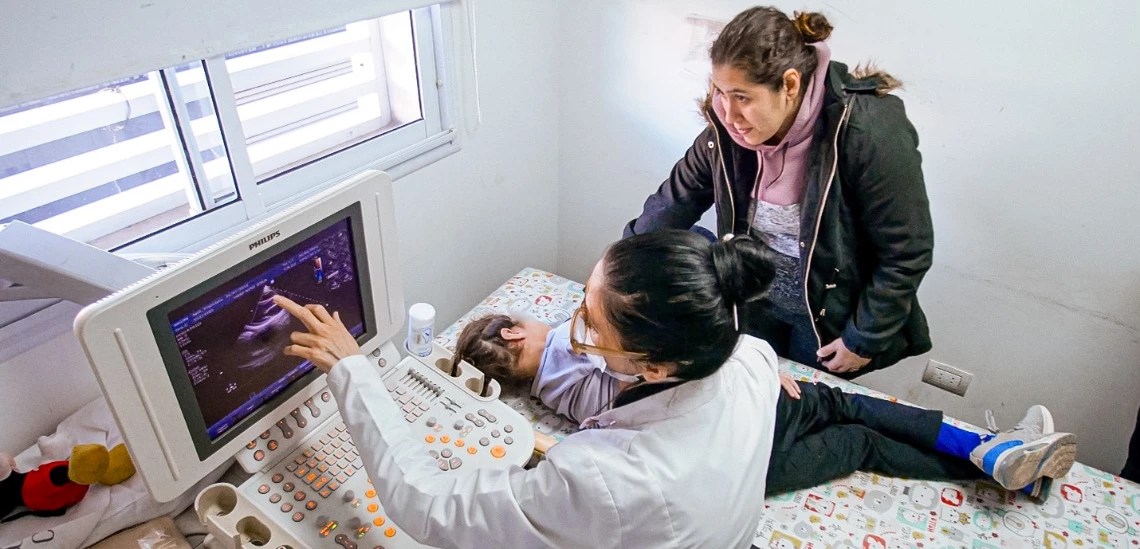
Good health fuels human potential — supporting education, work, and productivity. For people in emerging markets, it is essential to participating in a growing economy. Yet the scale of the global health challenge remains daunting: an estimated 4.5 billion people still lack access to essential health services. Health systems worldwide face worker shortages, weak infrastructure, rising demand, and financial barriers. In these constrained environments, AI offers real promise.
Continue readingWorld Bank Supports Energy Transition and Job Creation in Brazil’s Northeast Region
WASHINGTON, DC, May 15, 2026 — The World Bank’s Board of Directors has approved a new project to catalyze investment in low-carbon industrial commodities, clean fuels, and enabling infrastructure in industrial and energy value chains in the Northeast region of Brazil, paving the way for increased competitiveness and employment.
Continue readingWorld Bank Supports Jobs, Renewable Energy and Lower Energy Costs in Brazil’s Amazon Region
WASHINGTON, DC, March 20, 2026 — The World Bank’s Board of Directors approved a new project in Brazil’s Legal Amazon to support jobs, expand renewable energy generation, and lower energy costs across one of the world’s most ecologically significant regions. The project will help create quality jobs, expand access to reliable electricity for more than one million residents currently without basic energy services, and support the Amazon in attracting investment and securing its share of the growing global clean energy economy.
Continue readingDelivering jobs at scale: How Brazil is redefining the first step onto the jobs ladder

A real understanding of the impact of economic inclusion programs comes from seeing lives change—standing beside women building small businesses, young people stepping into formal jobs, and families beginning to plan for the future. These moments become possible and inevitable when governments and their partners invest the time and resources to design and deliver economic inclusion for the poor.
Continue readingBrazil’s Northeast can be a Catalyst for Jobs, Growth, Clean Energy, and Economic Opportunity
Brazil’s Northeast is poised to play a pivotal role in the country’s progress and prosperity, according to a new World Bank report, “Routes to the Northeast: Productivity, Jobs, and Inclusion,” which outlines how the region can unlock its potential and create jobs by pivoting to a more dynamic growth model. Home to 54 million residents—80 percent of them of working age—, the region offers one of Brazil’s largest and most dynamic labor pools.
Continue readingThe Global Sanitation Crisis: Pathways for Urgent Action
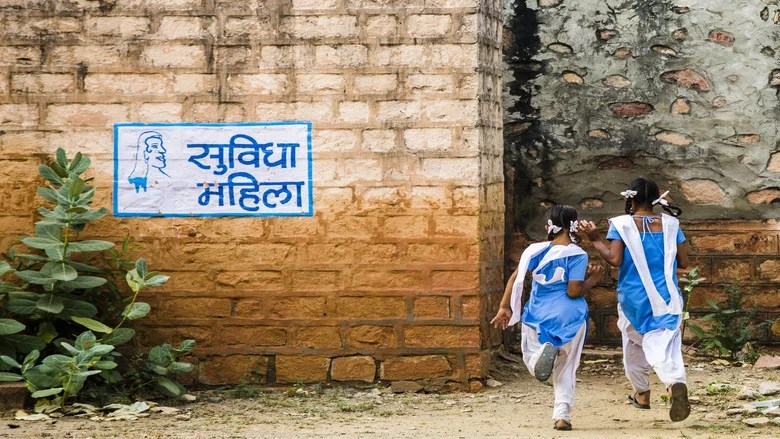
The Global Sanitation Crisis: Pathways for Urgent Action report examines the risks that poor sanitation poses to people, economic growth, and the environment. It outlines practical steps that cities and countries can take to accelerate progress toward universal access to resilient, safely managed sanitation—promoting healthy communities, sustainable environments and reduced greenhouse gas emissions, thriving economies, resilient cities, job creation, and greater human productivity.
Continue reading
Transforming Public Education: Innovative Programs Aim to Close Learning Gaps and Foster Student Success in Salvador, Brazil
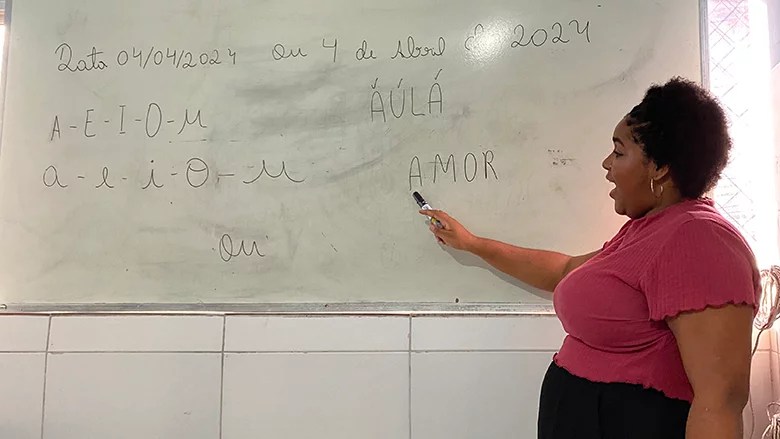
A visit to the Iacy Vaz Fagundes school, tucked away on a side street in the Federação neighborhood of Salvador, Brazil, quickly reveals the challenges faced by vulnerable students. In one of the classrooms, a learner from the City Council’s Learning Support Program (PAAP) was working with two girls aged 9 and 10. Despite being old enough to read and understand simple texts, they couldn’t even associate the sound of the vowel “A” with words like “amor” (love), “abacaxi” (pineapple), and “açúcar” (sugar). Witnessing this, one can’t help but wonder about the future jobs and lives these girls will have if they continue to struggle with basic reading skills, which are essential for learning a wide range of subjects.
Continue readingPublication: Brazil Country Climate and Development Report
Abstract
Brazil is highly exposed to climate change risks. The impacts of global climate change risks and local practices on the Amazon and Cerrado biomes are of particular concern, as they provide vital ecosystem services to Brazil, the South American region, and the world. The Brazil Country Climate and Development Report (CCDR) examines the implications of climate change and climate action for Brazil’s development objectives and priorities. It identifies opportunities for Brazil to achieve both its development goals and its climate commitments. It lays out a combination of sectoral and economy-wide policy reforms, as well as targeted investments in near- and medium-term mitigation and adaptation measures to achieve more rapid and inclusive development with lower greenhouse gas (GHG) emissions. The idea is to maximize synergies between climate and development objectives, while addressing trade-offs among policy objectives and key transition challenges.


You must be logged in to post a comment.