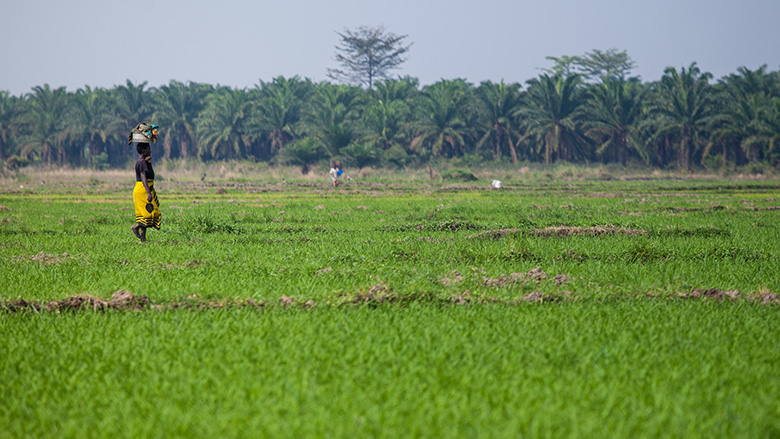
WASHINGTON D.C., March 30, 2026 – The World Bank has approved a $500 million International Development Association (IDA) credit for the Nigeria Sustainable Agricultural Value-Chains for Growth (AGROW) Project, aimed at increasing smallholder farmers productivity, strengthening agricultural value chains, and creating jobs while improving food and nutrition security.
Continue readingTag Archives: RVO
Updated Ukraine Recovery and Reconstruction Needs Assessment Released
Findings highlight the expanding footprint of destruction and the increasing complexity in restoring systems essential for economic recovery and social well‑being
KYIV, Ukraine, February 23, 2026—Four years into Russia’s invasion of Ukraine, an updated joint Rapid Damage and Needs Assessment (RDNA5) released today by the Government of Ukraine, the World Bank Group, the European Commission, and the United Nations currently estimates that as of 31 December 2025, the total cost of reconstruction and recovery in Ukraine is almost $588 billion (over €500 billion) over the next decade, which is nearly 3 times the estimated nominal GDP of Ukraine for 2025.
Continue readingCan interest rates make babies? The hidden demographic effects of monetary policy (Part 1)
Monetary policy is often portrayed as a technical lever—moving interest rates to manage inflation and aggregate demand. Yet recent evidence suggests its reach may extend far deeper into household life than previously imagined. Beyond spending and borrowing, central bank decisions might be shaping one of society’s most fundamental choices: whether and when to have children.
Across both advanced and emerging economies, fertility rates have fallen to historic lows. This demographic transition is transforming labor markets, altering savings behavior, and affecting long-term growth potential. As governments worry about aging populations and shrinking workforces, an overlooked question emerges: could monetary policy itself be influencing fertility—and, if so, what does that mean for economic development?
Continue readingWhat Works for Work: A Guidebook to Proven and Promising Employment Solutions
Highlights:
- New World Bank Group guidebook presents evidence-based strategies for designing effective labor programs, especially in low- and middle-income countries facing job creation challenges.
- The most effective labor programs in low- and middle-income countries deliver earnings and employment improvements four to five times greater than the average, at times providing up to ten years lasting benefits, and returns far exceeding the initial investments.
- Five core principles—contextual tailoring, comprehensive scope, incentive alignment, private sector engagement, and social protection integration—are key to creating lasting, inclusive impacts in the labor market.
When the cloud meets a thirsty world
Throughout history, water has been the quiet engine behind progress: farmers irrigate fields to grow crops; industry needs it to produce goods and generate energy; and people, communities and cities draw on it for drinking, sanitation, and public health. Technology also made it possible to reach deeper aquifers and more distant rivers, expanding water use and exposing fundamental tensions in how water is valued and distributed, and who bears the costs.
Continue readingPartnering to Unlock Youth Employment: Q&A with Dr. Mona Mourshed, founding CEO of Generation
Jobs are the best way to end poverty and give people hope, dignity, and a better future. That’s why the World Bank Group is changing the way we do things—ensuring that all our operations have a clear line of sight to employment. With more than a billion young people entering the labor market in the next decade, the world needs more jobs than ever before. But we can’t do it alone.
Continue readingLetter from USAID
December 15, 2025
Dear USAID Implementing Partners,
As the U.S. Agency for International Development (USAID) continues to finish closing the agency, USAID is taking additional immediate and decisive action to safeguard taxpayer funds and enhance financial oversight across its assistance portfolio.
Continue readingAsian Development Bank and the World Bank Group Announce Pacific Projects as First Proposed Under Groundbreaking Partnership Initiative
MANILA, PHILIPPINES, December 4, 2025 — World Bank Group President Ajay Banga and Asian Development Bank (ADB) President Masato Kanda today announced the first two Pacific projects to be delivered under the Full Mutual Reliance Framework, an innovative cofinancing model that will boost development impact.
Continue readingIntroducing Senior Advisor Alain Ancion
I’ve traded field boots for Board papers, but I still keep the map handy. Since last September, I’ve been Senior Advisor and (the most magical job title ever) temporary permanent alternate ED, in the Dutch Executive Director’s Office at the World Bank, where my portfolio spans the Committee on Development Effectiveness (CODE), trade, procurement, and a mix of regional and thematic files.
Before the Boardroom, my compass pointed firmly toward the Netherlands Ministry of Foreign Affairs. I built extensive field experience in the Western Balkans as regional security coordinator on counter‑terrorism issues, and in Kenya as Deputy Ambassador for Somalia, leading a cross‑ministerial team drawn from four ministries.
Continue readingDialogue Session visit Gallina Vincelette (Vice President of Operations & Country Services) and Hiba Tahboub (Chief Procurement Officer)
On Wednesday, November 19th, Gallina Vincelette, Vice President of Operations Policy & Country Services, and Hiba Tahboub, Chief Procurement Officer at the World Bank, visited the Netherlands as part of a three-day tour of Europe, which also included stops in Brussels and Berlin. During their visit to The Hague, TIO at the Netherlands Enterprise Agency hosted a Dialogue Session with 16 representatives from Dutch companies and organizations to discuss recent World Bank procurement reforms, as well as the challenges and opportunities encountered by practitioners. In a lively and open exchange, participants shared their experiences with the Bank’s procurement system and offered practical suggestions for further improvement.
Continue reading