Asian Development Bank and the World Bank Group Announce Pacific Projects as First Proposed Under Groundbreaking Partnership Initiative

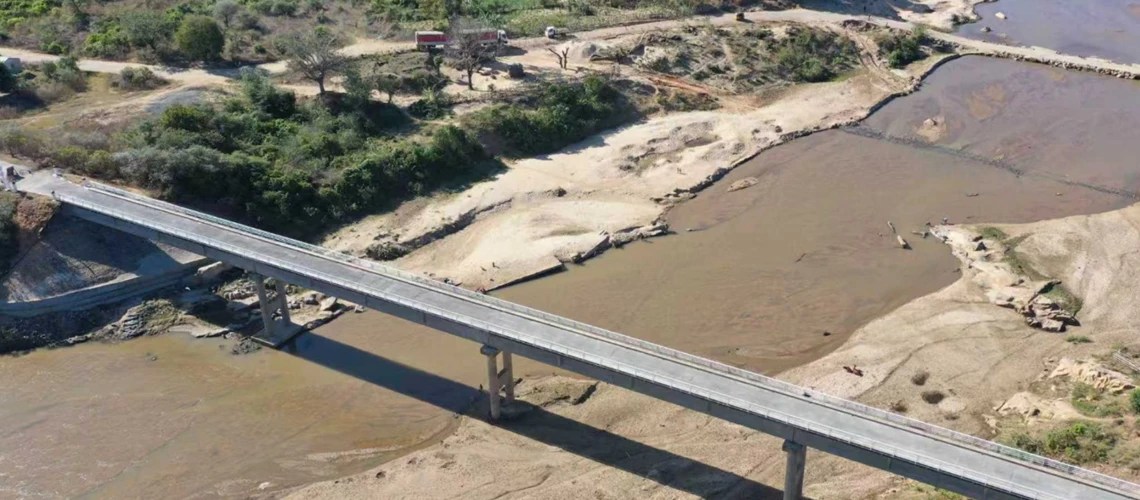
MANILA, PHILIPPINES, December 4, 2025 — World Bank Group President Ajay Banga and Asian Development Bank (ADB) President Masato Kanda today announced the first two Pacific projects to be delivered under the Full Mutual Reliance Framework, an innovative cofinancing model that will boost development impact.

Continue reading

Introducing Senior Advisor Alain Ancion

I’ve traded field boots for Board papers, but I still keep the map handy. Since last September, I’ve been Senior Advisor and (the most magical job title ever) temporary permanent alternate ED, in the Dutch Executive Director’s Office at the World Bank, where my portfolio spans the Committee on Development Effectiveness (CODE), trade, procurement, and a mix of regional and thematic files.

Before the Boardroom, my compass pointed firmly toward the Netherlands Ministry of Foreign Affairs. I built extensive field experience in the Western Balkans as regional security coordinator on counter‑terrorism issues, and in Kenya as Deputy Ambassador for Somalia, leading a cross‑ministerial team drawn from four ministries.

Continue reading

Dialogue Session visit Gallina Vincelette (Vice President of Operations & Country Services) and Hiba Tahboub (Chief Procurement Officer)

On Wednesday, November 19th, Gallina Vincelette, Vice President of Operations Policy & Country Services, and Hiba Tahboub, Chief Procurement Officer at the World Bank, visited the Netherlands as part of a three-day tour of Europe, which also included stops in Brussels and Berlin. During their visit to The Hague, TIO at the Netherlands Enterprise Agency hosted a Dialogue Session with 16 representatives from Dutch companies and organizations to discuss recent World Bank procurement reforms, as well as the challenges and opportunities encountered by practitioners. In a lively and open exchange, participants shared their experiences with the Bank’s procurement system and offered practical suggestions for further improvement.

Continue reading

Publication: Keys to Energy-Efficient Shipping

Abstract

This report quantifies the extent to which energy efficiency measures can reduce greenhouse gas (GHG) emissions and fuel costs in global shipping. Drawing on a fleet-wide analysis across key vessel segments (bulk carriers, container ships, and tankers), it assesses the untapped potential of technical and operational efficiency measures through to 2050. Findings show that maximizing energy efficiency can cut global shipping’s GHG emissions by up to about 40% by 2030, exceeding current IMO interim targets, while simultaneously lowering the costs of the energy transition. Roughly half of these potential GHG savings by 2030 pay for themselves, offering savings of up to $220 billion annually in total costs as green fuel supply chains develop, and helping to build resiliency against fuel price volatility and rerouting shocks. The report highlights the role of short-term operational measures (such as forms of port call and speed optimization) and medium-term technical innovations (for example, wind-assisted propulsion) in achieving substantial efficiency gains. It identifies persistent economic, behavioral, and organizational barriers to uptake and illustrates them through deep dives on port call optimization and wind-assisted propulsion, showcasing innovative industry initiatives being applied to overcome these barriers. Finally, the report offers targeted recommendations for policymakers, industry, ports, and financiers to accelerate the adoption of energy efficiency solutions at scale.

“Credit: World Bank Group. All rights reserved”

Promoting Productivity Would Boost GDP and Create More and Better Jobs for Countries in Europe and Central Asia

WASHINGTON, November 24, 2025—Countries in Europe and Central Asia (ECA) should urgently push to make more efficient use of existing economic assets and invest in the capabilities of its firms and people to unlock faster growth, according to a new World Bank report released today.

Continue reading

Harnessing Artificial Intelligence for Agricultural Transformation

Download report here

This report presents a comprehensive analysis of how AI can be responsibly deployed across agrifood systems, especially in low- and middle-income countries. It provides a roadmap of applications, requirements, and investment priorities focusing on ethical, inclusive, and scalable use.

Continue reading

Digital technology is driving the future of jobs

A farmer in Kenya uses mobile apps to get real-time harvesting tips, check market prices, and connect directly with buyers and lenders. A woman in Indonesia takes meal orders and arranges deliveries through social media. A small innkeeper in Jamaica lists rooms on booking platforms and manages reservations online. A street vendor in Dakar sells handmade jewelry across Africa using just her smartphone. And in Manila, a university student teaches math to high schoolers in remote areas via an online e-learning platform. 

Continue reading

Accelerating Investment: Challenges and Policies

Developing economies have an acute need for higher investment. Investment is the engine that builds productive capacity, modernizes infrastructure, sets the stage for job growth, and advances countries toward development and climate goals. Yet as development needs have expanded, investment growth has been in a deep slump—a call to action for policy makers, investors, and development practitioners.

Continue reading