WARSAW, June 22, 2026—Artificial intelligence could increase Poland’s real GDP by between 1.3% and 12.1% by 2035, according to a new World Bank Group report. The scale of the gains will depend on how quickly firms invest, how rapidly workers adapt, and whether policies enable the transition.
Continue readingTag Archives: AI
Nature isn’t the alternative to modern technology. It is technology
Technology is often celebrated as an engine of growth and development, conjuring images of advanced machinery, artificial intelligence, and cutting-edge innovation. Nature, by contrast, is too often considered as something separate from technology, or even something to be protected from or balanced against it. But this framing misses a deeper truth. Nature is ancient intelligence. It is the original AI.

From data to inference: Why AI governance matters for central banks in developing economies
Central banks are among the most data-dense public institutions. As they modernize digital payments and financial supervision, artificial intelligence (AI)-enabled analytics and supervisory technology (SupTech) enable them to draw connections across the large datasets they hold. In doing so, these tools expand central banks’ ability to infer information about legal entities and individuals beyond what is directly contained in any single dataset.

Spring Meetings 2026 | How Digital Health and AI Can Expand Access to Care at Scale
The binding constraint on AI in education is not technology. It’s organizational culture
When people talk about AI in education, they usually mean AI in classrooms: devices, chatbots, adaptive platforms. The conversation quickly stalls because many schools in low- and middle-income countries lack the infrastructure. So, AI becomes something for well-resourced systems, and everyone else waits.
Continue readingMaking AI Work for All: You Ask, We Answer
You are receiving this email because you signed up for our World Bank Live Updates. We want to let you know that we have a new event coming up. February 11, 2026 <a href="https://t.newsletterext.worldbank.org/r/?id=h2b08fbb1,eee1fdd,ef262e4&e=cDE9PGIgc3R5bGU9J2NvbG9yOg&s=moq4BV9sf59jrkGzm1tQd27yflhKkjicSn9DILXeFME#004370;font-size:16px;'>Making AI Work for All: You Ask, We Answer Making AI Work for All: You Ask, We Answer Location: Online Submit your questions in advance to learn how governments are expanding access to AI foundations—skills, data, and computing infrastructure—and why partnerships with the private sector matter for scaling solutions. Sign up for an event reminder and join us live. Experts will answer questions in the chat during the session. World Bank Live Development Events Brought to You Live |
“Credit: World Bank Group. All rights reserved”
When the cloud meets a thirsty world
Throughout history, water has been the quiet engine behind progress: farmers irrigate fields to grow crops; industry needs it to produce goods and generate energy; and people, communities and cities draw on it for drinking, sanitation, and public health. Technology also made it possible to reach deeper aquifers and more distant rivers, expanding water use and exposing fundamental tensions in how water is valued and distributed, and who bears the costs.
Continue readingThe future is Africa: Shaping AI-enabled EdTech for skilling the next generation
By 2050, one in three of the world’s children will live in Africa. Yet this demographic shift coincides with a profound learning crisis: over 70 percent of children in low- and middle-income countries (LMICs) cannot read and understand a simple text by age 10—and in Sub-Saharan Africa, the figure reached 86 percent before the pandemic. Without rapid acceleration in foundational learning outcomes, this demographic advantage risks becoming a source of deeper inequality and lost opportunity, talent, and productivity in the labor market.
Continue readingCan AI give small scale producers the right advice?
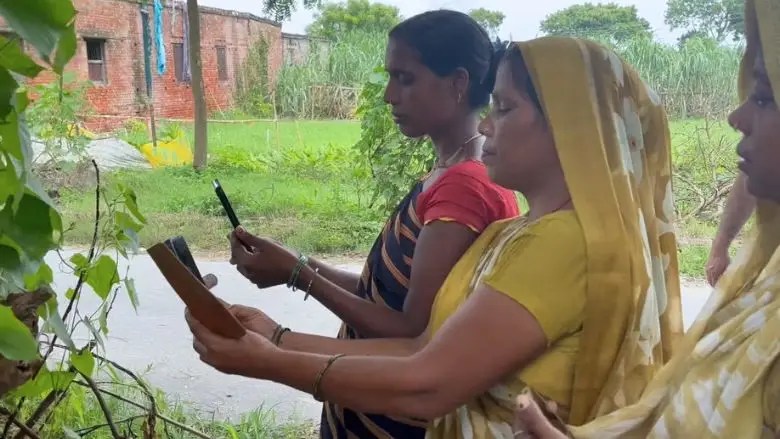
The World Bank has long recognized the critical importance of agricultural extension services – ranging from training and data to technology transfer – which make up the second-largest share of its agriculture portfolio. Yet farmers have often been slow to adopt the very methods and tools these services are designed to deliver—limiting their own productivity and the sector’s potential to create jobs.
That’s in large part because they depend on limited numbers of extension agents: the field advisors responsible for providing them with data, training and advice. Most countries have just one extension agent for every 1,000 to 2,000 farmers.
Continue readingArtificial Intelligence Revolution in Education: What You Need to Know | World Bank Expert Answers
“Credit: World Bank Group. All rights reserved”