
STORY HIGHLIGHTS
- A new report estimates that by 2030 up to two-thirds of the global extreme poor will
 be living in FCS, making it evident that without intensified action, the global poverty goals will not be met.
- The new report, “Fragility and Conflict: On the Front Lines of the Fight against Poverty” notes that the 43 countries in the world with the highest poverty rates are in FCS and/or Sub-Saharan Africa.
- The number of people living in proximity to conflict — defined as within 60 kilometers of at least 25 conflict-related deaths — has nearly doubled since 2007.
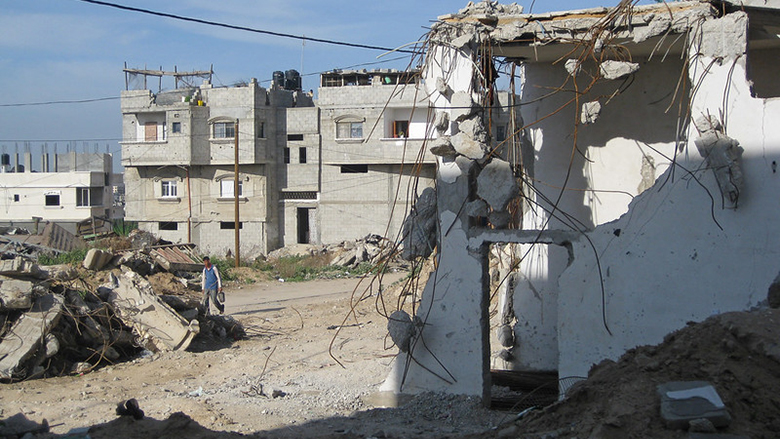
Globally, the prevalence of fragile and conflict-affected situations (FCS) continues to rise. The number of forcibly displaced people worldwide has more than doubled since 2012, exceeding 74 million in 2018. A new report estimates that by 2030 up to two-thirds of the global extreme poor may be living in FCS, making it evident that without intensified action, the global poverty goals will not be met.
The new report, “Fragility and Conflict: On the Front Lines of the Fight against Poverty,” notes that the 43 countries in the world with the highest poverty rates are in FCS and/or Sub-Saharan Africa. Economies facing chronic fragility and conflict have had poverty rates stuck at over 40 percent in the past decade, while countries that have escaped FCS have cut their poverty rates by more than half. Today, a person living in an economy facing chronic fragility and conflict is 10 times more likely to be poor than a person living in a country that hasn’t been in conflict or fragility in the past 20 years.
 policymakers and regulators when establishing a new market for offshore wind development. These shall include, but not be limited to, the following points:
 National Investment Climate Project is a pilot initiative implemented in two national regional states with the aim to a) strengthen regional investment promotion, retention and expansion capacity in selected/target sectors b) enhance regional business climate through streamlined regulatory and administration procedures; and c) strengthen inter-agency coordination and public-private dialogue for improved regional investment climate.
 Facilitation Committees (NTFCs) in 15 West African countries, design training materials, and roll out the training. The assignment is in two phases. The winner of the phase 1 contract will be awarded the phase 2 upon successful completion of the phase 1.
 development, under its Accelerated Growth and Prosperity Sharing Strategy (SCAPP, the acronym in French). SCAPP’s Vision for the Future, “The Mauritania We Want in 2030,” aims for strong, inclusive and sustainable growth to meet the basic needs of citizens and ensure their well-being. In the energy sector, the Government aims to ensure universal access to quality services at the lowest cost and to provide economic actors with reliable and secure electricity, through: (a) Development of new production capacities from local resources, mainly natural gas; (b) Expansion of the transport network and interconnection with neighboring countries; (c) Increasing the share of renewable energy in the energy mix and (d) Implementing decentralized solutions in remote rural areas. The strategy seeks to increase access rate to 95% in urban areas and 40% in rural areas, in order to reach an overall electrification rate of 70% at the national level by 2030.
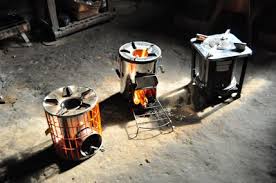 cookstove use in Zambia. The findings will feed into the development of the project component. The service contract will include a Stove User Testing and a Market Analysis to ensure that the cookstove change promoted as part of the World Bank project offers a true value proposition to potential consumers and assess how it best fits within the Zambian market. To assess cookstove efficiency, particulate matter (PM) emissions, carbon monoxide (CO) emissions, durability, and safety, cookstoves are tested and certified in labs using a set of standardized ISO protocols. However, such lab tests have no bearing on the actual efficiency of the stove when used in the household achieved by users cooking with them. In addition, it yields no results on potential fuel and cash savings or stove acceptance.
 Director of Operations
 Netherlands for the World Bank
You must be logged in to post a comment.