
Published on http://www.worldbank.org, June 19, 2019
STORY HIGHLIGHTS
- Resilient infrastructure is about people. Particularly in developing countries,
 infrastructure disruptions are an everyday concern that affects people’s well-being, economic prospects, and quality of life.
- There is a significant economic opportunity from investing in resilient infrastructure: the overall net benefit of doing so in developing countries would be $4.2 trillion over the lifetime of new infrastructure.
- For infrastructure investors, governments, development banks and the private sector the message is clear: rather than just spending more, also spend better
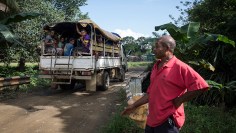
Infrastructure is at the heart of lives and livelihoods. It can enable schools and hospitals, businesses and industry, and access to jobs and prosperity. In developing countries, however, disruptions to infrastructure are an everyday concern, reducing opportunities for employment, hampering health and education, and limiting economic growth.
In low and middle-income countries, direct damages from natural hazards to power generation and transport alone cost $18 billion a year, cutting into the already scarce budget of road agencies and power utilities. But the main impact of natural shocks on infrastructure is through the disruptions they impose on people and communities, for instance, businesses unable to keep factories running or use the internet to take orders and process payments; or on the households that don’t have the water they need to prepare meals or on people unable to go to work, send children to school, or get to a hospital.

 global consultations on the issue. Our idea was to discuss current experience and explore ways to enhance this kind of partnership.
 Action Plan to promote the agribusiness sector in Guinea. The World Bank Group recently assessed the main constraints and opportunities for the development of the agribusiness sector in Guinea.
 schools, out of which the majority is not electrified. The World Bank seeks to hire the services of a firm to i) take stock of the electrification status and overall energy use of Health and Education Facilities in Burundi and ii) to design standardized solar-powered service packages to meet their current and future needs. The assignment should assess a representative share of those unelectrified facilities. A particular emphasis will be put on ways to ensure maintenance and operation of the systems, as one of the big challenges for long-term project success.
 vulnerable to climate risk.
 Bank to implement the second phase of the program on Securing Forest Tenure Rights for Rural Development (SFT). The overall objective of this phase is to test and refine a forest tenure assessment toll and its methodologies to make it practical, adaptable to different contexts, and demonstrate it can achieve traction in policy discussions. Phase 2 will be implemented as a step-wise collaborative process, in close coordination with country task teams and local consultants, supported by a SFT central task team.
 among poor people and communities can achieve outcomes that promote poverty reduction, enhanced welfare and create new and expanded employment opportunities. The final output would cover, the potential role of CE in development; case studies and assessment of market potential; different policy approaches for scaling CE, and; recommendations to governments. The consultancy will be based on desk review, economic modeling and detailed case studies that will be selected collaboratively. This EOI was tender for a smaller amount and is now being retendered with an updated amount and TOR.
 obesity and the quest for better public health. Interest in discouraging consumption through higher taxes is growing as more jurisdictions impose them and as we learn more from their experiences. Sugar-sweetened beverage taxes are one of three taxes for health highlighted in a recently published report by the

You must be logged in to post a comment.