
Deadline: 20-Dec-2018 at 11:59:59 PM (Eastern Time – Washington D.C.)
The Water supply and sanitation subsector is among the focus areas that the Federal  Democratic Republic of Ethiopia (FDRE) has considered among the pro poor sectors. With this understanding the World Bank is extending its support through different interventions. The World Bank Group is supporting the Federal Democratic Republic of Ethiopia to achieve its national targets set under GTP II through availing resources to different sectors and sub sectors.
One of the major interventions of the World Bank is the support extended to improve the services delivery in Addis Ababa and 22 secondary towns under the Second Urban Water Supply and Sanitation Project (SUWSSP). Implementation of the project is an opportunity to improve sanitation services delivery and water supply in Addis Ababa and in the secondary and regional towns. This project is a logical continuation of the Ethiopian Urban Water Supply and Sanitation project which was closed in December 2017. Unlike the prior projects the SUWSSP has a wider perspective of reaching different segment of the community by adopting City Wide Inclusive Sanitation (CWIS) approach. The model provides opportunity to start with understanding the context, planning for cost effective solution, and consultation with end users. Except Addis Ababa, all project beneficiary towns had limited experience of delivering sanitation focused project and their current staffing for sanitation is also limited.
The SUWSSP has three major components (i) Addis Ababa sanitation and operational efficiency improvement, (ii) Secondary cities and towns sanitation, water supply, and operational efficiency improvement, and (iii) Program management (Federal and regional level). The first two components further divided into three sub-components focusing on sanitation services improvement, water utilities performance improvement and utility modernization and institutional capacity strengthening.
 firms to supply drone and street-view imagery data collection services in a secondary city in Indonesia. For the street view images, the firm will be expected to use both a car mounted camera as well as more portable 360-degree devices. For the drone images, the size of the area of interest (AOI) will total roughly 80 square meters, however the data can be parsed into manageable sized mosaics.
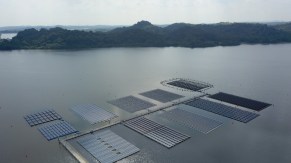 solar energy around the world, especially in countries with high population density and where land is a constraint
 emerging carbon pricing initiatives around the world including national, sub-national and corporate activities, emissions trading systems, carbon taxes, and crediting mechanisms Building on the efforts made in 2018, it will include a discussion on the carbon pricing trends. It will also address the feedback received last year and focus on developing clearer lessons learned from the various carbon pricing initiatives and from various publications (including WBG ones), improved infographics featuring key facts and numbers. In addition, it will feature a section on the various ways to price carbon, including through implicit and negative carbon pricing policies. Finally, the report will continue to complete the online dashboard that was launched in 2017, and which allows for direct access to this data and more regular updates. This report is expected to have approximately about 50 pages.
 for community forestry that will benefit the implementation of the ASL projects in Brazil, Peru and Colombia. The process should involve a comprehensive study tour that will provide an opportunity for the participants to learn from successful cases and receive technical knowledge. Considering similarities with the conditions of the ASL projects, it is suggested that the study tour considers learning from the community management experiences In the Guatemala Maya Biosphere Reserve. Due to previous engagement in forest community, working with the Association of Forest Communities of Peten (ACOFOP) and the NGO PRIMSA would be required.
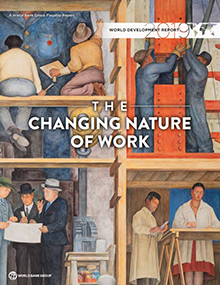 the nature of work is changing as a result of advances in technology today. Fears that robots will take away jobs from people have dominated the discussion over the future of work, but the World Development Report 2019 finds that on balance this appears to be unfounded. Work is constantly reshaped by technological progress. Firms adopt new ways of production, markets expand, and societies evolve. Overall, technology brings opportunity, paving the way to create new jobs, increase productivity, and deliver effective public services. Firms can grow rapidly thanks to digital transformation, expanding their boundaries and reshaping traditional production patterns.
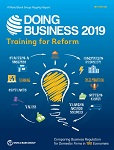 bureaucracy busting efforts for the domestic private sector, implementing 314 business reforms over the past year, says the World Bank Group’s Doing Business 2019: Training for Reform report, released today.
 of pollution and the World Bank (the Bank) has been requested by the relevant Governments to carry it out. To do so, in compliance with the requirements of the eligible BETF and RETF activities, the Bank will hire a consultant company (the Consultant) to prepare the Study while monitoring and coordinating the activities of the latter with those carried out by the beneficiary countries, Bosnia and Herzegovina and Croatia, and their consultants, including a Steering Board and a Study Implementation Team. The consultant will prepare the Study to help the beneficiary countries identify the effective sanitary protection measures for the springs to prevent groundwater pollution (the quantitative and qualitative features), and to share with them relevant recommendations for the monitoring of the groundwater in the relevant areas in the future, with the aim of allowing a timely identification of the eventual water quality deterioration in the catchment area.
 awareness and capacity of relevant Government of Indonesia line agencies in developing DRM and climate adaptation plans for water supply infrastructure, particularly to address seismic and hydro-meteorological (floods, droughts and landslides) risks. The key objectives are to: (i) develop a technical report that outlines guidance on how to address DRM and climate adaptation aspects in water supply infrastructure; (ii) develop a set of technical guidelines and standard operating procedures that will assist PDAMs to prepare DRM and climate adaptation plans; and (iii) provide technical assistance to AKATIRTA and/or MPWH’s Balai Teknik Air Minum (BTAM) to increase their capacity in delivering trainings and education programs in the design and operation of resilient water and sanitation infrastructure.
 Netherlands for the World Bank
You must be logged in to post a comment.