
The Energy Sector Management Assistance Program (ESMAP) is a global knowledge and  technical assistance program administered by the World Bank. It provides analytical and advisory services to low- and middle-income countries to increase their know-how and institutional capacity to achieve environmentally sustainable energy solutions for poverty reduction and economic growth. Supporting over a hundred activities in countries around the world at any given time, ESMAP is an integral part of the Energy and Extractives Global Practice of the World Bank.
Recently they have published several consulting opportunities on the eConsultant2 website.
 carried out with funding provided by a WB Technical Assistance Programme, in selected communities and municipalities in the Departments of Chuquisaca, Potosi, Cochabamba and Oruro. The baseline data will provide inputs for the Project design, including the implementation strategy in its water supply, energy and irrigation components; and the design of the community development and behavior change activities. The study will also set a baseline to monitor the project results and adjust its design and implementation if needed.
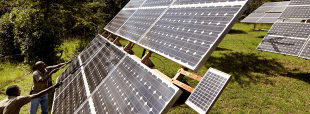 Authority (REA), ZESCO LIMITED (ZESCO) and the Central Statistics Office (CSO) is launching the first Global Energy Access Household Surveys in access deficit countries so as to set a baseline to track progress towards Sustainable Energy for All (SE4All) goal and Sustainable Development Goal (SDG) number 7 on access to affordable, reliable and sustainable modern energy by 2030.
 sector and planning and contracting major investments in Côte d’Ivoire.
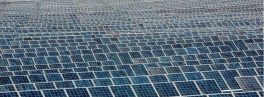 the development, construction and operation and maintenance of up to 500MW of utility scale solar PV projects on a PPP basis under the Scaling Solar Program (the Project).
 Power in the past constrained its capacity to expand its grid to main population centers or even in the capital city Honiara. While 45% households have reported to have some form of power supply at home, the majority of these households only have small solar panels, typically of 20W, whereas only 9% have power supply from the grid operated by Solomon Islands Electricity Authority (now trading as Solomon Power).
 development in Myanmar are required to provide clear, consistent and comprehensive guidance on:
 from individual firms or consortia that specialize in identifying, investigating, and facilitating business model diffusion in emerging markets. The core goal of the assignment is to facilitate identification, market validation and adoption of 2-3 business models in the renewable energy sector through the facilitation of uptake by existing companies in Kenya and South Africa. Throughout the piloting process, CTP aims to generate concrete lessons learned and insights that will be applied by public or private institutions to do further business model diffusion pilots or to scale up validated pilots. This assignment will include activities to be designed and implemented over a 12-18 month period.
 competitively priced, utility-scale solar photovoltaic (PV) power in Sub-Saharan Africa through a coordinated, packaged and largely standardised joint World Bank Group (World Bank, IFC, and MIGA) solution based on a templated Public Private Partnership (PPP) transaction. To date, three countries have signed up to the program and more countries are expected to follow shortly. In relation to Scaling Solar Madagascar, IFC intends to hire a firm to provide reliable on-site measured solar resource data for a site in Madagascar for a period of 1 year. The firm is to install, manage and maintain a solar resource measurement station at the site in order to provide bankable solar resource data.
 Netherlands for the World Bank
You must be logged in to post a comment.