
Deadline: 09-Oct-2018 at 11:59:59 PM (Eastern Time – Washington D.C.)
The World Bank is supporting the Government of Indonesia to address critical urban 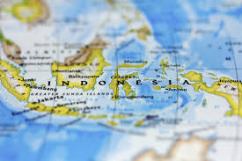 flood risk management and investment needs in Indonesia. This technical assignment will assist with the development of a conceptual framework design for a national urban flood risk reduction investment program, which could comprise risk reduction investments, technical capacity building, knowledge sharing, and innovation generation. The key output will be a conceptual framework and sustainable implementation model for the proposed program that addresses the identified needs through proposed financial and organizational arrangements; makes recommendations for any needed regulatory/institutional/financial arrangements; and propose an overall action plan and timeline to put the program into effect. The team will be expected to provide technical advice on public financial management, municipal finance, disaster risk management, flood risk management, and urban development.
 seven participating cities in the Mekong Delta under World Bank SUUP Project to incorporate green infrastructure principles to urban planning and infrastructure design. Main tasks include review of Vietnamese legal and regulatory framework on green infrastructure design and development, assessing baseline and needs in the cities, sharing global experiences, review and advising on detailed infrastructure design, preparation of design guidelines, providing training, and recommendations of incorporating green infrastructure principles and design into various city plans and regulations.
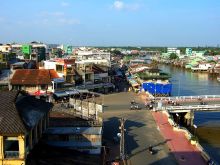 seven participating cities in the Mekong Delta under World Bank SUUP Project to incorporate universal accessibility to urban planning and infrastructure design. Main tasks include review of Vietnamese legal and regulatory framework on universally accessible infrastructure design and development, assessing baseline and needs in the cities, sharing global experiences, review and advising on detailed infrastructure design, preparation of design guidelines, providing training, and recommendations of incorporating universally accessible infrastructure principles and design into various city plans and regulations.
 goal of ending poverty by 2030 and pointing to the need for increased pro-poor investments, the World Bank finds.
 affordable housing development under Public Private Partnership (PPP) based on their Affordable Housing Policy for Economically Weaker Sections (EWS) and Low-Income Group (LIG) beneficiaries. The Project comprises of the design and construction of affordable housing units on a greenfield sites in up to 6 cities. In this context, IFC is seeking to hire specialized team of Technical Consultants, which will assist IFC with all the technical and design aspects of AH units, detailed break-up of the site development for residential and commercial uses, along with their cost estimates, development of performance specifications for the private sector, reviewing and assimilating elements of housing finance in the transaction structure, analyzing the existing policy framework to optimize the project capacity and project design, analyzing the issues related to providing access to housing finance to beneficiaries, evaluation of how to most efficiently ensure subsidies are flowing to needy beneficiaries, define technical criteria for qualification and technical evaluation of the applications and shortlist bidders. The detailed terms of reference shall be shared later with the shortlisted entities.
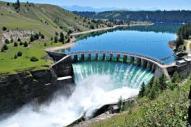 Mpatamanga Hydropower Project in Malawi, using the BEta version of the World Bank’s Hydropower Sector Climate Resilience Guidelines.
 carbon units held by account holders and (ii) enable the exchange of carbon units between account holders. with the support from the Partnership for Market Readiness (PMR), the Government of Sri Lanka aims to design a national registry system for recording project or mitigation action details, registration and approval, reporting of monitoring data, and the transactional features of carbon units. The registry is an essential tool through which the success of the mechanism will be measured and improved. It will be used for all reporting, collecting, and checking purposes, storing compliance data and identifying any cases of enforcement. It will also track the emissions and trading activity for registered users over the life of a particular scheme.
 Hodeidah. These cities are exposed to hazards such as coastal and urban floods, seismic activity, tsunamis, volcanoes and water scarcity.
 poorer countries close the gap with rich countries in life expectancy. But,

You must be logged in to post a comment.