
What is a Blue Bond?
The blue bond is a debt instrument issued by governments, development banks or others

to raise capital from impact investors to finance marine and ocean-based projects that have positive environmental, economic and climate benefits. The blue bond is inspired by the green bond concept, which people are more familiar with.
Why did Seychelles decide to issue a Blue Bond?
Like many small island states, Seychelles’ economy is highly dependent on the ocean and on fisheries for food, nutrition and livelihoods; marine habitats, and other blue economy sectors such as tourism. After tourism, the fisheries sector is the country’s most important industry, contributing significantly to annual GDP and employing 17% of the population. Fish products make up around 95% of the total value of domestic exports.
 following criteria (a) the size of PLN grid (5-150MW); (b) high average generation cost; and (c) electrification rate below 90%. The selected islands will be communicated to the Consultant before the start of the assignment. They are all located in the Eastern Islands and were divided into three groups, (i) islands with a small installed generation capacity and limited electrification, (ii) islands with an installed generation capacity of 50-150 MW with only diesel generation and very high average generation cost and (iii) islands with an installed generation capacity of 50-150 MW with diesel and coal generation and high average generation cost.
 San Salvador de Jujuy, Argentina, as part of the World Bank’s City Resilience Program. Specifically, the consultancy will focus in the Chijra River. The expected tasks include:
 Fund (IMF) hold Annual Meetings to discuss a range of issues related to poverty reduction, international economic development and finance. This year’s events will take place in Nusa Dua, Bali, Indonesia, October 8-14, 2018. Start planning your
  in Fiji. The objective of this study is to support the Government of Fiji in estimating the direct and indirect impact of cruise tourism, and to assess the investments required to support growth of the cruising sector. The results of this assessment will be used by government and industry to support further strategic development of cruise tourism and to identify opportunities to increase its positive impacts.
 disaster early warning systems and climate services in the East Asia and Pacific region. In this context, it is seeking the services of a consultant to undertake assessments and provide technical support on hydromet and climate services in several countries. Specifically, the objective of this consultancy is to (i) prepare a roadmap for hydromet modernization in Mongolia based on assessment of user needs and (ii) undertake an assessment and prepare roadmap for improving coastal monitoring and information systems in Myanmar.
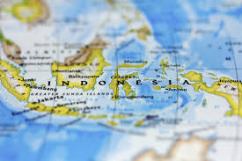 flood risk management and investment needs in Indonesia. This technical assignment will assist with the development of a conceptual framework design for a national urban flood risk reduction investment program, which could comprise risk reduction investments, technical capacity building, knowledge sharing, and innovation generation. The key output will be a conceptual framework and sustainable implementation model for the proposed program that addresses the identified needs through proposed financial and organizational arrangements; makes recommendations for any needed regulatory/institutional/financial arrangements; and propose an overall action plan and timeline to put the program into effect. The team will be expected to provide technical advice on public financial management, municipal finance, disaster risk management, flood risk management, and urban development.
 that hosts energy data provided by the WBG and other development partners) to develop new apps to respond to existing and upcoming needs from our clients, the private sector, and key development partners, and also consolidate those apps already developed and provide a more standardized user experience. ESMAP proposes to issue a new Master Agreement contract covering the development of new apps, consolidation of existing apps, curation of new and existing datasets, user interface improvements and routine maintenance of the ENERGYDATA site and all its current and future subdomains.

You must be logged in to post a comment.