
Deadline: 29-Jan-2019 at 11:59:59 PM (Eastern Time – Washington D.C.) 
Objective of the research and subsequent report is to develop recommendations on an implementable strategy for fintech as a key component of the regional financial services in South Africa. The research will build on previously undertaken work National Treasurys Financial Centre for Africa (FCA) policy work, the previous Payment aspects of financial Inclusion (PAFI) report and the Finnovating for Africa report, 2017 as well as the recently released Doing Business Report. Deliverables include:
Articulate a vision, concept and strategy for a fintech focused financial centre and define a shortlist of specific interventions required; Shortlist a few short- to medium-term policy, legal, regulatory or tax interventions with the greatest potential for impact – Creation of a dynamic, mobile friendly application to allow for the data to be seen in different slices as well the use of APIs to allow dynamic view of the sector.
 matter of survival. The irony is that while these states have not contributed much to greenhouse emissions, as they produce very little, they may face some of the worst consequences. The Maldives is no stranger to the risks from climate change. It is already witnessing an increase in intense rainfall and resultant flooding, cyclonic winds and storm surges. As one of the lowest-lying countries in the world, with all its people living a few meters above sea level and over two thirds of its critical infrastructure lying within 100 meters of the shoreline, a sea level rise of just a few meters will put the nation further at risk, endangering its relative prosperity.
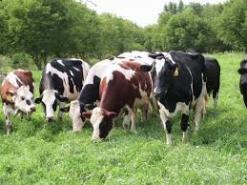 the establishment of an action plan that evaluates the potential of its dairy suppliers where the following market failures exist: i) low productivity and unstable supply of high-quality milk; ii) environmental impacts of dairy production, and iii) limited access to finance hindering adoption of climate-smart-technologies and practices. Within the Clients supply chain, IFC completed assessments for 6 cooperative suppliers related to productivity and food safety practices as well as a diagnostic on managerial/financial skills. The findings have served as a base to structure a four-year project.
 Plan on Climate Change Adaptation and Resilience.
 Bank, I was fluent in ASCII, developing systems and applications to make it easier to get things done.
 Warning Systems (CREWS) initiative and through the CREWS initiative provides complementary technical assistance to the national hydrological and meteorological services of Mali and Niger in capacity building and institutional strengthening for national weather, water and climate services, early warning system. The World Bank is looking for a qualified consulting firm (incl. universities or similar institutions) to deliver technical assistance with this regard.
 intelligence about the news you peruse, social media activity, and shopping preferences. They choose the ads you passively consume on your newsfeed and throughout your social media accounts, your internet searches, and even the music you hear, creating an incrementally increasingly customized version of reality specifically for you. Your days are subtly influenced by marketers, behavioral scientists, and mathematicians armed with cloud supercomputers. All of this is done in the name of maximizing profit to influence what you’re thinking, buying, and whom you will be electing…




You must be logged in to post a comment.