
Deadline: 05-Feb-2019 at 11:59:59 PM (Eastern Time – Washington D.C.) 
The PPIAF-financed activity provides technical assistance and capacity building to the Government to successfully implement these priority actions. In this context, the World Bank is seeking a Technical Advisor to support Government in strategic and operational decisions related to the scale up of distributed renewable energy in Haiti, in particular through developing public-private partnerships (PPP) options for retrofitting of existing utility/municipal mini grids, and building incentives for investments in new mini grids. This will be done through the provision of capacity building, facilitation of lessons learned from similar country contexts and other similar technical advice.
![medical-appointment-doctor-healthcare-clinic-health-hospital-medicine[7]](https://nl4worldbank.org/wp-content/uploads/2015/09/medical-appointment-doctor-healthcare-clinic-health-hospital-medicine7.jpg?w=301&h=201)
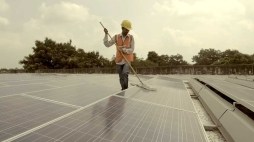 in one of India’s most remote tribal areas—a place so isolated that it’s not just off the power grid, it’s also absent from most maps. She and her community, the Asur tribe, are based in the eastern state of Jharkhand. Nearly half of the people in this isolated territory lack access to electricity—the highest percentage of any state in India.
 you can enjoy an Impossible Burger (meat industry disrupted) delivered by Caviar (food delivery disrupted) to your AirBnB (hotel industry disrupted) while you’re on FaceTime (telecommunication industry disrupted) urging your teenager to get back to lessons on Khan Academy (education industry disrupted). And all the while, you’re leaving a trail of digital data points.





You must be logged in to post a comment.