eConsultant2: 2030 Water Resources Group: Knowledge Exchange – South Africa

In addition to knowledge-sharing through analytical work and case studies, 2030 WRG leverages its growing network of country partners to foster in-person exchange of knowledge and ideas. In the past, this has been achieved through dedicated 2030 WRG partner days at major events such as World Water Week. Later this year, we plan to expand this via an exchange to South Africa. The intention of this event is to enhance the sharing of knowledge and building of capacity around specific thematic topics. The purpose of selecting South Africa is to learn from the countrys efforts to address municipal water losses and mine-water management, topics which come up across a number of 2030 WRG country partnerships.

See full tender here: #1100305 2030 Water Resources Group – Knowledge Exchange – South Africa

Specific objectives of the exchange are to:
Continue reading

eConsultant2: Vietnam Technical Support Flood Risk and Water Management Project

The World Bank is looking for a consulting firm to provide guidance to the clients project preparation consultant and review the outputs generated by the clients consultant in the following aspects:

  1. hydrodynamic modeling of the Phan River Basin built by the consultant already engaged by the client;
  2. feasibility study of the project, especially the sections related to alternative analysis, hydraulic structures, pump station layout and selection of pumps, economic analysis;
  3. consistence among the feasibility study report, environmental impact assessment report, and resettlement action plan, as well as other project documents that may be reviewed.

See full tender here: #1189860 Vietnam Technical Support Flood Risk and Water Management Project

Continue reading

Sesame Street at the World Bank – Sanitation & Hygiene

A week ago, on June 17, Sesame Street’s Raya and Count von Count were at the World Bank to talk to policy makers and children alike about the need for toilets, good sanitation, proper hygiene and how children can play a vital role in the behavioral change so desperately needed to make an impact.

Continue reading

Public procurement in the context of natural disasters

Original blog published by Felipe Goya on the World Bank website.

Nepal is coping with the consequences of a disastrous earthquake. During the next months the government will be under a lot of pressure to respond quickly to the needs of the population.

Public procurement units across the Volunteers unload relief materials in Nepalcountry will also feel this pressure. They will be deciding over the purchase of goods and services with taxpayer money. On the one hand, the purchases are urgently needed. On the other, there is a risk that taxpayer money can be wasted if decisions are taken too hastily.
One instrument that can be helpful in this kind of situation is a framework agreement. This should be part of any country’s Disaster Risk Management plan. Its aim is to have a procurement system ready that responds quickly to an emergency. But this quick response should not increase risks beyond what policymakers have defined as acceptable. Special procurement procedures for emergencies should be part of disaster management systems and should especially include tailored framework agreements.

Specific considerations:

  • Delivery capacity
  • Price speculation

Read the full article at http://blogs.worldbank.org/endpovertyinsouthasia/shaping-procurement-plan-emergencies?CID=EXT_TWBN_D_EXT.


Interns Netherlands embassy visit the WBG

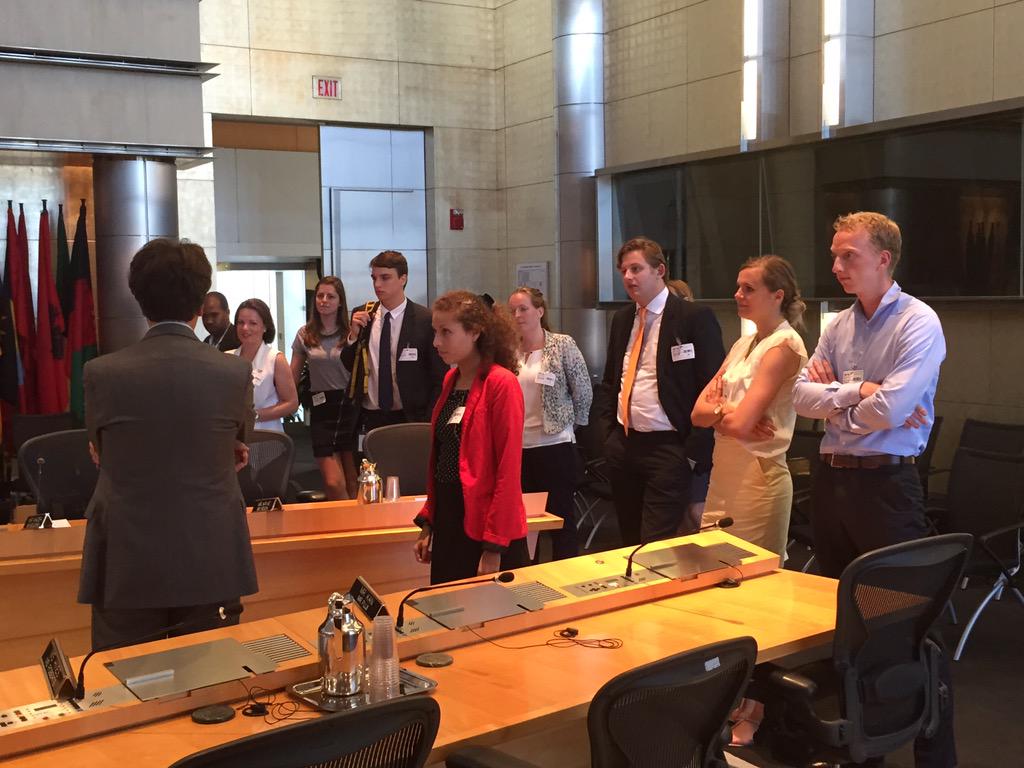
On Tuesday, June 16, the interns and trainees of the Netherlands embassy in Washington, DC visited the World Bank Group. The nine Masters-degree students, with interests ranging from security to communications, and agriculture to legal affairs, met with the Dutch Executive Director Mr Frank Heemskerk. The ED discussed his work – which he explains as 1/3 Board work, 1/3 outreach to his constituency countries (13 in total), and 1/3 outreach to the private sector – and challenged the students to come with ideas to better communicate the work of the World Bank to the Dutch private sector, parliament, academia, NGOs and the general population: “So much is being achieved by the World Bank, and so little of it is seen, recognized and acknowledged by the people.”

Embedded image permalink

Continue reading

World Bank project pipeline for major sectors

Curious about future World Bank projects in your field of expertise? Interested in knowing how much will be invested by the World Bank in a particular country? Want to know the pipeline of projects, with information on the project amount, the main sectors and themes, and the link to the project website?

Search no more! We have collated the information regarding pipeline projects for the main sectors. Simply click on the sector below. Please note that projects may appear in multiple lists as projects may address issues in multiple sectors.

The information is currect per June 22, 2015. Not all projects may ultimately be approved by the Board of Directors.

Pipeline Agriculture (total pipeline: $6.794 billion)

Pipeline Energy (total pipeline: $9.744 billion)

Pipeline Health (total pipeline: $7.266 billion)

Pipeline Transport (total pipeline: $28.833 billion)

Pipeline Water (total pipeline: $9.208 billion)

Where Does the World Stand in Reaching Sustainable Energy Objectives?

progress on sust energy


STORY HIGHLIGHTS
  • Moving in the right direction, but far from reaching universal access to modern energy, doubling energy efficiency and doubling share of renewable energy in global energy mix;
  • Annual global investments must triple to $1.25 trillion to reach sustainable energy goals;
  • Right policies and access to latest technology are important to spur country-level action.

Continue reading

Sahel Malaria and Neglected Tropical Diseases

On June 11, the Board of Directors of the World Bank approved the Sahel Malaria and Neglected Tropical Diseases, involving a total of $121 million. These funds are split between Burkina Faso ($37 million), Mali ($37 million), Niger ($37 million), and ECOWAS ($10 million).

The goal of the project is to increase access to and use of harmonized community-level services for the prevention and treatment of malaria and selected neglected tropical diseases in targeted cross-borders areas in participating countries in the Sahel region.

These goals are to be achieved through the following three components:

Continue reading

Lao PDR Health Governance and Nutrition Development Project

Lao PDR has made steady and significant progress on key population health outcomes over the past few decades. Life expectancy has increased to almost 68 years in 2012, up from 49 years in 1980. The mortality rate for children under the age of five has also declined significantly over the same period: from 201 per 1,000 live births in 1980 to 71 in 2013. Notable progress has been made in improving maternal health, with maternal mortality decreasing from 1,600 per 100,000 live births in 1990 to 220 in 2013. The total fertility rate has also declined steadily from an estimated 6.0 births per woman in 1990 to 3.2 in 2013.
The gains in nutrition have been smaller. In Lao PDR, 44 per cent of children under five years of age (around 417,000) are stunted (low height for age), 27 per cent are underweight and 6 per cent are wasted (low weight for height).
Given this background, on Tuesday June 23, the World Bank Board of Directors is considering the Lao PDR Health Governance and Nutrition Development Project. The project involves a total World Bank grant and credit of $26.4 million.

Continue reading

Vietnam Sustainable Agriculture Transformation Project

The World Bank Board of Directors will discuss the Sustainable Agriculture Transformation Project in Vietnam on Tuesday, June 30. Upon approval, this project will receive a total of $238 million from the World Bank for a grand total of $314 million.

The Project Development Outcome is to improve farming practices and value chains in the targeted project areas, and promote institutional strengthening of relevant public agencies in effective support to implementation of the Agricultural Restructuring Plan. The project consists of three different components:

Continue reading