
Deadline: 31-Aug-2017 at 11:59:59 PM (Eastern Time – Washington D.C.)
The initial scope and purpose of the multi-stakeholder platform for knowledge sharing ![medical-appointment-doctor-healthcare-clinic-health-hospital-medicine[7]](https://nl4worldbank.org/wp-content/uploads/2015/09/medical-appointment-doctor-healthcare-clinic-health-hospital-medicine7.jpg?w=270&h=180) on access solutions for innovative medicines (henceforth, the Platform) will be to develop and share knowledge and tools for smarter decision making on access strategies for patented medicines for NCDs, through a collaborative approach. The Platform will leverage the pharmaceutical industry’s capacity for developing innovative access solutions and the World Banks role as a strategic long term partner for developing countries and its convening power, to create a reference policy and implementation framework and decision-making tools for maximizing reach of new treatments for populations that typically would not have access to patented medicines, ultimately driving uptake of voluntary access strategies in developing countries.
on access solutions for innovative medicines (henceforth, the Platform) will be to develop and share knowledge and tools for smarter decision making on access strategies for patented medicines for NCDs, through a collaborative approach. The Platform will leverage the pharmaceutical industry’s capacity for developing innovative access solutions and the World Banks role as a strategic long term partner for developing countries and its convening power, to create a reference policy and implementation framework and decision-making tools for maximizing reach of new treatments for populations that typically would not have access to patented medicines, ultimately driving uptake of voluntary access strategies in developing countries.
 fund to support countries to prepare and implement climate change policies in order to scale-up mitigation efforts. The PMR consists of 13 Contributing Participants, who provide financial support to the PMR Trust Fund and share their carbon pricing experience, and 19 Implementing Country Participants, who receive funding and technical support. In Thailand, the PMR supports the design of an Energy Performance Certificate scheme and prepares infrastructure such as a database and MRV system. PMR activities also include a study on the legal framework for an ETS and preparation of the Low Carbon City Program and Fund.
 contribute to improve transport connectivity and sustainability. Whilst local impacts are identified and addressed in site specific ESIA, the lake ecosystem is large, complex, multi-dimensional and dynamic. Understanding the social and environmental issues thus requires comprehensive observation and management at the catchment scale in a holistic manner. Given the wider scope of the interventions on the Lake Victoria basin (both at the ports, but also with the lake itself), with knock-on or cumulative effects on the lakes overall catchment area, a strategic planning framework for the development and protection of the lake, its dependents, and associated infrastructure is critically important. This assignment is designed to support the LVBC do that.
 Uganda, financed by IFC and the Global Agriculture and Food Security Program.
 quantitative tools to support decision-making in financial disaster risk management. The tools will draw on current international best practice in user interface design, transparency and quality in coding, and probabilistic financial and actuarial analysis.
 out to be not only technically challenging, but also politically risky. As the benefits of carbon pricing policies are not always self-evident, a strategic communication plan for awareness raising and risk management both within the government, among businesses and for the general public can be critical to ensure the successful adoption and implementation of such policies.
 operator (MNO) in Cameroon to expand their existing customer segment to new clients and markets. IFC is supporting the MNOs plans to implement an expansion and financial inclusion strategy with research to identify opportunities in the market that will help the MNO develop the best products to service its customer base. IFC is looking for a market research firm (Consultants) for this research assignment on mobile money and access to finance in Cameroon. Consultants will be hired to conduct desk research, data collection and analysis on customer needs and preferences for financial services and the extent to which these needs may be met through mobile money. The market research will also involve a competitor analysis, agent profiling, customer segmentation, and product assessment. The goal is to identify and quantify the potential customer base in the Cameroonian market.
 and environmentally sustainable dredging levels for key ports and shipping routes on Lake Victoria. Improving transportation on Lake Victoria is key to strengthening the Tanzanian Central Corridor, and is a priority for the Governments of Tanzania, Uganda and Kenya. The lake plays a pivotal role in connecting land-locked countries (DRC, Uganda, Rwanda and Burundi) via its shipping and railway network and is a key part of the intermodal supply chains along the Northern and Central corridor linking to Mombasa and Dar es Salaam ports. However, in recent years port infrastructure and consequently maritime operations on Lake Victoria have declined significantly.
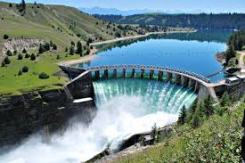 regarding a sector-wide institutional and policy framework for the Government of Papua New Guinea to enable long-term sharing of part of the economic benefits of hydropower projects with the communities that are adversely affected by and/or are hosting such projects.
 the following activities: (i) Develop and deliver a comprehensive capacity building program that targets the entire vertical chain of stakeholders; (ii) provide technical assistance to FMET in the Federation, MPPCE in RS, Brcko District, MOFTER at the BiH level; (iii) organize study tours to well operated landfills, waste collection companies, MRF in the EU and BiH; (iv) facilitate FIDIC trainings at a specialized training facility.
 Netherlands for the World Bank
You must be logged in to post a comment.