Handbook for Gender-Inclusive Urban Planning and Design

STORY HIGHLIGHTS handbook

  • Urban planning and design shape the environment around us – and that environment, in turn, shapes how we live, work, play, move, and rest.
  • Cities have historically been planned and designed for men and by men. They tend to reflect traditional gender roles and gendered division of labor. In general, cities work better for heterosexual, able-bodied, cisgender men than they do for women, girls, sexual and gender minorities, and people with disabilities.
  • The Handbook for Gender-Inclusive Urban Planning and Design seeks to respond to these urgent questions: how might we design and plan cities that work well for everyone? What would such a city look like, and how would we go about creating it?

Continue reading

eC2: Gender capacity building for National Trade Facilitation Committees in West Africa

Deadline: 24-Feb-2020 at 11:59:59 PM (Eastern Time – Washington D.C.)

The consulting firm will be recruited to conduct the needs assessment of National Tradewomen-finance-blogpost Facilitation Committees (NTFCs) in 15 West African countries, design training materials, and roll out the training. The assignment is in two phases. The winner of the phase 1 contract will be awarded the phase 2 upon successful completion of the phase 1.

Continue reading

eC2: Gender-disaggregated Impacts of Street Lighting in Brazil

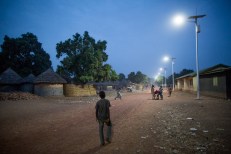
Deadline: 30-Jan-2020 at 11:59:59 PM (Eastern Time – Washington D.C.) Solar-street-lights-in-Guinea1

The objective of this activity is to carry out a qualitative baseline assessment of the effects of street lighting (or the lack of it) on mens and womens perceptions of safety and on mobility, economic activity, and educational and professional opportunities. The analysis will also include a comprehensive qualitative assessment of the current level of street lighting (pole presence, energy source, technology, brightness, availability, reliability, etc.), and a review of the literature on the impacts of street lighting on crime and violence.

Continue reading

eC2: Closing Gaps in Womens Employment in the Africa Energy Sector Terms of Reference | AFR Womens Employment Consultancy

Deadline: 13-Jan-2020 at 11:59:59 PM (Eastern Time – Washington D.C.) rw_gender_ag_blog

There will be key criteria for the development of the deliverables:
1. Gender Gaps: A focus on gender equality priorities across the categories policy, leadership, employment, is expected.
2. Client Focus: The focus will be on providing relevant content and recommendations( strategies/remedial actions, activities and programmes) to the WB and KenGen which will be focused in the energy sector and other sectors such as education etc.
3. Partnerships: The consultant will be expected to map out feasible partnerships with e.g. like minded companies and institutions professional associations, universities and NGOs as part of the outputs delivered.
4. Budget and Sustainability: Key will be mapping costs and timelines of the interventions proposed in the gender options analysis. This is essential for sustainability.
5. Key Performance Indicators. What will be the success factors
6. Monitoring and Evaluation Framework. Define how to measure success

Continue reading

eC2: Market Assessment: Concept Development for PNG Technical Training Center for Women

Deadline: 17-Jun-2019 at 11:59:59 PM (Eastern Time – Washington D.C.)

To address both the skills gap and the gender gap, IFC, in partnership with construction

20150224-senegal-farhat-0660

company Rhodes PNG, is exploring the possibility of establishing a technical training college for women in PNG. Rhodes PNG has identified a site located at their Napa Napa campus, outside of Port Moresby, and have indicated they are interested in donating that site for use as a womens technical training college. IFC is now at the stage of conducting a detailed market assessment which will feed into the development of a detailed business plan for the proposed training college (Womens TVET project).

The objective of this assignment is to conduct a landscape analysis and market study to assess the feasibility of the proposed Womens TVET Project. It will include an assessment of the industry demand for skills and commitment toward supporting improved supply of skilled workers; , the current training supply in PNG; as well as the challenges and opportunities for women to access more and better training, and ultimately to access jobs. This assignment also aims to raise awareness of the project and obtain initial buy-in from industry.

Outputs under this assignment will be use to canvass potential investors and inform a go/ no go decision prior to developing a full business plan

Continue reading

eC2: Development of Gender Strategies and Action Plans for ECOWAS, ECCAS and SADC under the Building Resilience to Natural Hazards in Sub-Saharan African Regions, Countries and Communities Program

Deadline: 24-Dec-2018 at 11:59:59 PM (Eastern Time – Washington D.C.) vn-communitybased-disasterrisk-780x439

The Bank is seeking the services of a firm to carry out activities for the inclusive preparation of Gender Strategy and Action Plans (GSAPs) for the following Regional Economic Communities (RECs): The Economic Community of West African States (ECOWAS); The Economic Community for Central African States (ECCAS); and The Southern African Development Community (SADC). They have expressed the need for support for developing comprehensive and effective guidelines for mainstreaming gender considerations into disaster risk management policies, plans of action and programs. Tasks include preparation of individual Inception Reports for each REC; gender analysis and stakeholder consultations; REC-level discussions and feedback events; and finalization of customized Gender Strategies and Action Plans in Disaster Risk Management for each REC.

Continue reading

Tackling gender inequality through investments in health equity

Still today, in almost all societies around the world, women are less well-off than men.democratic-republic-congo_final_edit_0029.jpg Women are still paid less than men; they are less represented in business, politics and decision-making. Their life chances remain overwhelmingly less promising than those of men.

This inequality hurts us all. The world would be 20% better off if women were paid the same as men. Delaying early marriage in the developing world by just a few years would add more than $500 billion to annual global economic output by 2030.

Continue reading

Investing in People to Build Human Capital

Scientific and technological advances are transforming lives: they are even helping investing-in-people2poorer countries close the gap with rich countries in life expectancy. But, poorer countries still face tremendous challenges, as almost a quarter of children under five are malnourished, and 60 percent of primary school students are failing to achieve even a rudimentary education. In fact, more than 260 million children and youth in poorer countries are receiving no education at all.

There is a moral case to be made, of course, for investing in the health and education of all people.  But there is an economic one as well: to be ready to compete and thrive in a rapidly changing environment. “Human capital” – the potential of individuals – is going to be the most important long-term investment any country can make for its people’s future prosperity and quality of life.

Continue reading

Call for Proposals for Innovation in Addressing Gender-Based Violence

The World Bank Group and the Sexual Violence Research Initiative (SVRI) announced a new open call for awards recognizing promising innovations aimed at preventing and responding to gender-based violence. Applications for the Development Marketplace for Innovation in Addressing Gender-Based Violence must be received online by September 5, 2018.

Continue reading

Are men the new weaker sex? The rise of the reverse gender gap in education

capture1_34It is probably fair to say that the World Bank’s latest report on intergenerational mobility – Fair Progress? Economic Mobility across Generations around the World – is the first-ever attempt to paint a truly global picture of how achievement – or the lack thereof – is transmitted across generations. Though there are results for income mobility for a subset of countries, most of the analysis focuses on educational attainment across 148 economies, representing over 95% of the world’s population.

Continue reading