
On International Women’s Day 2024, we celebrate women’s achievements, yet recognize the urgent need to accelerate gender equality and equal opportunity for all. Too many women are still held back, and the cost of inaction is high.
Tag Archives: Gender Equality
Unleashing the economic power of women
By David Malpass, President World Bank Group
March 3, 2020
Girls are attending school in greater numbers than ever before, and women are  increasingly entering the labor force and leading businesses. Although we should celebrate this progress, much work remains in order for a girl born today to have the same opportunities as a boy.
Research from the World Bank and others shows that Moreover, it is the right thing to do. Fortunately, more countries recognize that economies can reach their full potential only with the full participation of both women and men.
The World Bank Group is supporting countries in achieving this goal in important areas, including the removal of discriminatory laws, investment to close gender gaps, broadening access to finance, and stepping up efforts to prevent gender-based violence.
Legislating gender equality in the workplace through pay transparency
Author: Kathleen Beegle ;Lead Economist with the World Bank Gender Group
A number of recent posts on Development Impact have focused on gaps in labor market outcomes for men and women. This includes some posts in the job market series in late 2019 and, in 2020, a look at the ‘dismal statistic’ on female-to-male labor force participation rates in India and Pakistan, changing the way women think about themselves and what they can do as a means to closing gaps, and a summary of the World Bank’s Research Group recruitment. The latter was underpinned by goal setting in the shortlisting process with respect to between men and women applicants. Fun fact: such quota setting with respect to the composition of candidates to interview is known in the U.S. as the Rooney Rule — established by the U.S. National Football League in 2003 and named after the former owner of the Pittsburgh Steelers (and intended not in regards to women hires but with regards to ethnic-minority candidates in coaching and senior league jobs, though it is now used more generally in the private sector).
eC2: Gender capacity building for National Trade Facilitation Committees in West Africa
Deadline: 24-Feb-2020 at 11:59:59 PM (Eastern Time – Washington D.C.)
The consulting firm will be recruited to conduct the needs assessment of National Trade Facilitation Committees (NTFCs) in 15 West African countries, design training materials, and roll out the training. The assignment is in two phases. The winner of the phase 1 contract will be awarded the phase 2 upon successful completion of the phase 1.
eC2: TOOLKIT FOR GENDER EQUALITY IN THE OFF-GRID SOLAR SECTOR
Deadline: 23-Dec-2019 at 11:59:59 PM (Eastern Time – Washington D.C.) 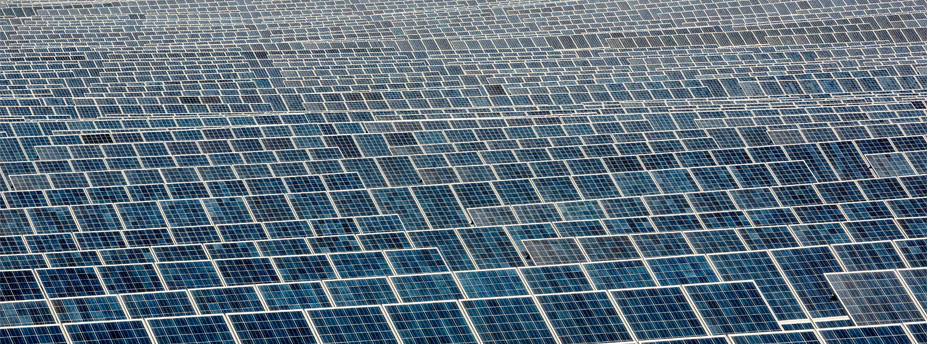
ESMAP seeks to hire the services of a firm to develop an interactive and dynamic Gender Equality and Off-grid Solar Toolkit, which will (i) provide operational support to WBG task teams during engagement with client governments and the development of WB lending operations in the off-grid energy sector, and deepen the focus on (ii) off-grid and the womens segment (both consumers and enterprises), and (iii) enhancing productive uses of energy (PUE) with a focus on female farmers and female businesses. Target audience for the Toolkit are WB Task Teams, development institutions, financial intermediaries, MFIs and the private sector. This research will aim to reshape the design of off-grid solar energy projects to enhance gender equality by developing new tools that teams can easily use in early conversations with client counterparts in implementation and supervision.
eC2: Market Assessment: Concept Development for PNG Technical Training Center for Women
Deadline: 17-Jun-2019 at 11:59:59 PM (Eastern Time – Washington D.C.)
To address both the skills gap and the gender gap, IFC, in partnership with construction

company Rhodes PNG, is exploring the possibility of establishing a technical training college for women in PNG. Rhodes PNG has identified a site located at their Napa Napa campus, outside of Port Moresby, and have indicated they are interested in donating that site for use as a womens technical training college. IFC is now at the stage of conducting a detailed market assessment which will feed into the development of a detailed business plan for the proposed training college (Womens TVET project).
The objective of this assignment is to conduct a landscape analysis and market study to assess the feasibility of the proposed Womens TVET Project. It will include an assessment of the industry demand for skills and commitment toward supporting improved supply of skilled workers; , the current training supply in PNG; as well as the challenges and opportunities for women to access more and better training, and ultimately to access jobs. This assignment also aims to raise awareness of the project and obtain initial buy-in from industry.
Outputs under this assignment will be use to canvass potential investors and inform a go/ no go decision prior to developing a full business plan
Gender equality: Unleashing the real wealth of nations
Last week, we launched the Women, Business, and the Law report, which found that  despite the considerable progress that many countries have made in improving women’s legal rights over the last decade, women are still only accorded 75 percent of the legal rights that men, on average, are given. As a result, they are less able to get jobs, start businesses and make economic decisions, with economic consequences that reverberate beyond their families and communities.
Why gender equality in doing business makes good economic sense
Article published on http://www.worldbank.org on November 17, 2016.
Women today represent about 50 percent of the world’s population and, for the past two  decades, about 50 percent of the labor force. Yet there are stark differences in the outcomes they achieve: Women are only half as likely as men to have a full-time wage-earning job. The women who do have paid jobs earn as much as one-third less than men. Fewer women than men are involved in trade or own registered companies. And women are more likely to work in low-productivity activities or informal employment.
 Netherlands for the World Bank
You must be logged in to post a comment.