The newsletter ‘Development Works‘ opens with the success story of Dutch company Elsevier.
Over the last 12 years Elsevier has been working together with the World Bank (and other multilateral organizations) to support activities in emerging economies to enhance higher education and research, develop better science and technology, and improve local competitiveness.
In the article Elsevier highlights their most important successes with the World Bank of the last few years and their motivation to stay ahead of the expected challenges of Industry 4.0, as well as their commitment to the Sustainable Development Goals.
Further more an introduction of the new President of the World Bank David Malpass was published.
And if you have missed the IMF/World Bank Group Spring Meetings or are interested in what was said during the key events in that week, you can find the most important events of the Meetings on World Bank Live.
To support the sustainable extraction and processing of minerals and metals that are used in clean energy technologies, such as wind, solar, and batteries for energy storage the World Bank created a facility on climate-smart mining. It will focus on helping resource-rich developing countries benefit from the increasing demand for minerals and metals, while keeping the environment and climate footprint as minimal as possible.
The report on the progress of SDG7 Energy, as well as the latest tenders, events and most popular blogs can also be found in the newsletter.
Those subscribed to the newsletter automatically received it in their inbox, if not, you can find the latest edition here. All editions of the NL4WorldBank newsletter are published on our website. If you would like to automatically receive the next newsletter when it is published, please subscribe here.


 he (the first female engineer had not graduated yet) would not recognize much of the technology we have today. Personal computers, cell phones, cars, planes, and antibiotics would probably be unfathomable to him. But he would definitely recognize our current piped water and sanitation (WSS) infrastructure, as it looks and operates almost exactly the same as it did 150 years ago. Certainly, there have been significant improvements in the sector, especially in water and wastewater treatment, but the principles on which the piped WSS technology is based have not seen any fundamental changes since the 1860s, when it was (re)introduced on a large scale.
 obesity and the quest for better public health. Interest in discouraging consumption through higher taxes is growing as more jurisdictions impose them and as we learn more from their experiences. Sugar-sweetened beverage taxes are one of three taxes for health highlighted in a recently published report by the
  quantity and quality of livestock commodities produced in the county by the key value chain actors. More specifically, the LIFS project focuses on improved productivity across the red meat value chain from livestock production to slaughter, processing and access to markets.
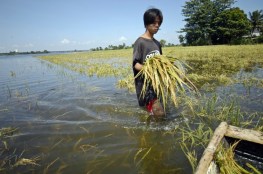 annual meetings when our group, visitors from more than 189 countries along with Indonesians on the island and neighboring communities were acutely woken up at dawn with magnitude 6.4 quake that struck off the coast. Early reports by the National Disaster Mitigation Agency indicated extensive damage to infrastructure and loss of lives in the span of a few minutes. The Indonesian response that followed revealed the difference disaster risk finance can bring to families, economies and societies at large. I was humbled by what I experienced and what we can contribute -as an institution together with our partners- to manage these acute disasters more prudently, effectively and humanely.
 Improvement Project (DPTIP) by i) assessing and improving institutional regulatory framework and client capacity to increase private sector participation in the public transportation sector in Dhaka; and ii) assessing and recommending specific PPP options and business-financial models for the operation of the feeders associated with the BRT line from Gazipur to Mohakhali, for the associated BRT infrastructure and for the operations of the city-wide bus service. The extent of PPP potential must be well assessed and structured based on client capacity, similar experiences in Bangladesh, the relative appetite of banks and investors in Bangladesh to invest in the transport sector (including through the exploration of financing options such as leasing), and the cost/access to finance for private operators and investors.
 achieving sustainable RMNCAH results by strengthening the health systems and support progress towards universal health coverage (UHC).
 headlines, just a decade after the global financial crisis of 2008-2009.
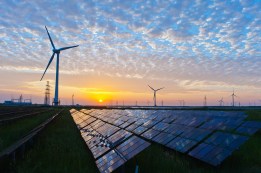 generation project at the Central de Abastos in Mexico City. This project will include the installation of solar panels and internal interconnection, as well as connection to the public network in common areas (existing ceilings and current roofless parking areas) with the objective of generating clean energy.
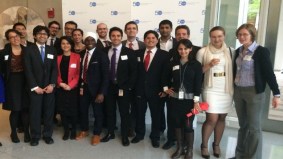 the Young Professionals Program are now open until June 30.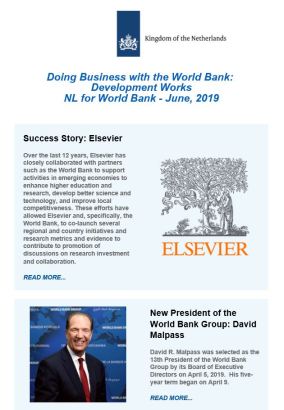


You must be logged in to post a comment.