eC2: Optimal Contribution of Natural Gas in the Indonesian Economy

energyDeadline: 03-Jul-2018 at 11:59:59 PM (Eastern Time – Washington D.C.)

The World Bank seeks the services of an internationally recognized consulting firm to conduct a study on the current and potential contribution of gas to the Indonesian economy as a basis for informing policy directions and specific reforms across a range of industrial, power, transportation and household uses. The work will evaluate the gas value chain in each use of gas to identify the direct and indirect economic benefits and co-benefits of gas use (e.g. pollution abatement, lower carbon, security). It will identify barriers to the optimal use of gas and opportunities to overcome these through policy actions and public investments, including inter alia gas price, allocation and fiscal regulations.

Continue reading

Achieving Financial Inclusion: Fintech, account usage, and innovation

Submitted by H.M. Queen Maxima of The Netherlands on June 14, 2018

For almost a decade, the global community and national governments have made concerted efforts to expand financial inclusion—creating a financial system that works for all and opens the doors to greater stability and equitable progress.

madagascar_0This has been a demanding challenge. At the start of our engagement on financial access back in 2013, we said that having a real target with an end date would keep us focused and give us a benchmark against which we could measure progress.

Last month we learned that we have made strong and consistent progress—a real cause for celebration. According to the Global Findex database, more than half a billion people gained a financial transaction account over the last three years, thanks to a combination of technology, private investment, policy reforms, and support from the global community. Since 2011, the share of adults with formal accounts has risen from 51 percent to 69 percent, and financial access has expanded to include an additional 1.2 billion people.

Continue reading

eC2: Energy Access Household Survey in Madagascar

esmapDeadline: 14-Jun-2018 at 11:59:59 PM (Eastern Time – Washington D.C.)

The World Bank-ESMAP team is launching the first Global Energy Access Household Surveys to set a baseline to track progress towards Sustainable Energy for All (SE4All) goal and Sustainable Development Goal (SDG) number 7 on access to affordable, reliable and sustainable modern energy by 2030. A reputed local firm with extensive experience in household surveys is sought to conduct the baseline survey on energy access using the multi-tier framework approach to track progress towards SDG7 . The survey will be nationally representative and administered to both urban and rural localities. The firm will work with the World Bank-ESMAP to pre-test, finalize and implement the survey. Data collection should be carefully monitored to ensure high quality information.

Continue reading

eC2: Digital Skills for Ghana

indexDeadline: 12-Jun-2018 at 11:59:59 PM (Eastern Time – Washington D.C.)
Develop a publication targeting CEOs of African tertiary education institutions, Executives in the Technology and other relevant sectors and African policy makers. The effort will have a specific focus on Ghana. The objective of the publication is to showcase best-in-class private sector-led practices promoting Digital Skills, advancing the understanding of what are the relevant digital skills that need to be promoted, and how to best integrate the delivery of digital skills into the curriculum through specific, innovative offerings. The focus will be on skills needed at the post-secondary level, including upskilling / reskilling needs for working adults, with an emphasis on lifelong learning. The digital economy in Ghana, and more broadly across Africa, needs a digitally skilled workforce that masters basic functional digital skills at minimum with some acquiring high level skills like coding and software development capabilities.

Continue reading

eC2: Mapping and prioritization of hydropower resources in the Democratic Republic of Congo

HYDRODeadline: 10-Jun-2018 at 11:59:59 PM (Eastern Time – Washington D.C.)

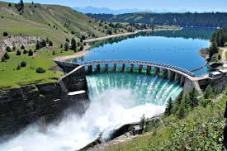
The objective of this activity is to inform the Government of DRC (GoDRC)s plan to develop its vast and untapped hydropower resources. The activity will (i) assess and map geospatially DRCs hydropower resources; (ii) rank small, medium, and large green field hydropower sites based on technical and economic considerations; (iii) provide narrowed/priority lists of sites by category, with a focus on mid-size sites (10 100 MW), and based on multi-criteria analysis jointly identified with the Government and the World Bank; (iv) provide in-country advice and training to enable stakeholders to participate in the production, maintenance and future enrichment of the database and related information created and (v) offer practical advice for implementation of priority site development. The priority lists and implementation advice will form practical guidance based on which the GoDRC will launch prefeasibility or feasibility studies of selected medium size hydropower sites funded separately under IDA resources.
Continue reading

eC2: Communication Consultant – Banjul Port PPP

public-Private-PartnershipDeadline: 21-May-2018 at 11:59:59 PM (Eastern Time – Washington D.C.)

The Government of the Gambia (GoTG) wishes to implement a public private partnership (PPP) to rehabilitate, operate and develop the Port of Banjul. Established in 1972, the Port is managed by the Gambia Port Authority (GPA) and is currently operating as service port. It accounts for almost 90% of the countrys trade and serves as a secondary regional hub, with volumes going to the hinterland (Southern Senegal, Guinea Bissau, Guinea and Western Mali). Throughput has grown substantially in the past decade, with a compounded annual growth rate of 7.3%. between 2007 and 2017 and 105,000 TEUs in 2017.

Continue reading

eC2: Increasing Rail Freight Share in India

indexDeadline: 24-May-2018 at 11:59:59 PM (Eastern Time – Washington D.C.)

Indian Railways has many freight marketing policies which are designed to increase rail freight share, however, it has not been able to meet its stated objective. A few of the strategies include: 1)Development of Private Freight Terminals by private sector to provide intermodal transport connectivity and serve as a marketing interface in between IR and intended customers 2)Rating mechanisms which leans on what the cargo can bear and favours long lead movements 3) Private Sidings and Own your wagon schemes which induce private equity, ownership and increase in infrastructure to assist movement of cargo on rail.

Continue reading

Closing the gap between policy and practice on women’s land rights

Let’s Talk Development. By: Chris Jochnick, World Bank, March 19, 2018

Momentum is building behind a land rights revolution. Last year, just prior to the World Bank’s Annual Land and Poverty Conference, I wrote about the many factors pushing land to the top of the global agenda.  To maintain this momentum we must pay greater attention to gender and women’s land rights.

Land is more than an important asset in the fight against global poverty and gender inequality. For most people living in poverty, it is an essential, indispensable means to leading a healthy, safe, and productive life. Despite this, hundreds of millions of people who depend on land around the world – especially women – lack access or secure tenure rights to it.

Continue reading

eC2: ANALYSIS OF CARBON TAX OPTIONS AND CARBON TAX INTERACTION

Deadline: 05-Apr-2018 at 11:59:59 PM (Eastern Time – Washington D.C.)

Among carbon pricing policy considerations for Ukraine is the application of a carbon tax to complement the ETS, either through the development of a new taxation system or by improving the existing one with or without changing its current sectoral coverage. In order to assess the impact of carbon tax as a pricing mechanism on the Ukrainian economy, a macroeconomic model will be developed. The study should take into consideration the interaction between carbon taxation and ETS and be coordinated with ongoing technical work in Ukraine with respect to developing an installation-level GHG emissions monitoring, reporting and verification (MRV) system (also supported by the PMR project).

Continue reading

eC2: Efficiency of county health systems in Kenya

maternal-and-child-healthcare-shofco-dec18-4489Deadline: 15-Mar-2018 at 11:59:59 PM (Eastern Time – Washington D.C.)

The purpose of this consultancy is to conduct an in-depth analysis of county health systems to better understand the causes of (in) efficiencies in four selected case study counties and identify potential mechanisms to improve performance. The study is expected to take place between March to August 2018.

Continue reading