Deadline: 21-Jan-2019 at 11:59:59 PM (Eastern Time – Washington D.C.)
The World Bank will employ the services of a specialized firm to conduct a diagnostic which shall help inform the design of interventions to support women-led SMEs (WSMEs) in Nigeria in accessing finance and markets. Specifically, this assignment includes:
i) Mapping: Gather evidence on target beneficiaries (women entrepreneurs with high growth potential) to develop a diagnostic tool and provide the basis for design of tailored capacity building. This will include a creation of a taxonomy for various types of WSMEs, a targeted database of WSMEs and data collection (targeted survey, focus groups, etc.) to help understand WSMEs’ capacity building needs;
ii) Ecosystem Diagnostic: The ecosystem diagnostic will identify and understand the perspective of the various stakeholders affecting the ability of women entrepreneurs to start and grow a business (investors, customer base, competitors, business associations, business development service providers, government agencies, etc.). Focus groups and interviews will help understand the gap, market and institutional, between what is available and what is required for WSMEs to access finance and take advantage of market opportunities;
iii) Market assessment: Mapping of bank and non-bank providers, products, and regulatory barriers, including for Fintech adoption, to inform design of FinTech solutions/movable asset-based lending, and/or savings products tailored to WSMEs’ needs.
Continue reading →

 support developing countries’ efforts in mobilizing much-needed public domestic resources to achieve the Sustainable Development Goals, particularly in Africa and the Middle East.
 support to the National Food Safety Agency (ANSA), the Ministry of Economy and Infrastructure (MEI) and the Ministry of Agriculture, Regional Development and Environment (MARDE), in designing a Raw Milk Monitoring Program (RMMP) that is aligned to EU requirements. The task is a continuation of a previous engagement with ANSA on the development of an Action Plan for gaining EU market access for milk and dairy products, where the absence of the RMMP has been identified as an important barrier to access EU markets.
 through strengthened value chains and circular economy (CE) approaches, specifically among poor people and communities and achieve outcomes that promote poverty reduction, enhanced welfare and create new and expanded employment opportunities, eg green jobs.
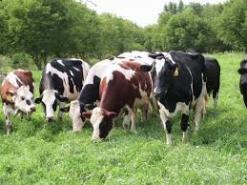 the establishment of an action plan that evaluates the potential of its dairy suppliers where the following market failures exist: i) low productivity and unstable supply of high-quality milk; ii) environmental impacts of dairy production, and iii) limited access to finance hindering adoption of climate-smart-technologies and practices. Within the Clients supply chain, IFC completed assessments for 6 cooperative suppliers related to productivity and food safety practices as well as a diagnostic on managerial/financial skills. The findings have served as a base to structure a four-year project.
 Warning Systems (CREWS) initiative and through the CREWS initiative provides complementary technical assistance to the national hydrological and meteorological services of Mali and Niger in capacity building and institutional strengthening for national weather, water and climate services, early warning system. The World Bank is looking for a qualified consulting firm (incl. universities or similar institutions) to deliver technical assistance with this regard.
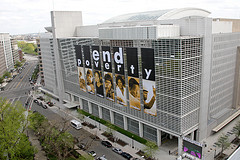 met January 9 under the Chairmanship of its Dean, Dr. Merza Hasan, to discuss the selection process for the next President of the World Bank Group, following the announcement of the current President, Jim Yong Kim, that he will be stepping down from his position on February 1.
 edge of the Chengdu Plain in Sichuan Province, China. The Deyang District Government is providing water and limited sanitation service. In order to address significant challenges of the local water environment and improve waters services for over 230,000 people, Jingyang District Bureau of Housing and Urban-Rural Development (the Client) is seeking to implement a comprehensive centralized water project which includes the operation, maintenance and rehabilitation of existing assets, and greenfield assets for sewage treatment, water supply, pipe networks, water source protection, and a cloud IT platform.
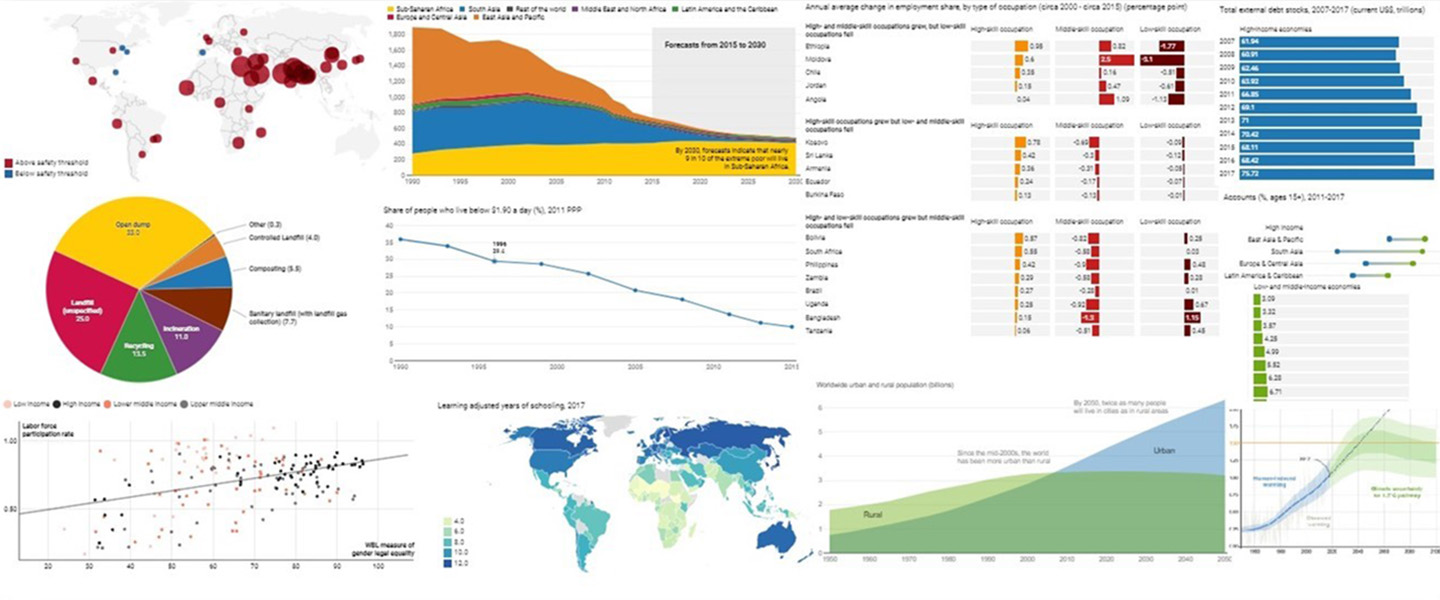 expected to become increasingly concentrated in one region. A record number of people have been forcibly displaced from their homes, and an influential new report confirms we’re running out of time to limit global warming. Yet, innovation and disruptive technologies are helping to bring clean energy to millions and connecting hundreds of millions of people to the financial system. These 14 facts tell a story about the challenges we face — and the actions needed to create a more inclusive, sustainable world.
 infrastructure in ASEAN, MPAC 2025 recommended the establishment of a rolling priority pipeline list of potential ASEAN infrastructure projects and sources of funds.

You must be logged in to post a comment.