
Article published on http://www.worldbank.org.
Most people agree that water is an extremely valuable resource—for farmers who depend  on it to grow crops, for factories that need it to cool machines and spin turbines and, of course for life itself. But . The very fact that water is so important to people, economies, and the environment means that it is tough to even agree on a common way of valuing it.
No less an economic mind than Adam Smith was stumped by this challenge. As he famously observed, “Nothing is more useful than water: but it will purchase scarcely anything. A diamond, on the contrary, has scarcely any use-value; but a very great quantity of other goods may frequently be had in exchange for it.”
 carried out with funding provided by a WB Technical Assistance Programme, in selected communities and municipalities in the Departments of Chuquisaca, Potosi, Cochabamba and Oruro. The baseline data will provide inputs for the Project design, including the implementation strategy in its water supply, energy and irrigation components; and the design of the community development and behavior change activities. The study will also set a baseline to monitor the project results and adjust its design and implementation if needed.
 may double in the coming two decades.
 examining Public Private Partnership (PPP) options for improving provision of water supply and sanitation services for the larger urban areas, as well as looking at the potential projects that have already been the subject of studies in Tanzania, both as set out below:
 financial) study on 4-6 urban Water Supply and Sanitation (WSS) utilities (EPS) that serve Perus intermediate cities. The study will address the key challenges the cities face concerning WSS service provision to ensure water underpins the development of the intermediate cities as the new growth poles. The work will propose reforms of the EPS management models and develop Business Plans for each EPS.
 support the site selection for eight sites, and implement an impact assessment to improve the pastoral and agro-pastoral communities’ access to, and management of, small-scale water sources and to enhance the capacity of the government to implement small-scale water interventions in targeted arid lands of Somaliland and Puntland.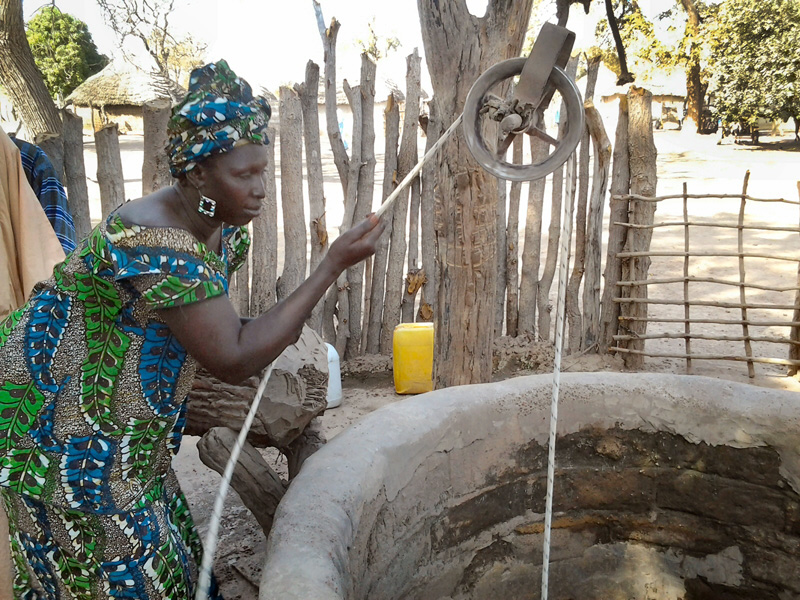


You must be logged in to post a comment.