eConsultant2: Assessment of Potential Public Private Partnerships

Deadline: 31-Dec-2015 at 11:59:59 PM (Eastern Time – Washington D.C.)

Preliminary assessment of potential infrastructure projects to develop aInfra in Ethiopia pipeline of feasible PPP projects in Ethiopia. The result of the assessment will serve to inform future government decisions on which projects to prioritize for further development as PPPs.

Continue reading

ENERGY EFFICIENCY REVIEW OF DAR ES SALAAM CITY WATER AND SEWERAGE SERVICES

Deadline:  23-Nov-2015 at 11:59:59 PM (Eastern Time – Washingtlight-bulb-297489_640on D.C.)

The Ministry of Water (MoW) has initiated a reform process to reorganize the Dar es Salaam Water and Sewerage Authority (DAWASA) and the Dar es Salaam Water and Sewerage Corporation (DAWASCo) who are responsible for delivery of water and sewerage services in the city. Under the proposed reorganization, DAWASA will be responsible for bulk water production and wastewater treatment, while DAWASCO will be the downstream distributor of water supply and will be responsible for sewerage service provision for the city. In their new mandate, they will both be major consumers of energy.

The objective of this assignment is to audit the energy efficiency in the operations of DAWASA and DAWASCO, leading to suggestions for improvement in utilization of energy and reducing costs.

Continue reading

eConsultant2: Development of a Lighting Africa project for Somalia

Deadline: 16-Nov-2015 at 11:59:59 PM (Eastern Time – Washington D.C.)

The World Bank Group is seeking to recruit a consultant (firm) to perform a diagnostic study of the small solar off-grid and lantern market in light-bulb-297489_640Somalia/Somaliland.

The study will form an important part of designing a “Lighting Africa” project for Somalia/Somaliland, which will be a major vehicle for the World Bank Group for reaching IDPs, nomadic populations and other underserviced groups without access to lighting and modern energy.

Continue reading

eConsultant2: Standards & Labeling for Energy Efficient Industrial Motors in Egypt

Deadline: 05-Nov-2015 at 11:59:59 PM (Eastern Time – Washington D.C.)

This assignment aims to 1) carry-out an analysis of the motor mlight-bulb-297489_640arket in Egypt to understand the various types, variants, and efficiency levels and project growth levels. 2) assessment of equipment testing infrastructure available for electric motors, 3)develop test procedures base on international practice 4)develop minimum energy performance standards and roadmap.


Continue reading

AM15 event: Unleashing Private Investment in Renewable Energy

Annual Meeting 2015 event
Lima2015

Date: Friday, October 9, 2015
Time: 11:00 a.m. – 12:30 p.m. (Peru) / 12:00 p.m. – 1:30 p.m. (ET) / 16:00 – 17:30 (GMT) or convert time
Location: Pachacamac Room, Lima Convention Center, Lima, Peru & Online

Taking action to scale-up private sector investment in clean energy is crucial to ensuring power for growing economies, securing sustainable livelihoods, and addressing climate change and greenhouse gas emissions.

What solutions already exist and what needs to be done to stimulate further private sector investment in renewable energy? Continue reading

Successful NL / WB Clean Cookstove Webinar

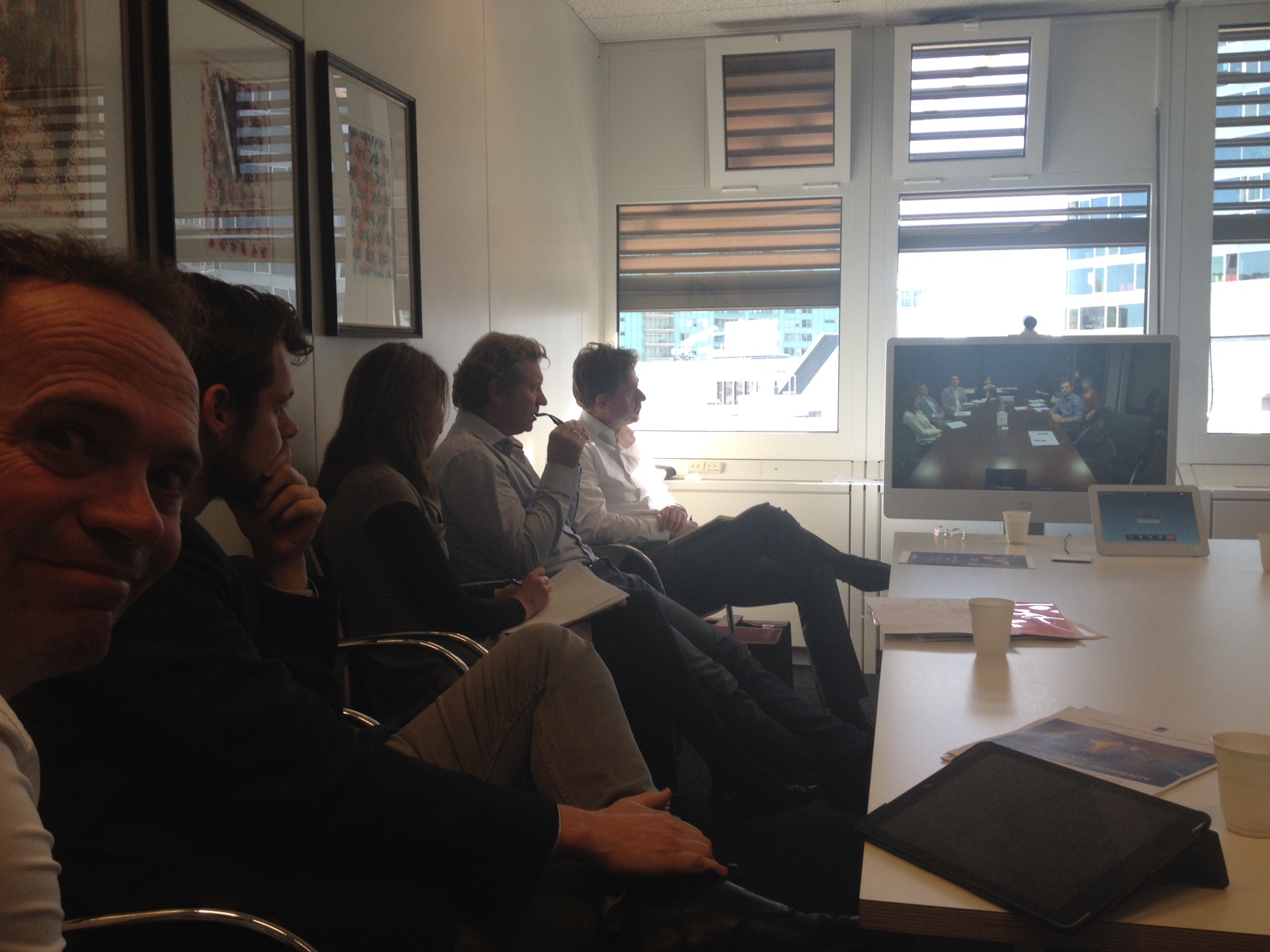
Every year over 4 million people, mostly women and children, die due to air pollution caused by unhealthy cookstoves and other heat sources. webinar-met-worldbankOn Tuesday, September 29, your Netherlands Embassy’s NL4WorldBank team, in close cooperation with the World Bank Group, the Netherlands Enterprise Agency (RVO), and the Ministry of Foreign Affairs, organized the first ever Clean Cookstove Webinar to address this issue.

How it works

Geared towards the Dutch private sector, the webinar offered the participants the chance to pitch their companies’ cookstove or related product to a group of World Bank staff all working on cookstove projects across the world. Continue reading

Successful NL / WB Clean Cookstove Webinar held on September 29

On Tuesday, September 29, your webinarNL4WorldBank team at the Netherlands embassy, in close cooperation with the World Bank Group, the Netherlands Enterprise Agency (RVO), the Ministry of Foreign Affairs and the Global Alliance for Clean Cookstoves, organized the first ever Clean Cookstove Webinar.

You will find the audio recording of the webinar here. The initial clip is a preview – click on ‘download’ to hear the entire recording.


eConsultant2: Converting Biomass to Energy: A Guide to Developers and Investors

Deadline: 12-Oct-2015 at 11:59:59 PM (Eastern Time – Washington D.C.)

light-bulb-297489_640Enhancing access to power is a key priority for the IFC and biomass is an area of growing global importance. The overall objective of the study is to develop a white paper that would help build capacity among key stakeholders, as biomass continues to grow into and become a more important contributor to meet the energy needs in emerging countries.
Continue reading

eConsultant2: Technical Consultant for Colombo Waste to Energy PPP Project

Deadline: 07-Oct-2015 at 11:59:59 PM (Eastern Time – Washington D.C.)

alcdsb-environmental-education-wiki-licensed-for-non-commercial-use-1051x1050The Urban Development Authority in Sri Lanka has requested IFCs assistance in designing and successfully bidding a WtE plant of 600 TPD capacity in Karadiyana on a public private partnership (PPP) basis. (“Project”). IFC is keen to engage a consultant firm to undertake technical, commercial, environmental & social due diligence for the Project.
Continue reading

US$250 Million Program to Support Jordan’s Energy & Water Sectors

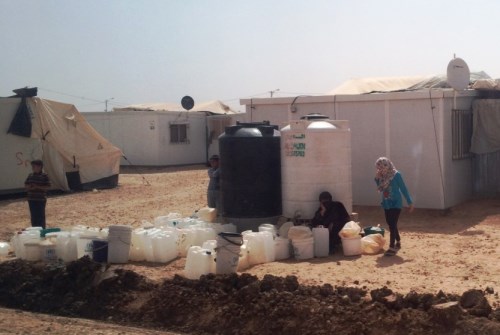
The World Bank Board of Directors approvedsyrian-refugees-saeed3today a US$250 million financial package to support Jordan’s process to reform the energy and water sectors, two critical public services which are challenged by scarce resources and further burdened by a sharp rise in demand caused by the influx of Syrian refugees.
“The water sector is on track to start generating energy efficiency savings that will help to reduce the fiscal and environmental footprints of the sector.”

– Caroline van den Berg, World Bank Lead Water and Sanitation Specialist.

Jordan’s historic vulnerability to the fluctuations in fuel prices, coupled with the frequent interruptions in piped natural gas from Egypt since the outbreak of the Arab upheaval in 2011, have severely taxed the budget. To compensate for the gas shortages, Jordan has resorted to importing more expensive diesel and fuel oil. This development encouraged the Government to develop and implement programs to diversify and reduce cost of energy supply through the development of domestic renewable energy resources and alternate natural gas supply options for power generation.

On the water front, Jordan has historically grappled with water scarcity, which has forced the Kingdom to maximize its use of shared resources, while becoming more dependent on non-conventional, and often very energy-intensive, water infrastructure.  A series of external shocks, including the fluctuations in oil prices and the influx of the Syrian refugees in the country, have rapidly increased the cost of water. In response, the Government is implementing a sector reform program that aims to optimize the allocation of water resources, while reducing the use of energy in the sector – a program that would be supported by the DPL. The plan will optimize the use of existing surface water resources while allocating increasing flows of treated wastewater to farmers and industry to support economic growth while reducing the over-extraction of groundwater.

“We are pleased to continue supporting the Government of Jordan in implementing its ambitious and far reaching reform programs, which aim to bolster the country’s broad development agendas.”

– Ferid Belhaj, World Bank Director for the Middle East.

The water sector is one of the largest consumers of electricity in the country, and hence any increase in energy efficiency will help to reduce the cost of water and reduce emissions and subsequently the carbon footprint of the sector.

In addition to the new US$250 million loan, the World Bank’s portfolio in Jordan comprises three projects amounting to US$430 million, as well as 15 trust fund grants for a total of US$83.4 million.

More information can be found on the World Bank website, where you also may find the program document.