
Deadline: 28-Feb-2017 at 11:59:59 PM (Eastern Time – Washington D.C.)
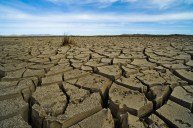
The study will identify climate risks associated to the areas of intervention for the Pilot Program for Climate Resilience (PPCR) in the country that are relevant to the private sector (water management and infrastructure, agriculture and food security, meteorological knowledge management and climate data). Based on the identified risks, the study will consider how the private sector, including commercial banks, can protect themselves from those climate risks as well as deliver essential products and services to help communities and businesses tackle climate challenges. The study will also analyze the existing enabling environment and market barriers that prevent the private sector from engaging in climate adaptation. Moreover, the study will identify potential private sector investments.


 The World Development Report 2017: Governance and the Law explores why some policies fail to achieve desired outcomes and what makes other policies work. The main messages of the WDR 2017 are:
 achievement of the aforementioned pupils relative to the learning outcomes prescribed in the primary curriculum. Other objectives were: to investigate differences in pupil achievement by key system, school and pupil factors {e.g., division, district, school type, locality (urban v. rural), and gender}; to examine the relationships between achievement and factors such as school size, class size, pupil-teacher ratio, attendance rate, teachers’ qualifications and training, training of school managers, and frequency of inspection; and to draw implications for improvements in teaching and learning through enhanced policy actions, planning and management, and teacher education. It is expected that relevant Government of Bangladesh (GoB) line agencies will utilize the findings and recommendations in order to inform educational planning of sub-components such as teacher professional development and curriculum reform.
 on it to grow crops, for factories that need it to cool machines and spin turbines and, of course for life itself. But
  through:
 to improving and promoting energy efficiency driven by the energy security risks associated with the pressures from growing population and rising fuel demand on its finite fossil fuel supply. This shortage of traditional fuels poses a serious challenge to the industrial growth of Egypt. The industrial sector energy demand amounts to approximately one third of final energy production. Yet energy efficiency within industries is not adequately exploited due to high energy subsidies, the lack of an effective policy framework, weak environmental law enforcement, and the lack of availability of clean technologies in the local market, among other factors.
 Netherlands for the World Bank
You must be logged in to post a comment.