Today to 2030

Follow the event on Twitter with #TodayTo2030
Join the Live Stream October 92030-promo-getty

President, Peru: Ollanta Humala
Secretary-General, United Nations : Ban Ki-moon
UK Secretary of State for International Development: Justine Greening
President, World Bank Group: Jim Yong Kim
Managing Director, International Monetary Fun: Christine Lagarde
International Journalist: Femi Oke – Moderator

Date: Friday, October 9, 2015

Continue reading

World Bank Webinar: Recent Global Trends in Infrastructure Project Finance

Date: September 29, 2015Recent_Global_Trends_PPP
Time: 10:00AM EST
In the first quarter of 2014, many emerging countries were still struggling to mobilize financing flows to infrastructure, although there were key signs of a revival. A year later, some countries and regions appear to have been successful in reviving their PPP markets, others less so. In addition, against the back drop of developments in the project finance market, international financial institutions and bilateral aid organizations discussed the future of financing of infrastructure in Addis Ababa this year. What does the future look like? This webinar looks at the current trends in PPP financing in major regions of the world from lender and MDB perspectives.

Continue reading

eConsultant2: Consultancy Services for development Investment Plan Bangladesh Delta Plan 2100 (BDP 2100)

Deadline: 08-Oct-2015 at 11:59:59 PM (Eastern Time – Washington D.C.)

delta

The Government of Bangladesh (GoB) is in the process of developing the Bangladesh Delta Plan 2100 (BDP2100).Based on concept notes prepared by the BDP2100 team and by additional verification and consultation, the Consultant will review the baseline studies conducted by the BDP2100 team; assess each of the priority short and medium term projects identified for investment in consultation with stakeholders and the BDP2100 team; develop in consultation with all relevant stakeholders from the public and private sector a list of nominated projects; and for each project prepare detailed descriptions, which would be included in the final report the BDP2100 Investment Plan.The implementation period for this assignment is over a period of 12 months.
Continue reading

IFC Reengagement with the Central African Republic’s Private Sector

This article was originally published on the IFC website.

As part its efforts to re-engage with the CASACentral African Republic, IFC, a member of the World Bank Group, supported the organization of a five-day national forum on private sector development presided over by Catherine Samba-Panza, the country’s transitional Head of State. The forum was co-financed by IFC’s Conflict Affected States in Africa Initiative (CASA), which is supporting private sector growth in nine fragile countries in Africa (Burundi, CAR, Côte d’Ivoire, DR Congo, Guinea, Liberia, Mali, Sierra Leone, South Sudan). CASA is supported by donor partners Ireland, the Netherlands, and Norway.

Workshops during the forum focused on forestry, mining and agriculture as key development sectors, and introduced a public-private partnership (PPP) model to infrastructure development. Other key issues discussed included taxation, investment incentives, women entrepreneurship, and inclusion in the regional economy. IFC has previously worked with public and private sector partners in the CAR to improve the investment climate and support small business growth, particularly in and around the capital, Bangui.

Jean Christophe Carret, World Bank Country Manager for the CAR, said, “The World Bank Group is open to re-engagement with key internal and external stakeholders in the CAR to promote private sector-led growth through support to the health and infrastructure sectors, including transport and energy.” The forum’s goals included identifying bottlenecks hindering the development of the private sector, and nurturing a new economic development approach for the country


eConsultant2: Design of RBF Mechanism for Solid Waste Management in Mauritania and Senegal

Deadline: September 29.

The objective of this activity financed by solid wasteGPOBA and implemented by the World Bank Urban team is to design results-based financing (RBF) or output-based aid (OBA) mechanisms, provide related policy, investment and institutional enhancement recommendations that are necessary to improve the performance of solid waste management in each cities. A particular focus of this activity will be to identify solutions approaches that improve access to sound solid waste services to poor households. The countries where the work is planned are Mauritania and Senegal. Continue reading

Improving Lives: Health & Education Strengthening Human Capital

Article originally published in the IFC’s Annual Report 2015.

Across the world, more than a billion Health-Edu-Story-Bannerpeople lack access to quality health services. Nearly three-fourths of the 38 million worldwide deaths from chronic illnesses — such as cancer — occur in developing countries. Globally, more than 57 million children do not attend school, with 30 million of them in Africa alone.

These statistics highlight a major obstacle to ending extreme poverty and boosting shared prosperity: high-quality education and health-care services still aren’t as widely available and affordable as they need to be. This is a challenge that’s best addressed when the public and private sectors act in concert to advance the interests of society.

Continue reading

Tender: Water Supply And Sanitation Construction Works in Uganda

The Republic of Uganda has received a loan from the World Bank for a Water Management and Development Project, and intends to applywater part of these proceeds to payments under the contract for construction works for water supply and sanitation in Rukungiri Municipality, Katwe-Kabatoro and Koboko Town.

Deadline: November 10, 2015

Continue reading

Building Resilience: Climate Change Helping Contain a Global Threat

Article originally published in the IFC’s Annual Report 2015.

Climate change will hit developing Climate-Change-Story-Bannercountries hardest — posing significant threats to their efforts to tackle water, energy, and food-supply needs.

Developing countries will need large sums of money to cope with climate change: up to $1 trillion a year. The private sector has an indispensable role to play, and IFC is at the forefront in mobilizing private capital to address climate change.

We provide finance and advice for energy-efficient and renewable-energy solutions — such as green buildings and solar power. Since 2005, we have made long-term investments totaling more than $13 billion in climate-related projects. This includes $2.3 billion in 103 projects in 31 countries in FY15. We also mobilized $2.2 billion from other investors.

Continue reading

eConsultant 2: Development International Healthcare Standards for the Government of Poland

Deadline:  01-Oct-2015 at 11:59:59 PM (Eastern Time – Washington D.C.)medical-appointment-doctor-healthcare-clinic-health-hospital-medicine[7]

The Government of Poland has decided to develop a systematic review of standards for 30 diseases (based on ICD 10). Under the umbrella of a Reimbursable Advisory Services (RAS) agreement, the World Bank may be requested to develop these benchmarks. The World Bank seeks to hire a firm to provide a clinical advisory role in developing these standards.

See full tender here: #1200117 Advisory Services to develop International Healthcare Standards

eConsultant2 website: https://wbgeconsult2.worldbank.org

Tender notification: # 1200117

Assignment Countries:

  • PL – Poland

NL4WorldBank Webinar: Cookstoves

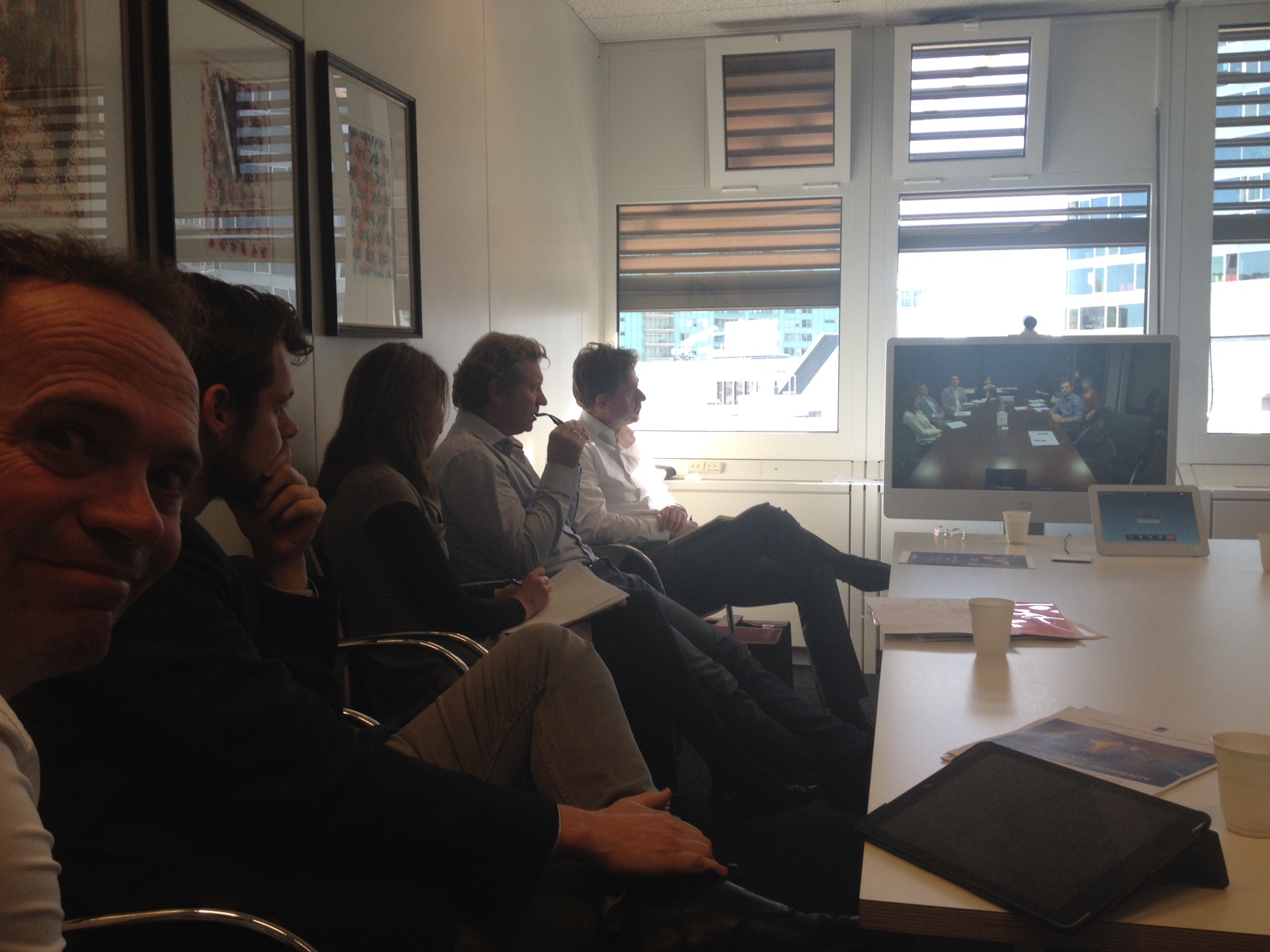
The World Bank Team at the cookstovesNetherlands embassy, in collaboration with the World Bank and RVO, will be organizing a webinar on cookstoves in late September. The purpose of the webinar is to inform Dutch organizations in the field of cookstoves of the medium- to long-term strategy of the World Bank with regards to cookstoves, and to discuss their thinking on the way forward. In turn, Dutch organizations will be able to provide input and advice on best practices and latest developments to ensure that the World Bank is fully up to speed when rolling out new initiatives and projects.

To sign up for this webinar, please send an email to the World Bank Team so we can keep you updated regarding date, time and logistical information. The ultimate aim of this webinar is to create a win-win-win, with improved projects for the World Bank, better opportunities for Dutch organizations to market innovative and state-of-the-art technologies and solutions, and most importantly better development outcomes for borrowing countries. And that is the essence of NL4WorldBank.