
ABIDJAN, June 28, 2016 — A new assessment of the quality of government policies and 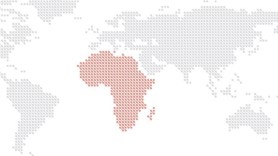 institutions that support growth and poverty reduction in Africa shows some progress for a few countries but flat or deteriorating scores for the majority, according to a new World Bank Review.
The latest Country Policy and Institutional Assessment (CPIA) for Africa describes the progress made in low-income African countries to strengthen their policies and institutions that help to spur better development outcomes.
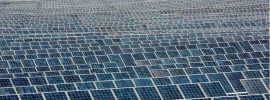 Broad-Based Black Economic Empowerment Shareholder participation in the Renewable Energy Independent Power Producer Program (REIPPP) including by improving the accessibility and terms of financing for B-BBEE equity and increasing the ability of B-BBEE shareholders to realize the benefit of their investment. This should include an assessment of the enabling conditions for primary market participation and also the constraints affecting the sale of B-BBEE shareholdings in REIPP projects. The same analysis could also be applied to other (non-renewable) projects procured under the Independent Power Producers Programme of the Department of Energy to the extent the B-BBEE position is similar.
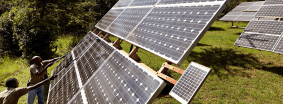 World Bank for the design of a World Bank-financed project component that aims to hybridize with PV and expand access to electricity in some of the existing micro-grids (centres isolés) operated by NIGELEC in throughout Niger.
 African countries to explain why independent power projects (IPPs) are crucial to help deliver electricity to the 600 million people without it in Sub-Saharan Africa. The report highlights the challenges policymakers face and factors that can lead to scaled-up and sustainable power sector investment.
 initiative seeks to recruit Enumeration Agencies to support the identification and enrolment of the poor onto health insurance in the demonstration districts through use of a Proxy Means Test tool in the Volta Region – Ho-Adaklu-Anyigbe-Ziope Districts. The tool will run an algorithm that will provide an immediate categorization of the household as poor (eligible for free NHIA enrolment) or non-poor (ineligible). The data collected will also be used to build the GNHR database in the selected districts. Enumeration Agencies will recruit the necessary human resources for the collection of data.
 competition in Zambia. In line with this support, as well as ongoing support to the CCPC, the World Bank Group (WBG) intends to undertake a baseline perception survey on competition in Zambia. The survey is intended to set a baseline on the perceptions and understanding of competition law and policy by the business community (individual firms and business associations), government officials in charge of market regulation, civil society organizations (CSO), academia and consumers.
 This is an assignment to conduct a post program evaluation for the investment climate reform projects financed by SECO in Africa.

You must be logged in to post a comment.