eC2: Community Mapping Urban Risks in Mwanza Tanzania

Deadline: 19-Mar-2020 at 11:59:59 PM (Eastern Time – Washington D.C.)

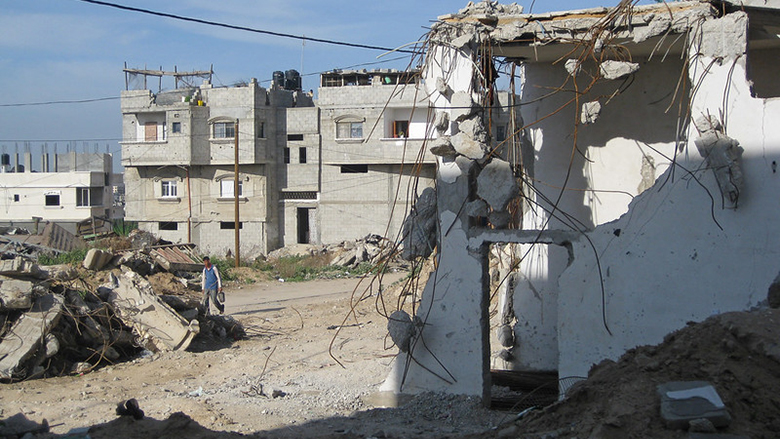
The objective of this assignment is to inform the socio-economic exposure analysis of thewater TURP flood risk assessment for Mwanza city. This will be done by providing design and management of mapping campaigns in Mwanza from May October 2020 with a focus on three core mapping campaigns: i) Digitization services for 2020 building exposure updates; ii) Drainage infrastructure and river mapping; iii) Participatory Mapping of Unplanned Communities; iv) Household flood and rockfall historical incidents mapping.

Continue reading

Fragility and Conflict: On the Front Lines of the Fight against Poverty

STORY HIGHLIGHTS

  • A new report estimates that by 2030 up to two-thirds of the global extreme poor will Imagebe living in FCS, making it evident that without intensified action, the global poverty goals will not be met.
  • The new report, “Fragility and Conflict: On the Front Lines of the Fight against Poverty” notes that the 43 countries in the world with the highest poverty rates are in FCS and/or Sub-Saharan Africa.
  • The number of people living in proximity to conflict — defined as within 60 kilometers of at least 25 conflict-related deaths — has nearly doubled since 2007.

Globally, the prevalence of fragile and conflict-affected situations (FCS) continues to rise. The number of forcibly displaced people worldwide has more than doubled since 2012, exceeding 74 million in 2018. A new report estimates that by 2030 up to two-thirds of the global extreme poor may be living in FCS, making it evident that without intensified action, the global poverty goals will not be met.

The new report, “Fragility and Conflict: On the Front Lines of the Fight against Poverty,” notes that the 43 countries in the world with the highest poverty rates are in FCS and/or Sub-Saharan Africa.  Economies facing chronic fragility and conflict have had poverty rates stuck at over 40 percent in the past decade, while countries that have escaped FCS have cut their poverty rates by more than half. Today, a person living in an economy facing chronic fragility and conflict is 10 times more likely to be poor than a person living in a country that hasn’t been in conflict or fragility in the past 20 years.

Continue reading

eC2: Key Factors for Successful Development of Offshore Wind in Emerging Markets

Deadline: 19-Mar-2020 at 11:59:59 PM (Eastern Time – Washington D.C.)

The scope of the assignment shall cover the major topics that need to be considered by energypolicymakers and regulators when establishing a new market for offshore wind development. These shall include, but not be limited to, the following points:

1. Policy discussion on successful policy measures including drivers, targets;
2. Pre-development geospatial planning and technical studies, including zoning;
3. Stakeholder identification and consultation;
4. Legal key legislation to facilitate project development and delivery;
5. Environmental and social policies to ensure sustainable offshore wind development
6. Health & safety referencing best practice from Europe and related sectors (e.g. oil and gas);
7. Consenting roles and responsibilities between agencies and building public sector capacity;
8. Transmission models for development, financing and ownership of transmission;
9. Grid integration best practice in integration of offshore wind into grids
10. Tariff and bankability offtake mechanisms to ensure bankable revenue;
11. Project solicitation identification of sites, competitive methodologies for awarding rights;
12. Supply chain approaches to support and encourage local supply chain and infrastructure development (e.g. ports);
13. Financing project structures to minimize risk (both on public and private elements)

Full Terms of Reference (TOR) will be included in a future Request for Proposals (RFP) which will be issued to Consultants that are shortlisted from this REOI.

Continue reading

eC2: Oromia National Regional State: Regional Investment Climate Competitiveness Analysis

Deadline: 24-Mar-2020 at 11:59:59 PM (Eastern Time – Washington D.C.)

As a part of the Ethiopian Investment Climate Program of IFC/WBG, The Ethiopia Sub-Data-collection-fragile-settings1National Investment Climate Project is a pilot initiative implemented in two national regional states with the aim to a) strengthen regional investment promotion, retention and expansion capacity in selected/target sectors b) enhance regional business climate through streamlined regulatory and administration procedures; and c) strengthen inter-agency coordination and public-private dialogue for improved regional investment climate.


As part of its ongoing engagement, The Project seeks to recruit an experienced firm to undertake the following assignments;
– Analysis of the Regions competitive advantages and prioritization of strategic sectors
– Deep dive analysis of the sectors
– Institutional capacity diagnosis and capacity for Oromia Investment Commission
– Regional Investment Climate/doing business analysis with deep dive on priority issues to be selected in consultation with relevant stakeholders
Continue reading

eC2: Cost/Benefit Analysis of Aquatic Animal Health Management

Deadline: 23-Mar-2020 at 11:59:59 PM (Eastern Time – Washington D.C.) index

This activity aims to lower the risk profile of aquaculture investments, thus attract private equity in a MFD (maximize finance for development) model, and will thus directly address the global knowledge objective of Developing sustainable aquaculture through improved Biosecurity. The activity will provide country-level technical assistance & capacity-building to the development and implementation of best aquatic animal (fish and shellfish) and plant (seaweeds) health management practices in the field. To achieve this reduction of risk, the activity will work directly with Banks operations -in preparation or in their early phase of implementation- to adopt, pilot and refine the Progressive Management Pathway (PMP) to improved health and performance of farmed aquatic species.

Continue reading

eC2: PREPARING WATER SUPPLY, SANITATION AND HYGIENE (WASH) SECTOR DEVELOPMENT PROGRAM FOR GHANA

Deadline: 10-Mar-2020 at 11:59:59 PM (Eastern Time – Washington D.C.) waterkraan-nieuws-header

The main objective of the assignment is to: Update and consolidate the Water Sector Strategic Development Plan, the National Environmental Sanitation Strategy and Action Plan and other relevant WASH plans and prepare a National WASH Program Document with indicative cost break down and implementation framework for i) rural WASH; ii) urban WASH; iii) institutional development, iv) M&E and v) funding. It is expected that a WASH sector Institutional review will be conducted with considerable overlapping and its findings will inform the WASH program development. This will suggest that the program will have several phases with the first phase focusing on issues requiring immediate attention and the subsequent phases addressing the suggestions from the institutional review.

Continue reading

eC2: Consultancy Services for Somali Electricity Supply Industry Institutional Design

Deadline: 17-Mar-2020 at 11:59:59 PM (Eastern Time – Washington D.C.)

U.S. Electricity Output Rose 6.2% From A Year Earlier

a) Review available government legal, policy and strategy documents for the sector and undertake a detailed assessment of the performance of the electricity supply value chain.
b) Undertake an institutional and organizational review of the current ESI (public and private) institutional arrangements including skills audit and needs assessment.
c) Develop alternative options, clearly delineating the pros and cons, for the functional responsibilities and organizational structure of the ESI alongside the electricity value chain including generation, transmission and distribution functions, including the relations and transactions of the various entities in the ESI. The consultant shall recommend the optimal structure, clearly highlighting the rationale for the recommendation and the associated glide/transition phases as may be required.
d) Define the key responsibilities (value chains) for the management and operations of the ESI including policy and regulatory functions.

Continue reading

eC2: Technical support for the preparation of Flood Risk Management Plans for Romania. Methodologies to develop Programmes of Measures.

Deadline:  05-Mar-2020 at 11:59:59 PM (Eastern Time – Washington D.C.) floods

The assignment aims to develop a suite of practical new Methodologies to develop a flood damage/loss database and systems to support the development of flood risk maps for Romania. It will involve completing the following tasks:
1. Develop the typology structure for a flood damage and loss database.
2. Develop a methodology for flood damage assessment to create data for the database.
3. Develop the population of the database with actual flood damage data and using synthetic data to fill gaps 4. Develop a methodology for the elaboration of Flood Risk Maps, considering the comments received from the European Commission and making use of the existing and new flood hazard maps and the flood damage and loss data base.
5. Trial the deployment of the flood damage/loss database methodology and the development of Flood Risk Maps.

Continue reading

eC2: Technical support for the preparation of Flood Risk Management Plans for Romania. Methodology for the elaboration of Flood Hazard Maps for Romania

Deadline: 05-Mar-2020 at 11:59:59 PM (Eastern Time – Washington D.C.) water

The assignment aims to develop methodologies to elaborate the flood hazard maps for Areas of Potential Significant Flood Risk reported to the European Commission in 2019 (APSFR II). It will involve the following tasks: 1.Collate and review existing information on APSFR from cycle I and II, Flood Hazard Maps I and methodology. 2.Set out a clear overall integrated methodological framework for hazard mapping with specific methodologies for different types of flood hazards (Flash Floods, Pluvial Floods in urban areas, Coastal flooding, flooding due to dyke breaches)identified under the APSFR II. This framework is to be aligned with the methodology used during the first cycle for FHMs from fluvial source, will consider the comments received from the European Commission in the first cycle and international best practices. 3.Propose a method to integrate expected impacts of climate change into the development of the new Flood Hazard Maps and for using the existing Flood Hazard Maps of cycle 1

Continue reading

eC2: Technical support for the preparation of Flood Risk Management Plans for Romania.

Deadline: 05-Mar-2020 at 11:59:59 PM (Eastern Time – Washington D.C.) Bangladeshi villagers repair a vital flood-protecting embankment

The assignment aims to develop a suite of practical new Methodologies to develop Programmes of Measures for the second cycle flood risk management plans (FRMP2).It will involve completing the following tasks:
1.Collate and review existing information, including Methodologies for FRMP1
2 Update the catalogue of measures for FRMP2
3 Set out clear terminology and main types of measures for FRMP2 in Romania
4 Set out a clear overall integrated framework for the appraisal methodologies which then involves developing a clear practical methodology for each of the following steps:
Step 1:Identify, screen and scope possible eligible measures at catchment level
Step 2:Prioritise this long list of possible measures using a Multi-criteria analysis of their impacts (positive & negative) and their costs to rank them and define a short list of measures for which funds could be sought Step 3.Carry out Cost Benefit Analyses of this short list of measures to be able to justify them & secure funding

Continue reading