Examining the World Bank’s radical procurement overhaul

Article published by the Chartered Institute of Procurement & Supply (CIPS) magazine Supply Management on September 8, 2015.

Will Green looks at how the World Bank’s radical overhaul of its procurement processes will affect the organisation and its clients.
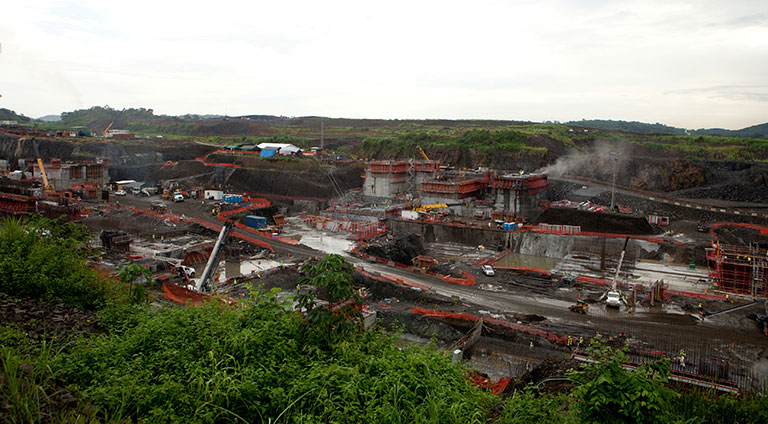
Construction works for the Panama Canal expansion project – one of the infrastructure projects financed by the World Bank. © Gerardo Pesantex/World Bank

Construction works for the Panama Canal expansion project – one of the infrastructure projects financed by the World Bank. © Gerardo Pesantex/World Bank

How many organisations spend $44 billion each year in 178 countries, including the most war-torn nations, finance enormous infrastructure projects such as the Panama Canal expansion scheme and support social development in the poorest countries?

Then ask, how would you go about developing a procurement strategy for such an organisation? This is the challenge the World Bank faced as it set about reforming a procurement system unchanged since the 1970s.

Continue reading

World Bank to extend loans to Greek companies

Article originally published in Het Financieele Dagblad on September 7, 2015 by Gerben van der Marel. This is an abstract, full article available through the FD website.

The World Bank will offer more help to relatively wealthy countries going through a crisis, like Greece. Talks are underway with the Greek private sector regarding a ‘substantial’ package of investments, according to Frank Heemskerk, Executive Director at the development bank in Washington.

FotoBehind the scenes, the World Bank has been active in Greece for some time, says Heemskerk. ‘Many institutions don’t work. The country is corrupt. We have allowed that to happen in Europe. We have all looked the other way.’ The Greek crisis has a large impact in the region, he says. Countries like Bulgaria, where the World Bank has been a player for a long time, feel the pain.
Remainder in Dutch.

Continue reading

Symposium: The value of groundwater

Original announcement for symposium on VVM website. World Bank speaker participating.
Only 100 spots available, so don’t wait!

In the Netherlands we pay on average bottled vs ground€1 per cubic meter of tapwater coming from groundwater. If surface water or infiltrated groundwater comes out of the tap, a few dimes or half a Euro is added. A bottle of water is up to a thousand times more expensive.

Date: September 23, 2015
Location: Nieuwegein, the Netherlands

Remainder in Dutch. Continue reading

Tender: study of pilot waste water treatment plant in Kinshasa

Recrutement d’un Consultant (Firme) pour waste water treamentréaliser les études d’APS, APD et DAO des travaux de construction d’une station pilote de traitement des boues de vidange dans la ville de Kinshasa.

Le Gouvernement de la République Démocratique du Congo a obtenu un don de la Banque mondiale en diverses monnaies pour financer le Projet d’Alimentation en Eau Potable en Milieu Urbain (PEMU) et a l’ intention d’utiliser une partie Continue reading

Ethiopia – Second Agricultural Growth Project signed

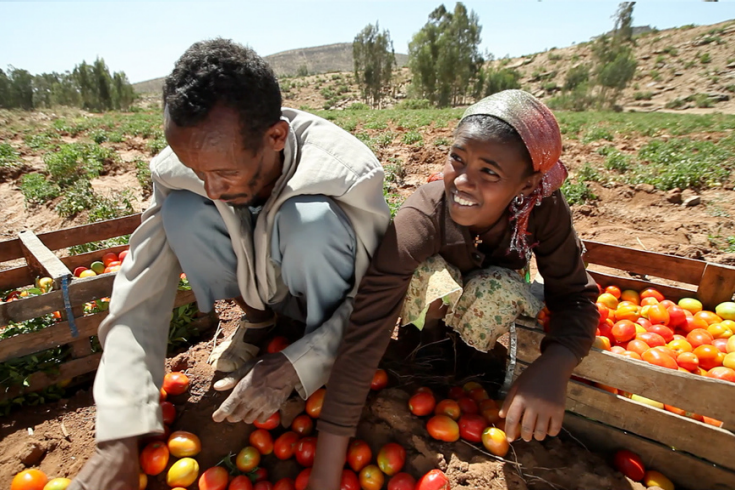
Ethiopia’s second agricultural growth Ethiopia agproject, which was adopted by the World Bank Board of Directors on March 31, 2015, has now been signed. The project involves a total of $365 million, of which $350 million is provided by the World Bank.

The development objective of the Second Agricultural Growth Project for Ethiopia is to increase agricultural productivity and commercialization of small holder farmers targeted by the project. The project comprises of five components: Continue reading

WB Event – The Big Push toward Universal Health Coverage: Metrics, Data, and Impact

Date: October 26, 2015

The developing world—and some parts of the 62049 - IPC-001465developed world too, including the United States—is in the midst of a big push toward Universal Health Coverage (UHC). There is, however, confusion about what UHC means and how to measure it. As a result it is unclear how far countries are from reaching UHC, and the degree to which different UHC-inspired reforms have actually helped move countries towards UHC. Continue reading

eConsultant2: Industrial Energy Efficiency in Uzbekistan

The World Bank is assisting the Government of Uzbekistan in its effort to scale up energy efficiency investments in industries. Under the technical assistance project Support Development of a National Industrial Energy Management Program, the following activities will be undertaken. alcdsb-environmental-education-wiki-licensed-for-non-commercial-use-1051x1050

Expression of Interest Deadline: 17-Sep-2015 at 11:59:59 PM (Eastern Time – Washington D.C.)

Continue reading

Resilient Supply Chains – A Strategic Dialogue (London, 19 October 2015)

Resilient Supply Chains – Farmers & Food Industry Tackle the Shared Challenge of Climate Change – A Strategic Dialogue (London, 19 October 2015)

Climate change brings significant, resilient supply chainsconcrete and near-term impacts for farmers and food companies’ bottom lines alike. The objective of this strategic dialogue is to bring leaders from both groups together to discuss their shared climate change challenges: Continue reading

eConsultant2: Let’s Work Zambia – Strengthening Value Chains for Jobs

As part of the wider Lets Work program in production__south_africa_2Zambia, which aims to support job creation in partnership with the private sector, the World Bank intends to contract a consultancy to carry out a series of jobs-focused value chain studies in Zambia. This program will be managed by the Lets Work Program through the Jobs CCSA. Lets Work is a global partnership dedicated to providing effective solutions to the jobs challenge by harnessing the private sectors role in creating more, better jobs that are inclusive.

Expression of Interest Deadline: 21-Sep-2015 at 11:59:59 PM (Eastern Time – Washington D.C.)

Continue reading

IGRAC hosted a World Bank partnership roundtable on groundwater

Article originally published on the IGRAC website.

Together with NWP (Netherlands IGRACWater Partnership) IGRAC organised a ‘Roundtable on Netherlands Groundwater Expertise in Integrated Delta Management’. Mr. Junaid Ahmad, Senior Director Water at The World Bank, met representatives of Dutch groundwater sector to hear about groundwater management practice in the Netherlands and to explore possibilities to implement related knowledge into World Bank operations.

Continue reading