World Bank Blog Post
Submitted by Berk Ozler

Each year on July 1, the analytical classification of the world’s economies based on  estimates of gross national income (GNI) per capita for the previous year is revised. As of 1 July 2016, low-income economies are defined as those with a GNI per capita, calculated using the World Bank Atlas method, of $1,025 or less in 2015; lower middle-income economies are those with a GNI per capita between $1,026 and $4,035; upper middle-income economies are those with a GNI per capita between $4,036 and $12,475; high-income economies are those with a GNI per capita of $12,476 or more. The updated GNI per capita estimates are also used as input to the World Bank’s operational guidelines that determines lending eligibility.
Deadline: 21-Jul-2016 at 11:59:59 PM (Eastern Time – Washington D.C.)
 IFC is looking for an experienced firm specialized in impact evaluations to conduct the baseline of an impact evaluation of IFC and GAFSP (Global Agriculture and Food Security Program) invested projects in Cameroon. The IFC projects are part of a joint World Bank/IFC initiative consisting of a comprehensive public-private partnership to support the vertical integration of producer organizations (POs) of cassava, maize, and sorghum into the value chain of commercial agribusiness off-takers. IFC and GAFSP investments facilitate the critical links to private banks and to the private sector by providing risk sharing facility (RSFs) and/or loans to participating financial institutions. The evaluation is to measure impact of the projects on yields, farmer income, poverty, food security and women.
Continue reading
WASHINGTON, June 28, 2016—Did you know that 94% of shipments imported into 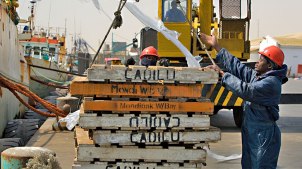 Germany meet the quality standards of global logistics operators, compared to only 40% in Bolivia? Or that importing goods into Georgia requires traders to deal with just one agency, but in Madagascar, traders must deal with 10?
All of these issues, and more, are captured under the broad category of logistics – the methods and procedures a country uses to move goods across borders. Infrastructure, procedures, regulations, geographic characteristics and even political economy issues all play a role in defining the strength of a country’s logistics.

July 10-14, Singapore
The World Cities Summit 2016 will explore how cities can better govern and build up resilience through policy, technology and social innovations. With active engagement, there will be more opportunities for the public, private and people sectors to co-create innovative and integrated urban solutions for a more livable and sustainable future. Click here.
July 12, IDB HQ, Washington D.C.
International Experts at Migrating from a Traditional City Management to a Smart City Management seminar will present specific “Smart City” Case Studies from Rio de Janeiro, Medellin, Singapore, Tel Aviv, Songdo, Orlando, among others. “The Road Towards Smart Cities”, a publication that proposes a roadmap for carrying out this transformation, will be launched and private sector partners will present innovative solutions and successful implementation of “Smart City” solutions. Click here.
 India is the world’s largest producer as well as consumer of milk and milk products. India nevertheless faces a shortage of milk and milk products due to increasing demand from the fast growing middle class in the country.
The National Dairy Plan Phase I (NDP-I), a Central Sector Scheme of the Government of India, which is supported by National Dairy Support Project (NDSP), aim to increase milk productivity and market access for milk producers, which are both necessary to meet the growing demand for milk. NDP-I is being implemented with a total investment of about US$350 Million, out of which the Bank has extended a Credit of US$219 Million through the NDSP.
New World Bank Report!
WASHINGTON, June 22, 2016 – A new World Bank report draws from experiences in five African countries to explain why independent power projects (IPPs) are crucial to help deliver electricity to the 600 million people without it in Sub-Saharan Africa. The report highlights the challenges policymakers face and factors that can lead to scaled-up and sustainable power sector investment.
Deadline: 22-Sep-2016 at 11:59:59 PM (Eastern Time – Washington D.C.)
The overall objective of the assignment for a Consultant will be to upgrade client-companies’ food safety management syestems in keeping with the requirements of the internationally recognized food safety standards and recommendations made in the Implementation Action Plan. The Consultant will provide consulting and technical advice, conduct training, develop documentation and monitor project timelines for the implementation process. Upon completion of a specific engagement, a client-company should be able to issue self-declarations about conformance and/or obtain relevant third party certification from an authorized certification body
Monday, June 27, 2016 – 12:30 – 2:00 pm EDT
Join the discussion on the IEG report during a LIVE webcast!
Join the conversation on twitter at #SecureTitle4All
Deadline: 22-Sep-2016 at 11:59:59 PM (Eastern Time – Washington D.C.)
The overall objective of the assignment for a Consultant will be to upgrade client-companies’ food safety management syestems in keeping with the requirements of the internationally recognized food safety standards and recommendations made in the Implementation Action Plan. The Consultant will provide consulting and technical advice, conduct training, develop documentation and monitor project timelines for the implementation process. Upon completion of a specific engagement, a client-company should be able to issue self-declarations about conformance and/or obtain relevant third party certification from an authorized certification body.
 Netherlands for the World Bank
You must be logged in to post a comment.