
Tag Archives: Wereldbank Groep
The hidden cost of water in Europe and Central Asia
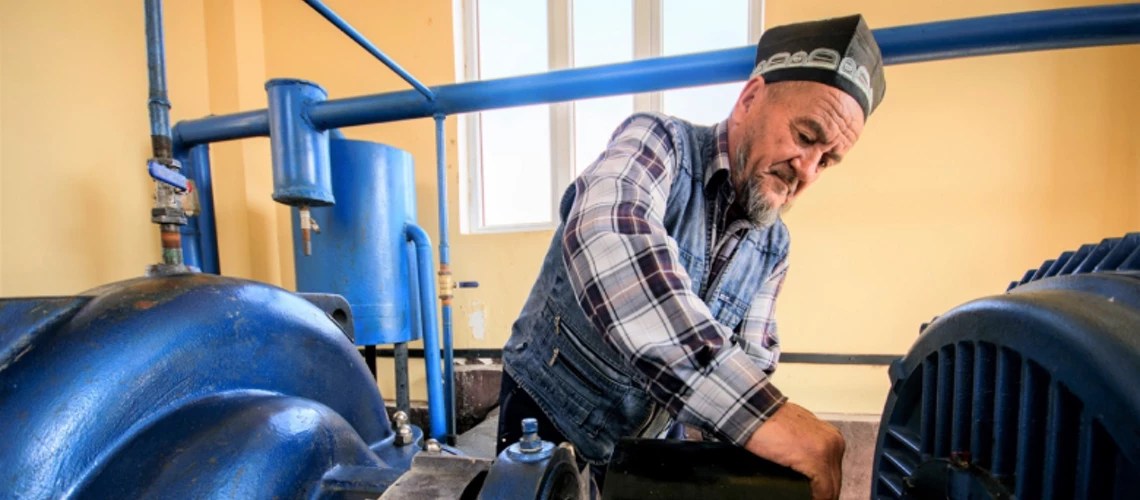
Delivering water safely uses a surprising amount of energy. In the emerging markets and developing economies of Europe and Central Asia, the energy footprint of delivering water services is particularly high. The average country spends about 10% of its energy bills on water use—more than five times the share spent in advanced economies. In fact, total water-related energy use in the region annually is roughly equal to the total energy consumption of Greece.
From Risk to Resilience: Strengthening Preparedness for Wildfires and Earthquakes in Europe
STORY HIGHLIGHTS
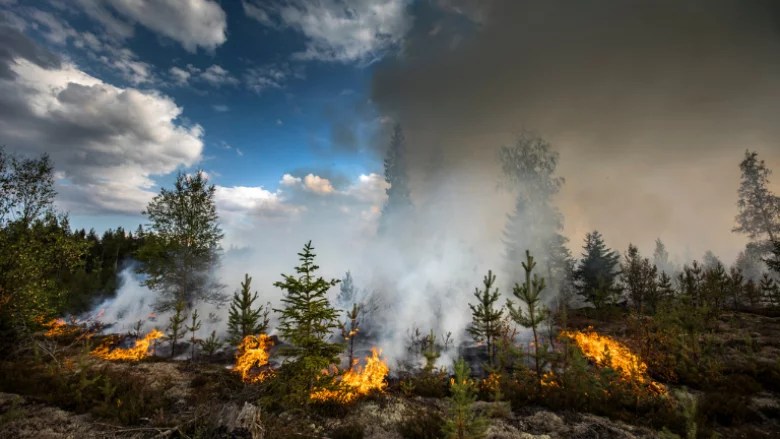
- Wildfires in Europe are becoming more frequent and severe, with record areas burnt in 2025. Spreading into regions once considered low risk, wildfires increasingly threaten lives, communities, and infrastructure.
- More than one-third of the EU population lives in seismic zones, yet awareness is dangerously low. Aging housing and vulnerable critical services leave people exposed, while secondary hazards such as landslides, soil liquification, and tsunamis can worsen earthquake impacts.
- Strategic investments in resilient infrastructure, early-warning systems, and recovery planning, including post-disaster financing, can help reduce risks, protect people, and strengthen preparedness.
Powering Prosperity: Unlocking East Asia’s Renewable Energy for Growth and Competitiveness
With vast, untapped renewable resources, East Asia can accelerate its clean energy transition—boosting competitiveness, creating millions of jobs, and strengthening energy security. A new World Bank report charts how.
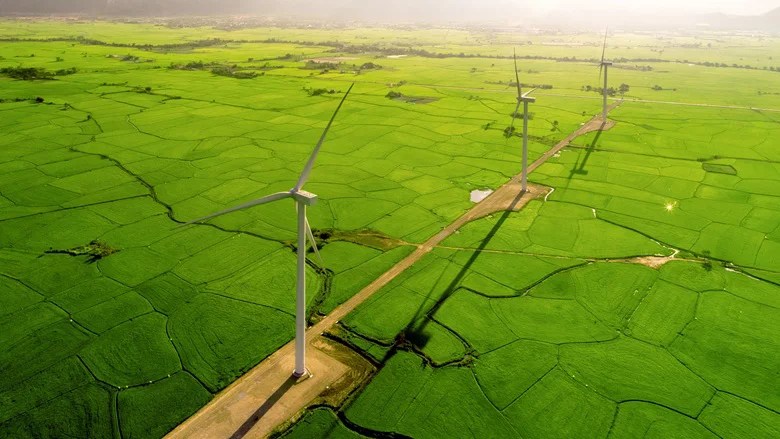
East Asia’s industrial rise has been powered by coal in recent decades – delivering rapid growth – but also making the region a major contributor to global greenhouse gas emissions. Today, the economics and the imperatives have shifted. A new World Bank Group report, Green Horizon: East Asia’s Sustainable Energy Future, finds that the region’s enormous, but largely untapped, renewable energy potential can fuel the next wave of growth, secure affordable energy, and enhance competitiveness.
Continue readingWomen, Business and the Law 2026
| You are receiving this email because you signed up for our World Bank Live Updates. We want to let you know that we have a new event coming up. February 24, 2026 <a href=”https://t.newsletterext.worldbank.org/r/?id=h2b2ee0f5,eee3225,ef2b99c&e=cDE9PGIgc3R5bGU9J2NvbG9yOg&s=zGT66GYPFF33l5dYVLcOjlfn37s7L0niNs2YVRGL9uE#004370;font-size:16px;’>Women, Business and the Law 2026—Benchmarking Laws for Jobs and Inclusive GrowthWomen, Business and the Law 2026—Benchmarking Laws for Jobs and Inclusive Growth Location: Online |
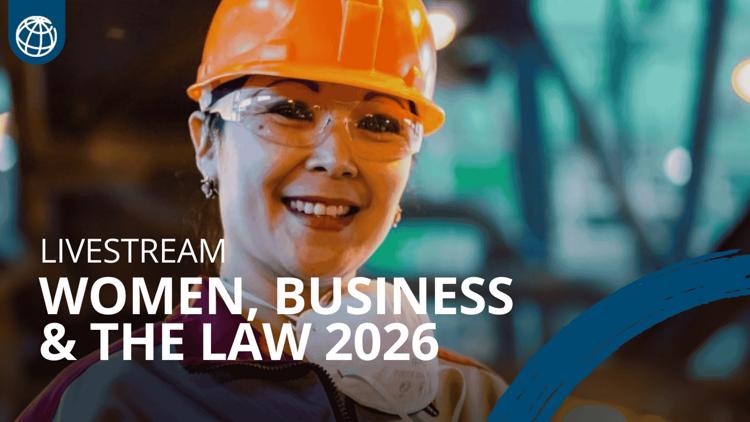 |
| Advancing women’s economic participation is a key driver of growth and job creation. Estimates suggest that removing barriers to women’s economic participation could raise global output by 15–20 percent. Yet progress remains uneven, with many countries facing persistent gaps in legislation, implementing policies and institutions, and legal enforcement. Join us online or in person in the Preston Auditorium at the World Bank Group Headquarters in Washington, DC, for the global launch of Women, Business and the Law 2026,a flagship World Bank Group report that examines the legal and policy factors shaping women’s access to economic opportunities. Drawing on data from 190 economies, the report benchmarks progress across 10 dimensions of women’s economic life, including pay, assets, entrepreneurship, childcare, and workplace protections. This event will explore where gaps remain, which reforms have proven effective, and how legal and policy choices can support more inclusive and competitive economies. Policymakers, researchers, business leaders, and development practitioners will discuss the evidence behind women’s economic rights and their implications for growth and jobs. Welcome and Opening – Sumi Somaskanda, Chief Anchor, BBC News – Indermit Gill, Chief Economist and Senior VP of Development Economics, WBG – Paschal Donohoe, Managing Director and Chief Knowledge Officer, WBG Key Messages of Women, Business and the Law 2026 – Tea Trumbic, Manager, Women, Business and the Law, WBG Voice of an Entrepreneur – Lina Maria Useche Jaramillo Panel — Legal reforms and actions needed to accelerate inclusive growth – Gargee Ghosh, President of Global Policy and Advocacy, Gates Foundation – Norman Loayza, Director, Policy Indicators Group, WBG – H.E. Wafa Bani Mustafa, Minister of Social Development, Jordan – Moderated by: Sumi Somaskanda Closing Remarks |
| “Credit: World Bank Group. All rights reserved” |
Fast payments beyond speed: India’s pioneering experience
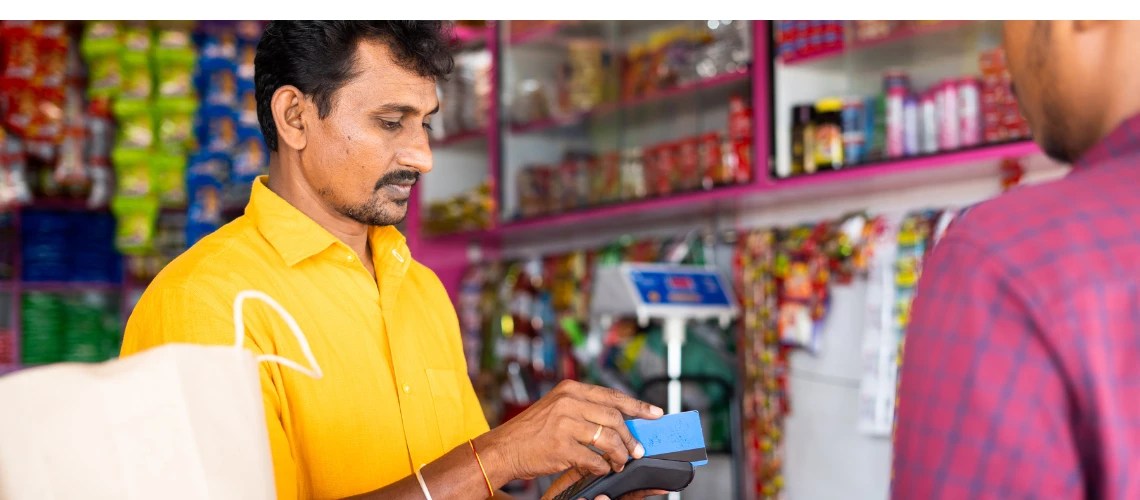
India’s digital payments journey has reshaped global imagination. At a moment when many countries still viewed fast payments as tools for high-value bank-to-bank settlement, India reimagined them as a universal service built for people and everyday life. That vision fundamentally reshaped understanding how payments could improve lives.
Continue reading‘Frontier Market’ Economies Haven’t Lived Up to Potential Since 2010
WASHINGTON, January 20, 2026—“Frontier market” economies—a cluster of mostly middle-income economies regarded as the proving ground for the next generation of economic superstars—have largely failed to live up to their potential in recent decades, a new World Bank study has found. On average, investment growth per person in the 2020s so far has been less than half the rate in the 2010s. Yet the experience of the top performers among frontier markets reveals lessons for the 56 economies currently in the cluster.
Continue readingInternational Day of Education 2026: Education Works
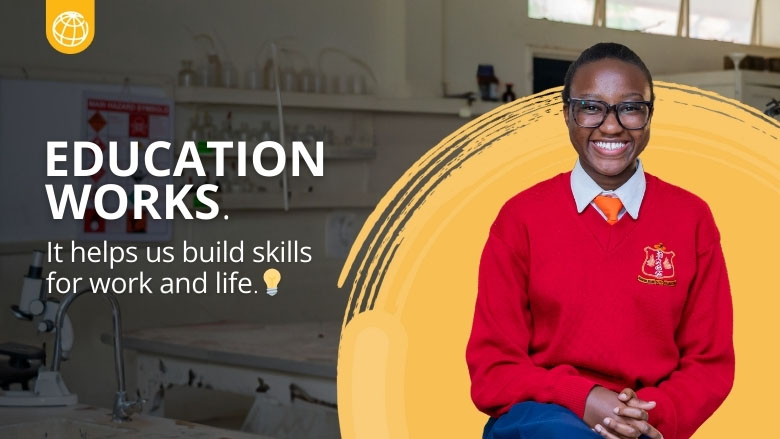
Education is the foundation to skills development and jobs, and the surest way out of poverty, empowering generations to earn an income and drive economic growth. A good education equips learners with key foundational skills—literacy, numeracy, and socio-emotional competencies—which are essential for work and life. These skills help today’s children become tomorrow’s productive workers and enable workers to reskill or upskill later in life. The World Bank Group is the largest financier of education in the developing world, with a $26.4 billion portfolio across 81 countries, supporting 324 million students to date with better education.
On this International Day of Education, we look at why education works, and how it helps propel people out of poverty, putting economies on a path to growth.
“Credit: World Bank Group. All rights reserved”
Global economic resilience masks an uneven growth outlook
First, the good news: in the face of one shock after another, the global economy has proved to be surprisingly shock-proof since the COVID-19 pandemic.
Despite steep tariff increases and historically high policy uncertainty during the last 12 months, global GDP growth in 2025 is set to come in at 2.7 percent—the pace that was predicted in January 2025. That rate should hold roughly steady through 2027. Inflation is abating. Interest rates are coming down. Investors are again showing signs of exuberance. At least by one measure, the global recovery from the coronavirus-era recession will go down as the strongest in six decades: global GDP per person in 2025 was 10 percent higher than it was on the eve of the pandemic. Subsequent shocks—wars, inflation, and tariffs—did less damage than most economists feared.
Continue readingMaking AI Work for All: You Ask, We Answer
You are receiving this email because you signed up for our World Bank Live Updates. We want to let you know that we have a new event coming up. February 11, 2026 <a href="https://t.newsletterext.worldbank.org/r/?id=h2b08fbb1,eee1fdd,ef262e4&e=cDE9PGIgc3R5bGU9J2NvbG9yOg&s=moq4BV9sf59jrkGzm1tQd27yflhKkjicSn9DILXeFME#004370;font-size:16px;'>Making AI Work for All: You Ask, We Answer Making AI Work for All: You Ask, We Answer Location: Online 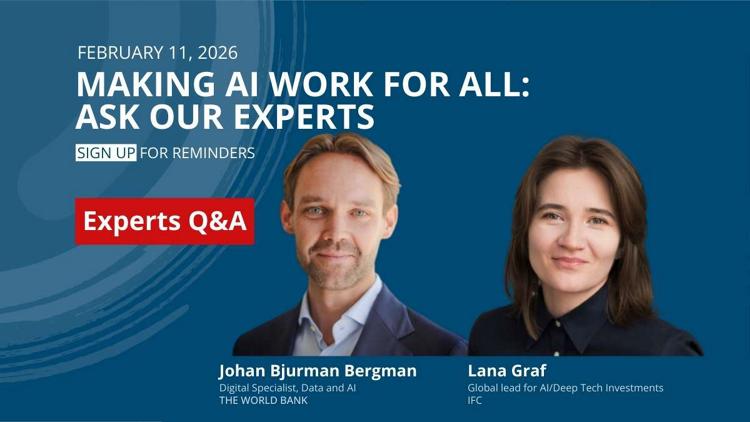 What is small AI, and how can it help developing countries tackle real-world challenges? In this live Q&A, two World Bank Group experts, Johan Bjurman Bergman and Lana Graf, will discuss how practical, affordable, and adaptable AI tools are improving health, agriculture, education, service delivery, and support for small businesses. What is small AI, and how can it help developing countries tackle real-world challenges? In this live Q&A, two World Bank Group experts, Johan Bjurman Bergman and Lana Graf, will discuss how practical, affordable, and adaptable AI tools are improving health, agriculture, education, service delivery, and support for small businesses.Submit your questions in advance to learn how governments are expanding access to AI foundations—skills, data, and computing infrastructure—and why partnerships with the private sector matter for scaling solutions. Sign up for an event reminder and join us live. Experts will answer questions in the chat during the session. World Bank Live Development Events Brought to You Live |
“Credit: World Bank Group. All rights reserved”
 Netherlands for the World Bank
You must be logged in to post a comment.