eC2: Sub National Investment Promotion and Competitiveness Strategy

Deadline: 17-Aug-2017 at 11:59:59 PM (Eastern Time – Washington D.C.) Climate-Change-Story-Banner
The WBG supported Ethiopia Investment Climate Program aims to scale up support for policies, institutions, and catalytic initiatives that stimulate trade, increase access to markets, improve the investment climate, promote competitiveness, and foster innovation and entrepreneurship. Within their mandate, sub-national regionals regions or regional states can address the myriad investment-service related problems and proactively promote their respective Region as competitive investment destination. Support in this area could include the following: (a) Assisting and guiding companies already located or considering locating in regions; (b) Improving subnational regulation for doing business. The initial focus of the program will be the on Amhara Regional State.
The objective of this consultancy is to support the State of Amhara to develop a regional investment promotion strategy and engage public and private leaders to accelerate the growth of investment and jobs in the region.

Continue reading

eC2: IFC-Heineken Brewery Share Company (HBSC)-Ethiopia Malt Barley Supply Chain Development Data Collection- for Baseline Study

Deadline: 26-Jul-2017 at 11:59:59 PM (Eastern Time – Washington D.C.) Survey

A baseline study involving qualitative and quantitative methods will be conducted in the malt barley sector in Ethiopia. The baseline study will provide IFC management and the project staff with information, lessons and recommendations that can be used to improve the design of similar projects elsewhere.

Continue reading

Breaking the Cycle of Crisis

Thirty years ago, a million people in Ethiopia died in one of the worst famines in modern history – a disaster caused by conflict and drought.

Today, conflict and drought are again contributing to a crisis that has put 20 million people in four countries on the brink of famine. This time, Ethiopia is not among them.

eC2: Streamlining Veterinary Drugs, Vaccines and Feed Related Products and Business Procedures in Ethiopia

Deadline: 10-Jul-2017 at 11:59:59 PM (Eastern Time – Washington D.C.)

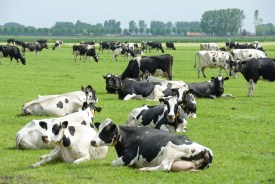
The Objective: The main objective of this assignment is to introduce regulatory reforms Koeien in de weiand also build the Veterinary Drugs and Feed Administration and Control Authorities capacity to enable it execute its role more efficiently.

Scope of Overall Work: The scope of overall work involves but is not limited to:
a) Capacity-building of VDFACA and its technical staff in the relevant areas of regulatory processes
b) Recommending and assisting VDFACA to implement streamlined registration and licensing procedures for the veterinary drugs, vaccines and animal compound feeds through, simplification, rationalization, and where possible and desirable, automation. This is in relation to procedures that are VDFACA s responsibility
c) Assisting VDFACA to increase the consistency and predictability of registration and licensing procedures
d) Strengthen VDFACAs capacity to conduct inspections on drug consignments at ports of entry, wholesale and retail outlets
e) Support VDFACA to increase its capacity for pharmacovigilance (market surveillance)
f) Support VDFACAs and or MoLFs capacity to address anti-microbial resistance and animal food residues
g) Upgrading of VDFACA laboratory staffs capacity to conduct tests on drug samples

Continue reading

Moving Away from Humanitarian Appeals to Managing Droughts in Ethiopia

STORY HIGHLIGHTSafr-moving-away-from-humanitarian-appeals-to-managing-droughts-in-ethiopia-feature-780x439.jpg
  • The World Bank has approved another $100 million for a program in Ethiopia that focuses on long-term practical measures to prevent famine.
  • Despite these measures, this year’s widespread drought in the Horn of Africa has badly affected Afar and Somali pastoralists in eastern Ethiopia.
  • Ethiopia routinely supports people during prolonged droughts like this one, but has issued an appeal for international aid this year.

Continue reading

eC2: Scaling Solar Ethiopia – Resource Measurement Campaign

Deadline: 07-Feb-2017 at 11:59:59 PM (Eastern Time – Washington D.C.)solar-energy

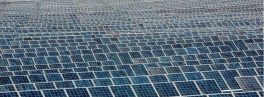
The Scaling Solar program (see http://www.scalingsolar.org) aims to accelerate the roll-out of competitively priced, utility-scale solar photovoltaic (PV) power in Sub-Saharan Africa through a coordinated, packaged and largely standardised joint World Bank Group (World Bank, IFC, and MIGA) solution based on a templated Public Private Partnership (PPP) transaction. To date, four countries have signed up to the program and more countries are expected to follow shortly. In relation to Scaling Solar Ethiopia, IFC intends to hire a firm to provide reliable on-site measured solar resource data for an expected 3 separate sites in Ethiopia for a period of 1 year. The firm is to install, manage and maintain solar resource measurement stations at these sites in order to provide bankable solar resource data in line with the details to be provided in the terms of reference.

Continue reading

eC2: Scaling Solar – Technical, Environmental and Social Consultant

Deadline: 30-Oct-2016 at 11:59:59 PM (Eastern Time – Washington D.C.)

IFC has been retained as lead transaction advisor by Ethiopian Electric Power to procure scaling+solar+main+bannerthe development, construction and operation and maintenance of up to 500MW of utility scale solar PV projects on a PPP basis under the Scaling Solar Program (the Project).

As such, IFC is procuring a technical, environmental and social consulting firm to advise on the Project. The assignment will be split in to several phases and is expected to include:

Evaluation of a shortlist of potential sites; review of grid code and development of the PPA technical limits schedule; detailed site studies for selected sites, including ground investigations, grid integration studies and E&S scoping; and support to the tender process (e.g. tailoring of the technical and E&S content in the template transaction documents, prequalification evaluation, responding to bidders clarifications, bid evaluation, negotiation support).

Use of a local partner for ground investigations and local E&S expertise is recommended.

Continue reading

eC2:Early Learning Partnership (ELP) Systems Research

The project below is divided into 4 tenders, the descriptions and requirements are the same but the country of execution is different.

Deadline: 27-Oct-2016 at 11:59:59 PM (Eastern Time – Washington D.C.)index

The goals of the ELP Systems Research program are (1) to provide policymakers in a set of focus countries with actionable information to help guide the delivery of quality, equitable early learning at scale; and (2) to build the international evidence base in the emerging field of systems research in early childhood education. Funding is available for one research team for each of the following focus countries/regions: Ethiopia; Liberia; the province of Punjab, Pakistan; and Tanzania. An additional focus country may be added at a later time depending on the availability of funds.

Continue reading

eConsultant2: Assessment of Potential Public Private Partnerships

Deadline: 31-Dec-2015 at 11:59:59 PM (Eastern Time – Washington D.C.)

Preliminary assessment of potential infrastructure projects to develop aInfra in Ethiopia pipeline of feasible PPP projects in Ethiopia. The result of the assessment will serve to inform future government decisions on which projects to prioritize for further development as PPPs.

Continue reading

eConsultant2: Commercial Plantation Forestry Industry Investment Plan

Deadline: 10-Dec-2015 at 11:59:59 PM (Eastern Time – Washington D.C.)

The objective of each study is to provide recommendations for financially feasible options Forestryfor commercial plantation forestry industry cluster development. This would be for the optimal utilization of existing and potential plantation forestry wood resources in terms of wood product market requirements both domestic and export. Industry cluster development options should consider all possible impacting factors including available suitable wood and land resources, possible outgrowers, markets, infrastructure and workforce, communities, existing businesses, and possible SOE privatization/inclusions.

Continue reading