
For African cities to grow economically as they have grown in size, they must create  productive environments to attract investments, increase economic efficiency, and create livable environments that prevent urban costs from rising with increased population densification. What are the central obstacles that prevent African cities and towns from becoming sustainable engines of economic growth and prosperity? Among the most critical factors that limit the growth and livability of urban areas are land markets, investments in public infrastructure and assets, and the institutions to enable both. To unleash the potential of African cities and towns for delivering services and employment in a livable and environmentally friendly environment, a sequenced approach is needed to reform institutions and policies and to target infrastructure investments. This book lays out three foundations that need fixing to guide cities and towns throughout Sub-Saharan Africa on their way to productivity and livability.
Download full report here.

![medical-appointment-doctor-healthcare-clinic-health-hospital-medicine[7]](https://nl4worldbank.org/wp-content/uploads/2015/09/medical-appointment-doctor-healthcare-clinic-health-hospital-medicine7.jpg?w=325&h=217)
 at meetings both within the World Bank and more broadly. The issue is not just linguistic hair-splitting. Technology optimists prefer the first term and see new technologies, digitization in particular, as an opportunity for low-income developing countries to leapfrog into the 21st century. Moonshot Africa, an ambitious World Bank initiative to connect individuals, firms, and governments in Africa to fast internet is inspired by this vision. Technology pessimists on the other hand emphasize the disruptive effects digital technologies are expected to have on labor markets. Concerns about robots and algorithms replacing human labor increasingly dominate the public debate not only in advanced economies, but also in emerging and developing economies. Against this background, it is natural to ask how these two views are compatible. To be more specific: How will Moonshot Africa create jobs on a continent where job creation is needed more than anywhere else in the world with Africa’s working-age population projected to rise by 70% in the next twenty years?
 opportunity, flat yields and small farms. It’s true that Africa is still producing too little food and value-added products despite recent efforts to increase investment, and that agricultural productivity has been broadly stagnant since the 1980s as shown in the
  Warning Systems (CREWS) initiative and through the CREWS initiative provides complementary technical assistance to the national hydrological and meteorological services of Mali and Niger in capacity building and institutional strengthening for national weather, water and climate services, early warning system. The World Bank is looking for a qualified consulting firm (incl. universities or similar institutions) to deliver technical assistance with this regard.
 Democratic Republic of Ethiopia (FDRE) has considered among the pro poor sectors. With this understanding the World Bank is extending its support through different interventions. The World Bank Group is supporting the Federal Democratic Republic of Ethiopia to achieve its national targets set under GTP II through availing resources to different sectors and sub sectors.
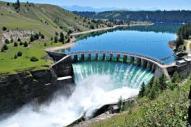 Mpatamanga Hydropower Project in Malawi, using the BEta version of the World Bank’s Hydropower Sector Climate Resilience Guidelines.

You must be logged in to post a comment.