Netherlands for the World Bank

Your guide to the World Bank Group

Netherlands for the World Bank

eC2: SRL-IFC Advisory-Sierra Leone Agricultural Initiative

Deadline: 23-Mar-2020 at 11:59:59 PM (Eastern Time – Washington D.C.) Florinda

The objective of this assignment is to improve the livelihoods of at least 150 households through improved agriculture (technical and commercial) and household practices (i.e. use of assets, family budgeting, nutrition, gender equity, etc.) and develop access to improved technical know-how by building capacity of 40 lead farmers that will share knowledge of improved technical practices with their peers.

Continue reading

Unleashing the economic power of women

By David Malpass, President World Bank Group
March 3, 2020

Girls are attending school in greater numbers than ever before, and women are girls-education-women-empowermentincreasingly entering the labor force and leading businesses. Although we should celebrate this progress, much work remains in order for a girl born today to have the same opportunities as a boy.

Research from the World Bank and others shows that unleashing the economic power of women can contribute to global growth.  Moreover, it is the right thing to do. Fortunately, more countries recognize that economies can reach their full potential only with the full participation of both women and men.

The World Bank Group is supporting countries in achieving this goal in important areas, including the removal of discriminatory laws, investment to close gender gaps, broadening access to finance, and stepping up efforts to prevent gender-based violence.

Continue reading

World Bank Group Announces Up to $12 Billion Immediate Support for COVID-19 Country Response

As COVID-19 reaches more than 60 countries, the World Bank Group is making available IDAan initial package of up to $12 billion in immediate support to assist countries coping with the health and economic impacts of the global outbreak. This financing is designed to help member countries take effective action to respond to and, where possible, lessen the tragic impacts posed by the COVID-19 (coronavirus).

Through this new fast track package, the World Bank Group will help developing countries strengthen health systems, including better access to health services to safeguard people from the epidemic, strengthen disease surveillance, bolster public health interventions, and work with the private sector to reduce the impact on economies. The financial package, with financing drawn from across IDA, IBRD and IFC, will be globally coordinated to support country-based responses.

Continue reading

Procurement Training Webinars

The Private Sector Liaisons are proud to present the first of four World Bank procurement i-love-procurement2training webinars.

World Bank contract bidding process webinar provides information about the bidding process for projects tendered by the client countries of the World Bank Group. The presenter is Nancy Bikondo-Omosa Senior Procurement Specialist.

We encourage you to view the recording of the webinar here: https://1930181.mediaspace.kaltura.com/media/1_bbk9429j

Continue reading

Handbook for Gender-Inclusive Urban Planning and Design

STORY HIGHLIGHTS handbook

  • Urban planning and design shape the environment around us – and that environment, in turn, shapes how we live, work, play, move, and rest.
  • Cities have historically been planned and designed for men and by men. They tend to reflect traditional gender roles and gendered division of labor. In general, cities work better for heterosexual, able-bodied, cisgender men than they do for women, girls, sexual and gender minorities, and people with disabilities.
  • The Handbook for Gender-Inclusive Urban Planning and Design seeks to respond to these urgent questions: how might we design and plan cities that work well for everyone? What would such a city look like, and how would we go about creating it?

Continue reading

Off-Grid Solar Market Trends Report 2020

STORY HIGHLIGHTSscaling+solar+main+banner

  • The off-grid solar sector has expanded into a $1.75 billion annual market serving 420 million users over the past decade and continues to grow.
  • As the sector matures and productive use of off-grid solar solutions such as solar water pumps, cold storage and other products servicing public institutions become natural expansion areas, companies are increasingly focused on its financial sustainability.
  • To achieve universal access to electricity by 2030, the off-grid solar sector would need to serve as many as 132 million households, which in turn would require between $6.6 billion to $11 billion in additional financing.

Continue reading

The Hidden Wealth of Cities: Creating, Financing, and Managing Public Spaces

STORY HIGHLIGHTS Hidden-wealth-of-cities

  • Many cities around the world are missing out on significant development opportunities by ignoring, under leveraging or mismanaging public-space assets.
  • There is enormous opportunity for smarter use of public spaces, and to unlock the “hidden” value they create for communities, neighborhoods, and cities.
  • “The Hidden Wealth of Cities: Creating, Financing, and Managing Public Spaces” identifies a rich palette of creative and innovative strategies that every city can undertake to plan, finance, and manage both government-owned and privately-owned public spaces.

[Click here to download a PDF version of the publication]

Continue reading

eC2: Consultancy Services for Somali Electricity Supply Industry Institutional Design

Deadline: 17-Mar-2020 at 11:59:59 PM (Eastern Time – Washington D.C.)

U.S. Electricity Output Rose 6.2% From A Year Earlier

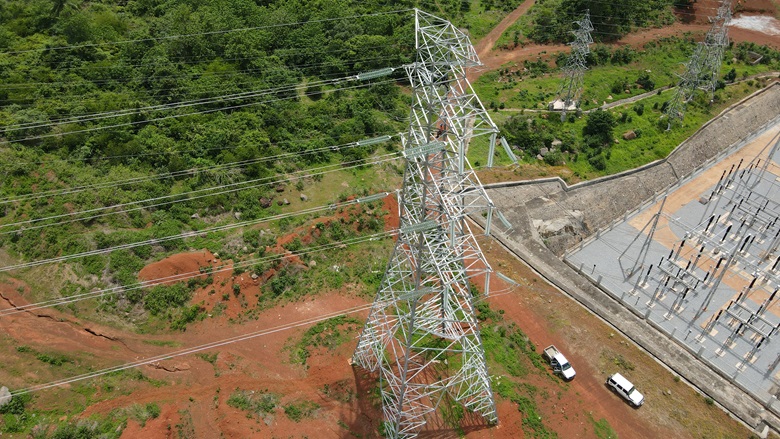
a) Review available government legal, policy and strategy documents for the sector and undertake a detailed assessment of the performance of the electricity supply value chain.
b) Undertake an institutional and organizational review of the current ESI (public and private) institutional arrangements including skills audit and needs assessment.
c) Develop alternative options, clearly delineating the pros and cons, for the functional responsibilities and organizational structure of the ESI alongside the electricity value chain including generation, transmission and distribution functions, including the relations and transactions of the various entities in the ESI. The consultant shall recommend the optimal structure, clearly highlighting the rationale for the recommendation and the associated glide/transition phases as may be required.
d) Define the key responsibilities (value chains) for the management and operations of the ESI including policy and regulatory functions.

Continue reading

eC2: Technical support for the preparation of Flood Risk Management Plans for Romania. Methodologies to develop Programmes of Measures.

Deadline:  05-Mar-2020 at 11:59:59 PM (Eastern Time – Washington D.C.) floods

The assignment aims to develop a suite of practical new Methodologies to develop a flood damage/loss database and systems to support the development of flood risk maps for Romania. It will involve completing the following tasks:
1. Develop the typology structure for a flood damage and loss database.
2. Develop a methodology for flood damage assessment to create data for the database.
3. Develop the population of the database with actual flood damage data and using synthetic data to fill gaps 4. Develop a methodology for the elaboration of Flood Risk Maps, considering the comments received from the European Commission and making use of the existing and new flood hazard maps and the flood damage and loss data base.
5. Trial the deployment of the flood damage/loss database methodology and the development of Flood Risk Maps.

Continue reading

eC2: Technical support for the preparation of Flood Risk Management Plans for Romania. Methodology for the elaboration of Flood Hazard Maps for Romania

Deadline: 05-Mar-2020 at 11:59:59 PM (Eastern Time – Washington D.C.) water

The assignment aims to develop methodologies to elaborate the flood hazard maps for Areas of Potential Significant Flood Risk reported to the European Commission in 2019 (APSFR II). It will involve the following tasks: 1.Collate and review existing information on APSFR from cycle I and II, Flood Hazard Maps I and methodology. 2.Set out a clear overall integrated methodological framework for hazard mapping with specific methodologies for different types of flood hazards (Flash Floods, Pluvial Floods in urban areas, Coastal flooding, flooding due to dyke breaches)identified under the APSFR II. This framework is to be aligned with the methodology used during the first cycle for FHMs from fluvial source, will consider the comments received from the European Commission in the first cycle and international best practices. 3.Propose a method to integrate expected impacts of climate change into the development of the new Flood Hazard Maps and for using the existing Flood Hazard Maps of cycle 1

Continue reading