Deadline: 26-Jun-2019 at 11:59:59 PM (Eastern Time – Washington D.C.)
The Ministry of Infrastructure of Ukraine in coordination with regional and city
administration/council owners of the Lviv International Airport,Kherson International Airport,Chernivtsi International Airport and Zaporizhia International Airport is interested in exploring options to bring private sector financing and expertise into the rehabilitation, expansion and operations of the country’s airport sector, in order to improve service and reduce subsidies. to that end, the Global Infrastructure Facility, the International Finance Corporation and the European Bank for Reconstruction and Development are supporting the MIU and the regional and city administration/councils in conducting a preliminary assessment of options to attract private sector participation in the rehabilitation and expansion of the Airports. IFC and EBRD will procure and manage specialized technical and legal consultants for the assessment, supervise their work,and manage interactions with the public sector clients.
vulnerable to climate risk.
are declining and disappearing, and the number of dead zones is increasing. A dearth of waste management on land results in pollutants and debris, including plastics, finding a home in the ocean.
Bank to implement the second phase of the program on Securing Forest Tenure Rights for Rural Development (SFT). The overall objective of this phase is to test and refine a forest tenure assessment toll and its methodologies to make it practical, adaptable to different contexts, and demonstrate it can achieve traction in policy discussions. Phase 2 will be implemented as a step-wise collaborative process, in close coordination with country task teams and local consultants, supported by a SFT central task team.
among poor people and communities can achieve outcomes that promote poverty reduction, enhanced welfare and create new and expanded employment opportunities. The final output would cover, the potential role of CE in development; case studies and assessment of market potential; different policy approaches for scaling CE, and; recommendations to governments. The consultancy will be based on desk review, economic modeling and detailed case studies that will be selected collaboratively. This EOI was tender for a smaller amount and is now being retendered with an updated amount and TOR.
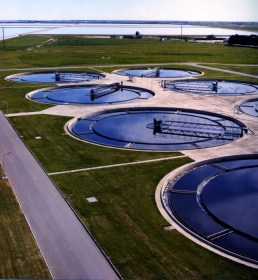
he (the first female engineer had not graduated yet) would not recognize much of the technology we have today. Personal computers, cell phones, cars, planes, and antibiotics would probably be unfathomable to him. But he would definitely recognize our current piped water and sanitation (WSS) infrastructure, as it looks and operates almost exactly the same as it did 150 years ago. Certainly, there have been significant improvements in the sector, especially in water and wastewater treatment, but the principles on which the piped WSS technology is based have not seen any fundamental changes since the 1860s, when it was (re)introduced on a large scale.
obesity and the quest for better public health. Interest in discouraging consumption through higher taxes is growing as more jurisdictions impose them and as we learn more from their experiences. Sugar-sweetened beverage taxes are one of three taxes for health highlighted in a recently published report by the
quantity and quality of livestock commodities produced in the county by the key value chain actors. More specifically, the LIFS project focuses on improved productivity across the red meat value chain from livestock production to slaughter, processing and access to markets.
annual meetings when our group, visitors from more than 189 countries along with Indonesians on the island and neighboring communities were acutely woken up at dawn with magnitude 6.4 quake that struck off the coast. Early reports by the National Disaster Mitigation Agency indicated extensive damage to infrastructure and loss of lives in the span of a few minutes. The Indonesian response that followed revealed the difference disaster risk finance can bring to families, economies and societies at large. I was humbled by what I experienced and what we can contribute -as an institution together with our partners- to manage these acute disasters more prudently, effectively and humanely.
Improvement Project (DPTIP) by i) assessing and improving institutional regulatory framework and client capacity to increase private sector participation in the public transportation sector in Dhaka; and ii) assessing and recommending specific PPP options and business-financial models for the operation of the feeders associated with the BRT line from Gazipur to Mohakhali, for the associated BRT infrastructure and for the operations of the city-wide bus service. The extent of PPP potential must be well assessed and structured based on client capacity, similar experiences in Bangladesh, the relative appetite of banks and investors in Bangladesh to invest in the transport sector (including through the exploration of financing options such as leasing), and the cost/access to finance for private operators and investors.
You must be logged in to post a comment.