
On August 6, 2017, The government of Bangladesh signed an additional $47.50 million  financing agreement with the World Bank to continue construction of new water infrastructure in Chittagong, and provide access to safe water to around 650,000 inhabitants in the city.
The additional financing to the Chittagong Water Supply Improvement and Sanitation Project will help the Chittagong Water Supply and Sewerage Authority (CWASA) to complete constructing the Modunaghat Water Treatment Plant and Patenga Booster Pumping Station, as well as to install 60 km of new water transmission pipeline and rehabilitate another 73 km pipeline from Kalurghat to the Patenga Booster Pumping Station.
 world but this is usually done in an ad-hoc basis and is not part of a long-term national strategy or policy. There are successes and failures around the world and information on the technological options abound, but there is much less information available on the institutional, regulatory and policy frameworks that incentivize these schemes nor on the financing/contractual arrangements behind these approaches. Many developing countries still think of wastewater as a waste; as something that needs to be treated and discharged. There is a need to move from a linear to a circular thinking.
 engaging with the City of Buenos Aires in several transportation projects across the city. One of them is aimed to provide technical assistance to improve the existing public bicycle transport system ECOBICI.
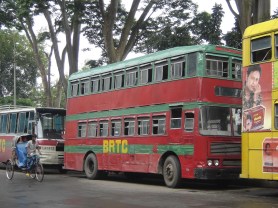 design business models and financial instruments, and provide policy recommendations to speed up clean bus implementation in 5 cities: Buenos Aires, Mexico City, Montevideo, Santiago, Sao Paulo. The consultancy firm will have to develop a detailed diagnosis, including i) detailed market study, including a diagnosis of supply and demand of bus financing, ii) a detailed investigation of bus operations, concessions agreements and procurement practices that hinder or facilitate the sector, iii) and the current regulations/subsidies schemes in each of the cities, defined both at local and national levels. From this diagnosis, the firm will design business models, propose financing mechanisms, provide policy recommendations, and training to relevant counterparts to disseminate the results and support the implementation of projects.
![medical-appointment-doctor-healthcare-clinic-health-hospital-medicine[7]](https://nl4worldbank.org/wp-content/uploads/2015/09/medical-appointment-doctor-healthcare-clinic-health-hospital-medicine7.jpg?w=270&h=180) on access solutions for innovative medicines (henceforth, the Platform) will be to develop and share knowledge and tools for smarter decision making on access strategies for patented medicines for NCDs, through a collaborative approach. The Platform will leverage the pharmaceutical industry’s capacity for developing innovative access solutions and the World Banks role as a strategic long term partner for developing countries and its convening power, to create a reference policy and implementation framework and decision-making tools for maximizing reach of new treatments for populations that typically would not have access to patented medicines, ultimately driving uptake of voluntary access strategies in developing countries.
on access solutions for innovative medicines (henceforth, the Platform) will be to develop and share knowledge and tools for smarter decision making on access strategies for patented medicines for NCDs, through a collaborative approach. The Platform will leverage the pharmaceutical industry’s capacity for developing innovative access solutions and the World Banks role as a strategic long term partner for developing countries and its convening power, to create a reference policy and implementation framework and decision-making tools for maximizing reach of new treatments for populations that typically would not have access to patented medicines, ultimately driving uptake of voluntary access strategies in developing countries. fund to support countries to prepare and implement climate change policies in order to scale-up mitigation efforts. The PMR consists of 13 Contributing Participants, who provide financial support to the PMR Trust Fund and share their carbon pricing experience, and 19 Implementing Country Participants, who receive funding and technical support. In Thailand, the PMR supports the design of an Energy Performance Certificate scheme and prepares infrastructure such as a database and MRV system. PMR activities also include a study on the legal framework for an ETS and preparation of the Low Carbon City Program and Fund.

 Netherlands for the World Bank
You must be logged in to post a comment.