
WASHINGTON DC, August 15, 2017—A new catastrophe risk insurance program to help the Philippines better respond to losses from climate and disaster risks was launched by the Government of the Philippines, supported by the World Bank (IBRD, International Bank for Reconstruction and Development) and the U.K. Department for International Development.
The program provides the Philippine peso equivalent of US$206 million in coverage against losses from major typhoons and earthquakes to national government assets, and to 25 participating provinces against losses from major typhoons. Insurance payouts are made when pre-defined parametric triggers are met.
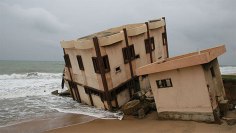 placethat attracts tourists but is
 financing agreement with the World Bank to continue construction of new water infrastructure in Chittagong, and provide access to safe water to around 650,000 inhabitants in the city.
 world but this is usually done in an ad-hoc basis and is not part of a long-term national strategy or policy. There are successes and failures around the world and information on the technological options abound, but there is much less information available on the institutional, regulatory and policy frameworks that incentivize these schemes nor on the financing/contractual arrangements behind these approaches. Many developing countries still think of wastewater as a waste; as something that needs to be treated and discharged. There is a need to move from a linear to a circular thinking.
 engaging with the City of Buenos Aires in several transportation projects across the city. One of them is aimed to provide technical assistance to improve the existing public bicycle transport system ECOBICI.
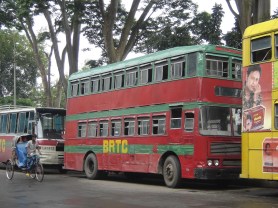 design business models and financial instruments, and provide policy recommendations to speed up clean bus implementation in 5 cities: Buenos Aires, Mexico City, Montevideo, Santiago, Sao Paulo. The consultancy firm will have to develop a detailed diagnosis, including i) detailed market study, including a diagnosis of supply and demand of bus financing, ii) a detailed investigation of bus operations, concessions agreements and procurement practices that hinder or facilitate the sector, iii) and the current regulations/subsidies schemes in each of the cities, defined both at local and national levels. From this diagnosis, the firm will design business models, propose financing mechanisms, provide policy recommendations, and training to relevant counterparts to disseminate the results and support the implementation of projects.
 Netherlands for the World Bank
You must be logged in to post a comment.