Today’s development challenges are broader, more complex, and more interconnected than ever before. At the same time, resources are increasingly constrained. This moment demands a more coordinated response. The question is no longer whether we work together, but how effectively—and how quickly—we can do so.
New World Bank report calls for more investment in better waste management and circular economy
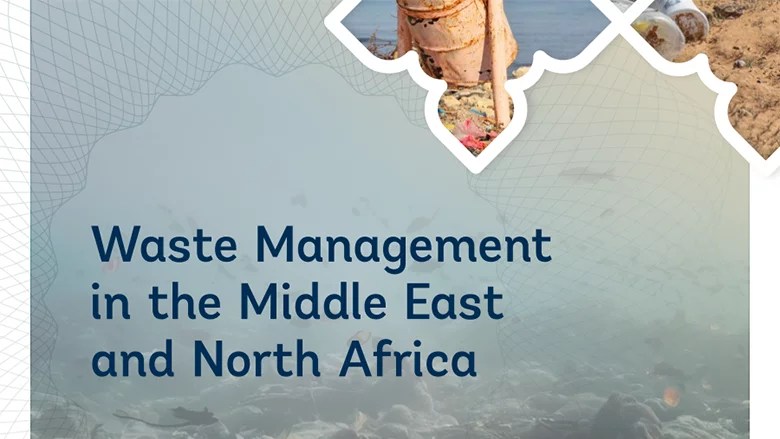
WASHINGTON, January 27, 2026 — The Middle East and North Africa region generates more waste per person than the global average and causes an estimated US$7.2 billion in environmental damage each year, according to a new World Bank report: Waste Management in the Middle East and North Africa.
In 2017, a ransomware spread across multiple countries, causing an estimated $10 billion in damage to businesses worldwide. More recently, in Costa Rica, a major incident in 2022 forced the government to declare a national state of emergency and resulted in losses up to 2.4% of GDP.
Digital technologies are reshaping economies and public services, but they also introduce new and persistent risks. Cyber incidents can disrupt essential services, undermine trust in public institutions, and erase development gains built over years.
Cybersecurity, therefore, is no longer a narrow technical concern. It is a foundational element of economic growth, national security, and inclusive digital development.
The World Bank’s flagship report, “Waste Management in the Middle East and North Africa,” reveals that the region currently generates over 155 million tons of waste each year, a figure projected to nearly double to 294 million tons by 2050. Poor waste management costs the region around US$7.2 billion each year in environmental damage. Food waste alone causes US$60 billion in losses, in a region where one in six people faces severe food insecurity. The report analyzes the challenges and opportunities in the waste sector across the region. Through new data from 19 countries and 26 cities, the report recommends pathways to advance waste management systems, tailored to high-income, middle-income, and fragile/conflict-affected countries. It calls for investment to modernize waste systems, reduce food loss and promote measures in line with the principles of circular economy. The report highlights that up to 83 percent of the waste collected in MENA could be reused, recycled, or recovered for energy. Transitioning to a circular economy could also create better jobs, particularly in waste services and recycling, while turning today’s waste crisis into a driver of sustainable growth. The report analyzes the challenges and opportunities in the waste sector across the region. Through new data from 19 countries and 26 cities, the report recommends pathways to advance waste management systems, tailored to high-income, middle-income, and fragile/conflict-affected countries. It calls for investment to modernize waste systems, reduce food loss and promote measures in line with the principles of circular economy. The report highlights that up to 83 percent of the waste collected in MENA could be reused, recycled, or recovered for energy. Transitioning to a circular economy could also create better jobs, particularly in waste services and recycling, while turning today’s waste crisis into a driver of sustainable growth.
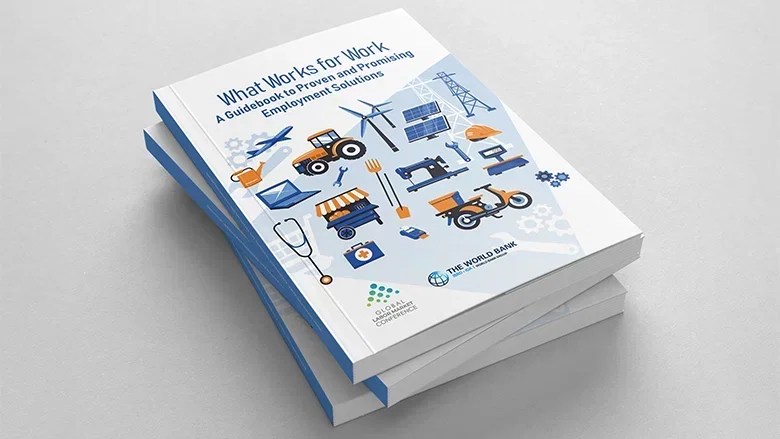
New World Bank Group guidebook presents evidence-based strategies for designing effective labor programs, especially in low- and middle-income countries facing job creation challenges.
The most effective labor programs in low- and middle-income countries deliver earnings and employment improvements four to five times greater than the average, at times providing up to ten years lasting benefits, and returns far exceeding the initial investments.
Five core principles—contextual tailoring, comprehensive scope, incentive alignment, private sector engagement, and social protection integration—are key to creating lasting, inclusive impacts in the labor market.
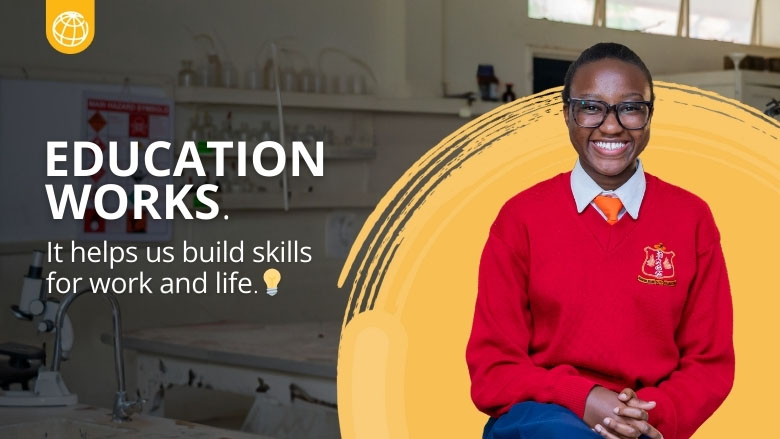
Education is the foundation to skills development and jobs, and the surest way out of poverty, empowering generations to earn an income and drive economic growth. A good education equips learners with key foundational skills—literacy, numeracy, and socio-emotional competencies—which are essential for work and life. These skills help today’s children become tomorrow’s productive workers and enable workers to reskill or upskill later in life. The World Bank Group is the largest financier of education in the developing world, with a $26.4 billion portfolio across 81 countries, supporting 324 million students to date with better education.
On this International Day of Education, we look at why education works, and how it helps propel people out of poverty, putting economies on a path to growth.
First, the good news: in the face of one shock after another, the global economy has proved to be surprisingly shock-proof since the COVID-19 pandemic.
Despite steep tariff increases and historically high policy uncertainty during the last 12 months, global GDP growth in 2025 is set to come in at 2.7 percent—the pace that was predicted in January 2025. That rate should hold roughly steady through 2027. Inflation is abating. Interest rates are coming down. Investors are again showing signs of exuberance. At least by one measure, the global recovery from the coronavirus-era recession will go down as the strongest in six decades: global GDP per person in 2025 was 10 percent higher than it was on the eve of the pandemic. Subsequent shocks—wars, inflation, and tariffs—did less damage than most economists feared.
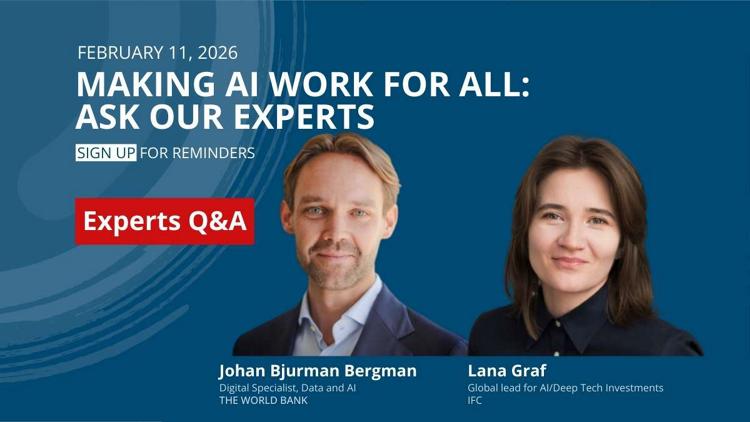
You are receiving this email because you signed up for our World Bank Live Updates. We want to let you know that we have a new event coming up. February 11, 2026 <a href="https://t.newsletterext.worldbank.org/r/?id=h2b08fbb1,eee1fdd,ef262e4&e=cDE9PGIgc3R5bGU9J2NvbG9yOg&s=moq4BV9sf59jrkGzm1tQd27yflhKkjicSn9DILXeFME#004370;font-size:16px;'>Making AI Work for All: You Ask, We Answer Making AI Work for All: You Ask, We Answer Location: Online What is small AI, and how can it help developing countries tackle real-world challenges? In this live Q&A, two World Bank Group experts, Johan Bjurman Bergman and Lana Graf, will discuss how practical, affordable, and adaptable AI tools are improving health, agriculture, education, service delivery, and support for small businesses. Submit your questions in advance to learn how governments are expanding access to AI foundations—skills, data, and computing infrastructure—and why partnerships with the private sector matter for scaling solutions. Sign up for an event reminder and join us live. Experts will answer questions in the chat during the session. World Bank Live Development Events Brought to You Live




 Netherlands for the World Bank
You must be logged in to post a comment.