
Deadline: 19-Nov-2018 at 11:59:59 PM (Eastern Time – Washington D.C.) 
Conclusion: The final section will provide a short summary of the drawbacks and benefits of implementing the TLA toolkit.
Deliverables: The consultant will produce a concise toolkit (guidebook) addressing issues described in the scope of work. The toolkit will be no more than 50 pages in length (aside from any annexes). In addition to the toolkit the toolkit will be developed into an interactive and modular web-based tool that policymakers and development partners can use as a self-guided tutorial.
 lately. Policymakers are concerned that America’s leading firms such as the FAANG stocks — Facebook, Apple, Amazon, Netflix and Google — are having adverse results on the rest of us and making economic policy less predictable. Why is this? Many of the companies have improved the lives of people across the world with highly desirable and useful products. These superstar firms have also done very well for many of their stakeholders and investors. The numbers are staggering. These five tech companies together account for roughly half of the gains achieved by the Standard & Poor’s 500 stock index in 2018. And in recent weeks, Apple became the world’s first trillion-dollar corporation, with Amazon not far behind. While the superstar firms have made life easier for many consumers, it’s hard for economists not to wonder whether the effects of their stratospheric success are entirely benign.
![medical-appointment-doctor-healthcare-clinic-health-hospital-medicine[7]](https://nl4worldbank.org/wp-content/uploads/2015/09/medical-appointment-doctor-healthcare-clinic-health-hospital-medicine7.jpg?w=584)

 been in the market for weather forecasts that help them decide when to plant and harvest to mitigate climate risks. Earlier this month, the 48th session of the Intergovernmental Panel on Climate Change delivered sobering news: the
 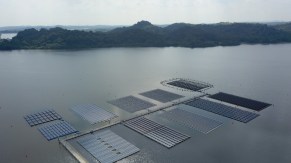 solar energy around the world, especially in countries with high population density and where land is a constraint
 emerging carbon pricing initiatives around the world including national, sub-national and corporate activities, emissions trading systems, carbon taxes, and crediting mechanisms Building on the efforts made in 2018, it will include a discussion on the carbon pricing trends. It will also address the feedback received last year and focus on developing clearer lessons learned from the various carbon pricing initiatives and from various publications (including WBG ones), improved infographics featuring key facts and numbers. In addition, it will feature a section on the various ways to price carbon, including through implicit and negative carbon pricing policies. Finally, the report will continue to complete the online dashboard that was launched in 2017, and which allows for direct access to this data and more regular updates. This report is expected to have approximately about 50 pages.
 for community forestry that will benefit the implementation of the ASL projects in Brazil, Peru and Colombia. The process should involve a comprehensive study tour that will provide an opportunity for the participants to learn from successful cases and receive technical knowledge. Considering similarities with the conditions of the ASL projects, it is suggested that the study tour considers learning from the community management experiences In the Guatemala Maya Biosphere Reserve. Due to previous engagement in forest community, working with the Association of Forest Communities of Peten (ACOFOP) and the NGO PRIMSA would be required.
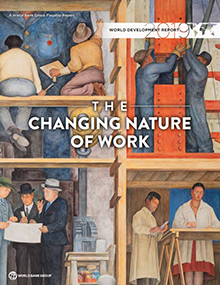 the nature of work is changing as a result of advances in technology today. Fears that robots will take away jobs from people have dominated the discussion over the future of work, but the World Development Report 2019 finds that on balance this appears to be unfounded. Work is constantly reshaped by technological progress. Firms adopt new ways of production, markets expand, and societies evolve. Overall, technology brings opportunity, paving the way to create new jobs, increase productivity, and deliver effective public services. Firms can grow rapidly thanks to digital transformation, expanding their boundaries and reshaping traditional production patterns.
 Netherlands for the World Bank
You must be logged in to post a comment.