
Deadline: 02-Apr-2018 at 11:59:59 PM (Eastern Time – Washington D.C.)
Objective: Open Cities Africa will be carried out in 8-10 cities in Sub-Saharan Africa, to engage local government, civil society, and the private sector to develop the information infrastructures necessary to meet 21st century urban resilience challenges. Each project will: 1) Create and release open spatial data about the built environment, critical infrastructure, and natural hazards; 2) Develop targeted products and/or tools to assist key stakeholders to utilize risk information towards addressing natural disaster risk in the selected city; 3) Enhance the local capacity and institutional development necessary to support the design and implementation of evidence-driven urban resilience interventions; and 4) Promote peer mentorship and build regional networks across cities.



 We are excited to bring you the first 2018 edition of the
  When it comes to infrastructure projects, “unsolicited proposals” (USPs) represent an alternative to the traditional project initiation method where the private sector, rather than the government, takes the leading role in identifying and developing a project. In practice, many public authorities across the world resort to USPs motivated by the perspective of solving the challenges brought by their lack of capacity to identify and develop projects. However, many projects that originate as USPs experience challenges, including diverting public resources away from the strategic plans of the government, providing poor value for money, and leading to patronage and lack of transparency, particularly in developing countries. To ensure governments can mobilize the strengths of the private sector while protecting the public interest, USPs, when accepted, should be managed and used with caution as an exception to the public procurement method.
 Deadline: 21-Mar-2018 at 11:59:59 PM (Eastern Time – Washington D.C.)
 The Private Sector Liaisons of Spain, Germany, Austria, and the Netherlands invite you to mark your calendar for June 4-6, 2018 for a joint mission focusing on the Water sector opportunities at the International Financial Institutions: World Bank Group (WBG), Inter-American Development Bank (IADB), and the Millennium Challenge Corporation (MCC).
 What is your role within the World Bank?
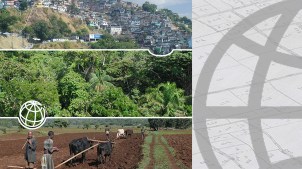 Every year the Netherlands is represented by NGO’s , Universities , Government Institutions and the private sector at the Land and Poverty conference organized by the World Bank. The conference has become one of the largest international events on land governance, attracting over 1,300 participants in 2017 from governments, academics, civil society, and the private sector. The topic of land governance is an area the Dutch have been worldwide leaders, represented and leading the way at the conference are Kadaster and the University of Maastricht. The 2018 conference theme will be: Land Governance in an Interconnected World the aforementioned organizations will be presenting on the use of Block chain technology.
 Netherlands for the World Bank
You must be logged in to post a comment.