
Deadline: 24-Jul-2017 at 11:59:59 PM (Eastern Time – Washington D.C.)
The World Bank-GFDRR DRFIP is seeking support in the development of 4 interactive 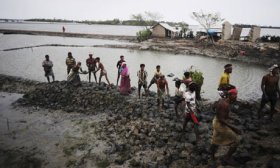 quantitative tools to support decision-making in financial disaster risk management. The tools will draw on current international best practice in user interface design, transparency and quality in coding, and probabilistic financial and actuarial analysis.
This consultancy covers the compilation and cleansing of data (from public sources); the development of quantitative methodology; and production (design, development, validation and testing) of 4 quantitative interactive tools in MS Excel. The quantitative tools will be generic tools that can be adapted and applied to support capacity building and decision making in many countries. The tools will allow decision makers to assess the liability and fiscal funding gap following a disaster, understand the financial implications of different DRF strategies, as well as answer questions about financial instruments and define relevant policy options.
 providing risk capital/ patient capital that are otherwise extremely scarce. Established in 2008, the successful raise of a follow-on fund by the Central Africa SME Fund validated IFCs pioneering role, and IFC secured Boards approval to expand the program globally in 2015.
 out to be not only technically challenging, but also politically risky. As the benefits of carbon pricing policies are not always self-evident, a strategic communication plan for awareness raising and risk management both within the government, among businesses and for the general public can be critical to ensure the successful adoption and implementation of such policies.
 give a presentation about their activities. MIGA contributes to the World Bank Group’s goals of ending extreme poverty and promoting shared prosperity by facilitating private investment into developing member countries and supporting projects that bring broad developmental impact. MIGA-supported investments help bring jobs, innovation, technology, and skills transfer.
 getting maximum value for the use of its donor funds by making a difference in how we invest in road safety. This is in line with our Strategic Objectives of developing capacity for sustainability in road safety results, promoting a global network of road safety funding, coordination and advocacy mechanisms, and leveraging development bank projects, particularly those of the GRSF host organization, the World Bank.
 challenge that has been shown to contribute to a number of harmful consequences, including school dropout, early pregnancy, intimate partner violence and infant mortality. But what are the economic impacts of child marriage? Join the International Center for Research on Women (ICRW) and the World Bank to discuss the findings from a groundbreaking research project to uncover the economic costs of child marriage.


 Netherlands for the World Bank
You must be logged in to post a comment.