Innovative Insurance Program to Boost Natural Disaster Risk Management

WASHINGTON DC, August 15, 2017—A new catastrophe risk insurance program to helpvn-communitybased-disasterrisk-780x439 the Philippines better respond to losses from climate and disaster risks was launched by the Government of the Philippines, supported by the World Bank (IBRD, International Bank for Reconstruction and Development) and the U.K. Department for International Development.

The program provides the Philippine peso equivalent of US$206 million in coverage against losses from major typhoons and earthquakes to national government assets, and to 25 participating provinces against losses from major typhoons. Insurance payouts are made when pre-defined parametric triggers are met.
Continue reading →

In Benin, Can Resilient Investment Solutions Save a Battered Coast?

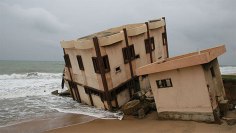
I was raised in a small town called Hornsea on England’s east coast, a magnificent blog-in-benin-can-resilient-investment-solutions-save-a-battered-coast-780x439placethat attracts tourists but is eroding faster than the rest of Europe. Some of the impressive, clay cliffs are literally crumbling. Local roads and the old settlement and have fallen into the sea. More than once, forward-planning residents have demolished and rebuilt their houses from salvaged materials as their coast recedes.

Continue reading →

eC2: Consulting firm for Resource Efficiency and Clean energy Advisory to Textile-Footwear Industries.

Deadline: 28-Aug-2017 at 11:59:59 PM (Eastern Time – Washington D.C.) 

PSLO Energy Mission to Washington

Firms responding to this EOI should have practical experience working with the textile/apparel/footwear sector in Vietnam and/or other countries in Asia-Pacific and demonstrated expertise in developing cost-effective projects to save water, energy, and chemicals and reduce variable operating costs. Interested consultants must have a broad range of capabilities in the areas of firm-level REF scoping/detailed assessments, wastewater treatment and recycle projects, and sector-level capacity building, awareness raising, and employee training. In addition, interested consultant must have experience in developing captive renewable energy projects. Relevant experience working with manufacturing supply chains will be a plus. Development of high-quality reports and other deliverables in both English and Vietnamese in a timely manner will be required. The consultant team must have a local partner who work in related field. IFC reserves the right to modify the scope and/or cancel this EOI depending on available funding.

Continue reading →

World Bank Helps Bangladesh Improve Water and Sanitation Services in Chittagong

On August 6, 2017, The government of Bangladesh signed an additional $47.50 million Bangladesh partnershipfinancing agreement with the World Bank to continue construction of new water infrastructure in Chittagong, and provide access to safe water to around 650,000 inhabitants in the city.

The additional financing to the Chittagong Water Supply Improvement and Sanitation Project will help the Chittagong Water Supply and Sewerage Authority (CWASA) to complete constructing the Modunaghat Water Treatment Plant and Patenga Booster Pumping Station, as well as to install 60 km of new water transmission pipeline and rehabilitate another 73 km pipeline from Kalurghat to the Patenga Booster Pumping Station.

Continue reading →

eC2: Innovative models for waste water planning, financing and regulation

Deadline: 05-Sep-2017 at 11:59:59 PM (Eastern Time – Washington D.C.)

Wastewater resource recovery is being implemented in many countries around the waste water treamentworld but this is usually done in an ad-hoc basis and is not part of a long-term national strategy or policy. There are successes and failures around the world and information on the technological options abound, but there is much less information available on the institutional, regulatory and policy frameworks that incentivize these schemes nor on the financing/contractual arrangements behind these approaches. Many developing countries still think of wastewater as a waste; as something that needs to be treated and discharged. There is a need to move from a linear to a circular thinking.

Continue reading →

eC2:BELIZE ENERGY RESILIENT CLIMATE ADAPTATION PROJECT Loan

Deadline: 14-Sep-2017 at 11:59:59 PM (Eastern Time – Washington D.C.) India Energy

The objective of this assignment (the Services) is to assist Belize Electricity Limited (BEL) to develop an effective vegetation study and management plan. This is to ensure that the utility is able to better manage vegetation growth near and under its utilitys lines, and prevent any physically damaging incident with minimal losses, in particular during storms. The plan has to be implemented in an environmentally and socially sustainable manner and be in full compliance with Belizes and the World Banks environmental and social policies and regulations. The specific objectives are: (i) to assess the limitations and capacities of BEL personnel and physical inventory, whether positive or negative, and propose mitigation measures which will effectively address the response time; (ii) identify different alternatives and their potential impacts and relevant mitigation measures; and (iii) to establish clear directives and methodologies for the effective implementation of the plan. The indicative implementation period for the Services is September 2017 August 2019.

Continue reading →

Community-Driven Projects Reduce Poverty and Empower Youth in Nigeria

STORY HIGHLIGHTSng-community-driven-projects-reduce-poverty-and-empower-youth-in-nigeria-780x439.jpg

  • To combat poverty, the Commercial Agriculture Development Project for Nigeria involves beneficiaries as key players and partners.
  • The project supports the strengthening of skills and capacity of Local Government Authorities and sectoral public agencies to provide support to communities.
  • The community-driven, development approach has resulted in 3,435 micro-projects, of which more than 50 percent are completed and in use.

Continue reading →

eC2: Ethiopia Malt Barley Supply Chain – Cooperative and Lead Farmer Business Management Training

Deadline:  04-Sep-2017 at 11:59:59 PM (Eastern Time – Washington D.C.) ml-can-a-nation-build-its-future-if-it-cannot-feed-its-children-five-policy-actions-to-transform-crop-and-livestock-farming-in-mali-780x439

IFC plans to assist a large domestic buyer to increase the quantity of malt barley procured from local smallholder farmers by aggregators such as cooperatives or “lead farmers”. Part of the project includes improving the professionalism of approximately 80 aggregators so that they can function more effectively as businesses and provide better services to their members and/or smallholder farmer clients.

Continue reading →

eC2: SE4All Least-Cost Electrification Global Platform

Deadline: 07-Sep-2017 at 11:59:59 PM (Eastern Time – Washington D.C.)logo

Specifically, the objectives of this assignment are threefold:
1. Develop a set of industry compatible data standards for electrification models data inputs and modelling outputs, primarily to facilitate data inputs reuse and comparability of outputs across models and countries;
2. Develop a scenario-based global model of least-cost electrification planning for universal access for all countries with electrification rate below 90% (as per World Bank Global Tracking Framework 2017)
3. Develop a web mapping application that demonstrates the global models results, and allows users to adjust certain parameters that affect least cost electrification planning, such as but not limited to:
a. Technology costs
b. Cost of diesel
c. Electrification level targeted
d. Timeline considered for universal access
The web mapping platform will need to ensure compatibility leveraging data standards specified as part of this assignment, notably to allow users to visualize other or future modelling results.

Continue reading →

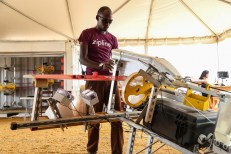
Finger Splints, Coding, Drones and R2D2: The Evolving Face of Technology and Development

Blood-delivering drones? Check. 3D-printer working off grid to print finger splints?drone Check. Disadvantaged women trained and employed in software-developing? Check. Is this how technology can deliver for development?

First things first. Let’s go back to the first principles. The World Bank’s World Development Report 2016 used a 3X3 framework to think about digital technology from a development lens: inclusion, efficiency and innovation for people, governments and businesses. Digital technologies, when employed as a tool for development, have the capacity to promote inclusive economies and societies, build upon existing capital and generate economies of scale. Herein lies powerful potential.

Continue reading →