Join #HLPWater to show your support

Join #HLPWater to show your support
Deadline: 05-Oct-2017 at 11:59:59 PM (Eastern Time – Washington D.C.) 
Deadline: 03-Oct-2017 at 11:59:59 PM (Eastern Time – Washington D.C.) 
IFC PPP Transaction Advisory is seeking to recruit an international technical consultant for structuring and implementation of an airport concession tender. The airport is in a EU member state and has capacity of ~5m passengers annually. Additional project information will be disclosed to the shortlisted companies. The work of the technical consultants is to be divided into two main phases. Phase 1 transaction structuring will encompass a technical analysis of all aspects of the project, including traffic projections, capital investment program, and environmental and social issues. Phase 2 will consist of the transaction implementation and will require from the technical consultant to assist in the successful tendering of the project by providing input to the technical annexes of the project documents, assistance with the bidders due diligence and evaluation of their technical offers.
Community-Led Total Sanitation might be the greatest Bangladeshi export you’ve never heard of. In countries across Asia, Africa and  Latin America, a consensus has emerged that the best approach is Community-Led Total Sanitation, which is widely credited with changing people’s behavior around the world to no longer defecate in the open, which has greatly improved global health.
Bangladeshis can take plenty of pride in these far-away accomplishments. That’s because it is Northern Bangladesh – more specifically the Mosmoil village in Rajshahi district – that pioneered this approach seventeen years ago. Its success at home led to its widespread adoption abroad.
Afghanistan is struggling with unemployment and poor economic performance because  of drastic reductions in foreign aid and continued social instability. While efforts have been made to improve the private sector, including several sectors like mining and manufacturing, the gains have been modest as Afghanistan remains beset by conflict and instability.
Yet investments in agriculture, particularly horticulture, have produced tangible returns as unique weather conditions are favorable to growing produce that are in-demand in local and regional markets.
Lack of Early childhood programs perpetuates inequality
While good quality ECD is important for all children, it is essential to support the development of children in disadvantaged settings. Indeed, various studies have demonstrated how investment in ECD can help reduce inequality and break the cycle of poverty.
As Nobel laureate Professor James Heckman put it, “Children raised in disadvantaged environments are not only much less likely to succeed in school or society, but they are also much less likely to be healthy adults.” Effective early childhood programs can lead to improved economic prospects of children by helping them gain the foundational skills they need to be more productive in the future workforce.
Deadline: 05-Oct-2017 at 11:59:59 PM (Eastern Time – Washington D.C.) 
The Water GP has defined an innovative results framework (RF) to track combined results from activities funded by the GWSP multi-donor trust fund and World Bank-financed operations. This results framework has been defined in partnership with donors to the GWSP to allow them to track the additionality of funding they provide to the multidonor trust fund. In a spirit of integration with WB operations, the RF was designed as a comprehensive framework for the WGP as a whole. Underlining the RF, the WGP has identified five priority themes where emphasis is critically needed to achieve the SDG for water (SDG 6) and contribute to many other SDGs which are so closely interlinked with the achievement of a Water-Secure world for all. These five themes are areas where countries need to redouble their efforts and in some cases, revise their strategies to increase their chances of meeting the water SDG: they include sustainability, inclusion, institutions, financing and resilience.
250 million children under the age of five in the developing world are failing to reach  their full development potential. Faced with this challenge, governments and donors across the globe have turned to early childhood education and development (ECED) services. These are a cost-effective way to overcome the developmental losses associated with growing up in a disadvantaged environment. The services can be delivered in different ways, such as through kindergartens and community-based playgroups.
But how effective are these, in practice?
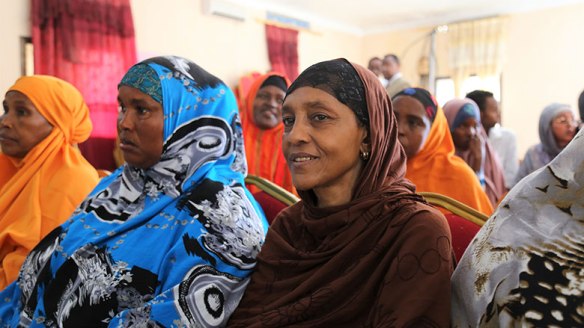
ADDIS-ABABA, September 12 2017‒“Hydromet” or weather, water, and climate services affect the decisions people, communities, and governments make every day. A family at their farm, a shopkeeper in a store, or a government worker on a dam, all need accurate, timely information to make well-informed day-to-day decisions. This can come from something as simple a river gauge, which warns of rising water levels, to more advanced weather forecasting systems alerting an entire country of the approach of a cyclone.


You must be logged in to post a comment.