
Deadline: 03-Sep-2017 at 11:59:59 PM (Eastern Time – Washington D.C.) 
The World Bank is commissioning an external evaluation of the Danube Water Program (DWP) on behalf of the DWP Steering committee. The external evaluation will review progress against the results outlined in the DWP Work-plan and overall Program’s objective of supporting institutional capacity building and the development of regulatory and policy instruments in the water supply and wastewater sector in participating countries in the Danube region. Qualified candidates with at least 10 years of professional experience in program and/or policy design and evaluation (relevant experience includes project or program reviews, audits or evaluations in the area of international development) are invited to express interest and submit an updated CV. The work is expected to be undertaken by mid-November 2017, so interested candidates must be fully available from first week in September to engage full-time in the assignment. Please see TOR for more details.
 financing agreement with the World Bank to continue construction of new water infrastructure in Chittagong, and provide access to safe water to around 650,000 inhabitants in the city.
 contribute to improve transport connectivity and sustainability. Whilst local impacts are identified and addressed in site specific ESIA, the lake ecosystem is large, complex, multi-dimensional and dynamic. Understanding the social and environmental issues thus requires comprehensive observation and management at the catchment scale in a holistic manner. Given the wider scope of the interventions on the Lake Victoria basin (both at the ports, but also with the lake itself), with knock-on or cumulative effects on the lakes overall catchment area, a strategic planning framework for the development and protection of the lake, its dependents, and associated infrastructure is critically important. This assignment is designed to support the LVBC do that.


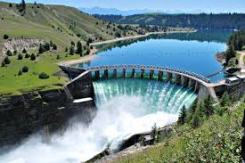 regarding a sector-wide institutional and policy framework for the Government of Papua New Guinea to enable long-term sharing of part of the economic benefits of hydropower projects with the communities that are adversely affected by and/or are hosting such projects.
 Netherlands for the World Bank
You must be logged in to post a comment.