eC2: Post of Short Term Consultant (STC)- Energy and Water Advisory

pexels-photo-831890.jpegDeadline: 18-Feb-2018 at 11:59:59 PM (Eastern Time – Washington D.C.)
Objective: STC will require to do: Business Development and Client Support: data analysis, industry research, brand engagement of the Textile sectors in India, Sri Lanka and other countries as required and support the IFC business development efforts including negotiations with clients and acting as the client relationship manager; for selected projects/markets, undertake project preparation activities (e.g. feasibility studies) in order to support the development of projects which can be presented to the private sector for investment; Support the team to establish and maintain quality client relationships to ensure responsive client service and enhance new business opportunities; Maintain a good knowledge of IFC work programs to ensure timely delivery of tasks. Track project timetables, provide feedback and help with project team coordination. Perform various project related searches and prepare reports and respond quickly to queries from management and staff.

Continue reading

Water works: how a simple technology in Dhaka is changing the way people get clean water

Amy Pickering laughs when she thinks of all the things that went wrong with the impact evaluation she recently completed of a water chlorination project in the slums of Bangladesh’s capital city Dhaka: delays, monsoons, and more delays.“It was the hardest project I’ve ever done,” says the seasoned research engineer, now a professor at Tufts University, who was working on a project funded through the World Bank’s Strategic Impact Evaluation Fund.

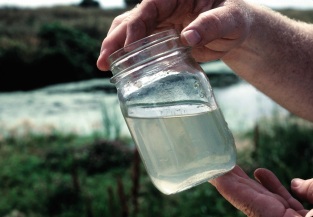
Clean water is an issue in Dhaka and other overcrowded cities in the region, where contamination by bacteria can lead to high rates of diarrhea, harming children’s growth and health. For Pickering, who specializes in water quality and diarrheal disease, the challenge was finding a water treatment technology that could work without electricity and operate in Dhaka’s extreme weather.

Continue reading

Water PPPs that work: The case of Armenia

Downtown Yerevan. Gusty winds, frosty air. Inside a hotel in the town square, cocktails and canapés, speeches and signatures. On this evening in November 2016, representatives of the State Committee for Water Economy (the Armenian water authority) and Veolia (a large international water operator) gathered to celebrate the signing of a new partnership: a 15-year national lease to provide water and wastewater services for the whole country. The lease began in January 2017, thus marking the start of a “second generation” of water PPPs in Armenia. Solid gains had already been made under the “first generation” between 2000 and 2016. At this crucial juncture, a World Bank study reviewed Armenia’s experience so far and analyzed the way forward under the new national lease.

Continue reading

Top 7 water blogs of 2017

As a new year of insightful and interesting blogs begins here, we celebrate some of the most popular entries on The Water Blog from 2017.  Thanks to our readers and bloggers, The Water Blog is growing every year. From global, to regional, to national, and local perspectives, and covering key themes that resonate with a diverse community, we strive to ensure our content makes an important contribution to the global dialogue on water issues, and offers readers fresh insights as well as vital resources they otherwise may have not known about.

Continue reading

Protecting Watersheds Through an Innovative Learning App

Watershed protection is a complex challenge that needs a multi-sectorial approach. Innovative and interactive tools, such as the new World Bank Spatial Agent app, is one solution, according to Nagaraja Rao Harshadeep, a Global Lead for Watersheds with the Bank’s Environment and Natural Resources Global Practice.Harshadeep, also the leader of the Spatial Agent app team, believes the app’s interactive maps and charts can help to us explore multi-sectoral synergies in a spatial development context. The data can promote collaborative efforts for sustainable and environmentally sound watershed management.

Continue reading

Towards a Climate-Smart World: 12 Ways for a Resilient Future

In early 2016, the Fiji province of Ra was hit by Cyclone Winston, the biggest storm ever cycloon.pngrecorded in the Southern Hemisphere, impacting 62% of the Fiji population and caused F$2 Billion in damage (20% of GDP). It killed 44 people, injured hundreds and left 131,000 people homeless. The Category 5 storm first made landfall in Ra, leaving its communities completely devastated. Cyclone Winston was an example of new enemies facing communities. Enemies that are linked to climate change.

Continue reading

eC2: Sectoral Water Use Assessment for Adaptive Allocation and Valuing Water in Tanzania

Deadline: 08-Jan-2018 at 11:59:59 PM (Eastern Time – Washington D.C.)

Objective: The Bank is carrying out analytical study on Tanzania freshwater resilience, which will underpin institutional reform and future on-the-ground investment for water resources management. A core activity of this study is to assess water use of the major sectors, namely, agriculture and industry, in Tanzania. The agricultural and industrial sectors are the major economic drivers of the country representing the biggest and most rapidly expanding users of water resources.


Continue reading

Towards a cleaner Bangladesh: Safe water, sanitation, and hygiene for all

Community-Led Total Sanitation might be the greatest Bangladeshi export you’ve never heard of.  In countries across Asia, Africa and lgsp1Latin America, a consensus has emerged that the best approach is Community-Led Total Sanitation, which is widely credited with changing people’s behavior around the world to no longer defecate in the open, which has greatly improved global health.
Bangladeshis can take plenty of pride in these far-away accomplishments. That’s because it is Northern Bangladesh – more specifically the Mosmoil village in Rajshahi district – that pioneered this approach seventeen years ago. Its success at home led to its widespread adoption abroad.

Continue reading

The biggest bang for our limited water and sanitation buck: can investing in small towns lead the way?

While the share of poor people in Sub-Saharan Africa decreased from 56 percent in 1990 to 43 percent in 2012, the region’s rapid population growth outpaced the decrease in the_biggest_bang_for_our_limited_water_and_sanitation_buck_investing_in_small_towns_-_graphpoverty, resulting in higher number of poor people than before. More specifically, Africa’s urban population is expected to triple in size in the next half century, which is putting pressure on scarce resources in cities, exacerbated by capacity, budget and governance bottlenecks. The densely-populated areas with low levels of water and sanitation services pose a serious threat to public health – cholera epidemics have broken out in urban areas in several African countries in recent years.

Continue reading