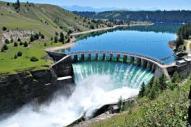
Water touches nearly every aspect of development. It drives economic growth, supports
healthy ecosystems and is fundamental for life. However, this critical resource can harm as well as help. Water-related hazards such as floods, storms, and droughts are responsible for 9 out of 10 natural disasters. Climate change is expected to increase this risk and place even greater stress on scarce water supplies.
Tag Archives: water
eC2:Improving energy, water and chemicals use efficiency in the textile sector
Deadline: 26-Jul-2018 at 11:59:59 PM (Eastern Time – Washington D.C.) 

A local (South Africa) consulting firm is being sought who will undertake the following work:
1. Establish baselines and collect key performance indicators data on the water, energy and chemicals use and wastewater generated.
2. Design and propose a resource efficiency improvement program (energy, water and chemicals).
3. Prepare a financial plan for the resource efficiency program. The financial plan must explore different investment and business model options and describe which fits the best a selected client.
4. Assess the financial feasibility of implementing power generation projects such as solar photovoltaic, natural gas generators and combined heat and power system.
eC2:Pre-Feasibility study for a financing facility to improve water utilities efficiency in the Danube River Basin Region
Deadline: 31-Jul-2018 at 11:59:59 PM (Eastern Time – Washington D.C.) 
The World Bank ECA Water team is considering different options to support client countries in the development of special financing facilities for water utilities, with a focus on facilities extending targeted lending to utilities for increasing their operational efficiency directly impacting their financial situation. A regional, multi-country or national financing facility would aim to achieve the following objectives: i) provide financing for small investments resulting in efficiency improvements which can contribute to achieving long term sustainability of WSS services; ii) improve cost recovery and financial sustainability and utility creditworthiness; and iii) contribute to building up a commercial banking market for WSS utility lending by developing the skills of commercial banks to take municipal/utility risk. See attached TOR for further details. The Firm to be selected will undertake a feasibility study to support the design of such financing facility.
eC2: Mekong Delta Pillar: Firm climate-resilient livelihood models and transition strategies
Deadline: 24-May-2018 at 11:59:59 PM (Eastern Time – Washington D.C.)
The Consultant will provide technical expertise across a range of fields including agro-ecology, livelihood adaptation, agricultural economics and value chain, and community and gender, to review, identify and provide analysis of sustainable climate-resilient transition models in agriculture, aquaculture, and horticulture livelihoods in the Mekong Delta.
Thirsty Energy: A five-year journey to address water-energy nexus challenges
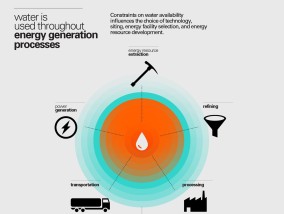
About 5 years ago we embarked on a global initiative titled “Thirsty Energy” to respond to water-energy nexus challenges around the world. The initiative, a joint effort of the Water and the Energy Global Practices at the World Bank, has finally come to an end. We wanted to reflect on the lessons learnt along the way, as our team has developed a fantastic set of material and methodologies to move the needle forward on this issue. We hope that the global community takes advantage of this to ignite change.
eC2: Assessment of water-related academic and research capacity in Central Asian countries and development of recommendations for improvement
Deadline: 18-Apr-2018 at 11:59:59 PM (Eastern Time – Washington D.C.)
Objective: During the past few years, all CA countries have introduced main principles of the Integrated Water Resource Management (IWRM) into their national policies and practices at central and local levels. Practical implementation of IWRM principles required higher quality of background education and skills among water professionals at all levels. Trying to meet these new demands some universities in CA countries have introduced elements of IWRM curriculum in their academic programs. However, these efforts remain scattered and uneven across the region.
eC2:Economic and Social Impact Evaluation of Water and Waste Water Sector Investments(China portfolio case study)
Deadline: 10-Apr-2018 at 11:59:59 PM (Eastern Time – Washington D.C.)

Objective: The International Finance Corporation (IFC)is seeking a firm to conduct an economic and social impact evaluation(ESIE)of selected water and wastewater investments in China. The quantitative component of this analysis will focus on GDP and employment impacts at a regional and/or national level. IFC has conducted a thorough literature review exploring the conceptual connection between interventions in water/waste water projects and welfare. IFC is seeking to build on this literature review to conduct the ESIE of selected investments in China. The project entails the development of a generic Excel-based tool to quantify ex-ante the value added by water/waste water sector investments to relevant macroeconomic sectors.
eC2: Formative research and social and behavioral change communication to promote improved water, sanitation and hygiene behaviors in rural
Deadline: 22-Mar-2018 at 11:59:59 PM (Eastern Time – Washington D.C.)
Objective: The objective of the assignment is to assist the MRD and key stakeholders in the rural WASH sector to develop a SBCC package to promote improved WASH behaviors, with a focus on child-centered behaviors that have the potential to reduce child stunting. The WASH behaviors to be included in the SBCC package consist of (i) promoting latrine adoption among rural households, (ii) promoting Handwashing with Soap (HWWS) among caretakers and children, and (iii) promoting correct Household Water Treatment and Safe Storage (HWTS) for drinking and for preparing infant formula and food. To achieve the above objectives, the assignment requires completion of the following tasks: 1) conducting spot research on behavior related to HWWS of caretakers and children; and HWTS for drinking and for preparation of infant formula and weaning foods; 2) developing an overarching umbrella concept and brand to be used for all future WASH campaigns; and 3) developing a package of behavior-specific SBCC materials to promote latrine adoption, correct HWWS and HWTS.
Strong thirsts in fragile countries: walking the water scarce path of refugees
Imagine that you must flee home at once. You may be fleeing violence, social tensions, poor environmental conditions, or even persecution. You and your loved ones may walk for several days to find safety, and may even go for periods without food.
What would you need to survive?
The answer is clean water. Finding drinkable water is one of the first steps in your journey to a new home. If you instead consume contaminated water, you risk exposure to several diseases. Drinking water unfit for consumption may not only harm your health in the short run — drinking unclean water may cause life-long health problems. And of course, these problems multiply if entire communities, or even cities, face these health problems.
Endline Survey for the Impact Evaluation of Overcoming Barriers to Adoption of Sanitation for the Poor Households in the Philippines
Deadline: 20-Feb-2018 at 11:59:59 PM (Eastern Time – Washington D.C.) 
Objective: The endline survey will be implemented in approximately 15 pre-selected households per barangay (village) across 272 barangays (total of 4,080 households) to collect post-intervention data from 17 selected municipalities in the 5 provinces of Negros Oriental, Cebu, Bohol (Region 7), Leyte and Eastern Samar (Region 8). The endline survey will focus on collecting basic information from households in order to test for balance between treatment and control groups and to understand financial behaviors and practices of participating households. Anticipated modules include: (i) household roster and demographics; (ii) assets, income and labor force participation; (iii) dwelling characteristics; (iv) water sources and drinking water; (v) latrine and sanitation facilities; (vi) program exposure and knowledge of sanitation practices; (vii) credit and savings; (viii) access to finance; (ix) children (under 5) health section and (x) risk aversion behavior. Other key stakeholders of the project will also be interviewed. This includes the participating local government units, regional DSWD staff, and partner MFI and masons.
You must be logged in to post a comment.