
Dar es Salaam, Tanzania, August 11, 2016 — IFC, a member of the World Bank Group, today announced the launch of a web portal to speed the development of mini-grids in Tanzania, helping the country boost its energy production and increase access to electricity through renewable sources such as solar and hydro.
The portal, found at http://www.minigrids.go.tz/, provides licensing, financing, regulatory, and other information and support to small, renewable power producers in Tanzania who want to sell electricity to consumers, especially to the millions in the country not connected to the main grid.
Tag Archives: Topsector Energie
eC2: Solomon Islands: Electricity Access Expansion Project
Deadline: 30-Aug-2016 at 11:59:59 PM (Eastern Time – Washington D.C.)
Dispersed population across an island archipelago and the poor performance of Solomon 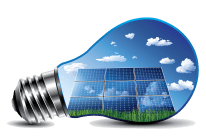 Power in the past constrained its capacity to expand its grid to main population centers or even in the capital city Honiara. While 45% households have reported to have some form of power supply at home, the majority of these households only have small solar panels, typically of 20W, whereas only 9% have power supply from the grid operated by Solomon Islands Electricity Authority (now trading as Solomon Power).
The World Bank is looking for an Independent Verification Agent (IVA). The objectives of the IVA are to (i) verify that the pre-agreed outputs as defined in Operations Manual (OM) have been delivered and properly documented; (ii) confirm that claimed outputs and beneficiaries are eligible to receive OBA subsidies; (iii) review costs of service connection and household wiring; (iv) recommend reimbursement of OBA subsidy to Solomon Power; and (v) prepare Output Verification Reports and to verify and collect project monitoring data.
eC2: Development of ESIA Guidelines for Hydropower Projects in Myanmar
Deadline: 29-Aug-2016 at 11:59:59 PM (Eastern Time – Washington D.C.)
Environmental and Social Impact Assessment (ESIA) guidelines for hydropower 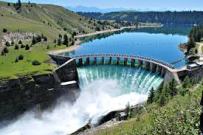 development in Myanmar are required to provide clear, consistent and comprehensive guidance on:
(i) the legal requirements for impact assessment;
(ii) key issues to be considered in project design, construction, commissioning, operation and decommissioning, and assessed during the ESIA process; and
(iii) management plans to be prepared, to seek project approval and to effectively design, construct, commission, operate and decommission projects in a sustainable manner.
This includes application of the mitigation hierarchy to anticipate and avoid impacts to the fullest extent possible, and where avoidance is not possible minimize (e.g. abate, rectify, repair and/or restore) those impacts, and where residual impacts remain, compensate/offset for risks and impacts.
eC2: Climate Technology Business Model Diffusion in Kenya and South Africa
Deadline: 15-Sep-2016 at 11:59:59 PM (Eastern Time – Washington D.C.)
The infoDevs Climate Technology Program (CTP) is seeking expressions of interests (EOIs)  from individual firms or consortia that specialize in identifying, investigating, and facilitating business model diffusion in emerging markets. The core goal of the assignment is to facilitate identification, market validation and adoption of 2-3 business models in the renewable energy sector through the facilitation of uptake by existing companies in Kenya and South Africa. Throughout the piloting process, CTP aims to generate concrete lessons learned and insights that will be applied by public or private institutions to do further business model diffusion pilots or to scale up validated pilots. This assignment will include activities to be designed and implemented over a 12-18 month period.
Continue reading
eC2: Scaling Solar Madagascar: Resource Management
Deadline: 18-Aug-2016 at 11:59:59 PM (Eastern Time – Washington D.C.)
The Scaling Solar program (see http://www.scalingsolar.org) aims to accelerate the roll-out of  competitively priced, utility-scale solar photovoltaic (PV) power in Sub-Saharan Africa through a coordinated, packaged and largely standardised joint World Bank Group (World Bank, IFC, and MIGA) solution based on a templated Public Private Partnership (PPP) transaction. To date, three countries have signed up to the program and more countries are expected to follow shortly. In relation to Scaling Solar Madagascar, IFC intends to hire a firm to provide reliable on-site measured solar resource data for a site in Madagascar for a period of 1 year. The firm is to install, manage and maintain a solar resource measurement station at the site in order to provide bankable solar resource data.
Two eC2 Tenders: Lighting Africa: Consumer Education Below/Above the Line in Tanzania
Deadline: 29-Aug-2016 at 11:59:59 PM (Eastern Time – Washington D.C.)
Lighting Africa, a joint World Bank/IFC program aims at helping address the lighting  needs of consumers who rely predominantly on fuel-based kerosene lamps and candles by enabling them gain access to non-fossil fuel-based, low-cost, high-quality, safe, and reliable lighting products.
The Lighting Africa, Tanzania program has identified consumer education as a critical component in developing the market for off-grid lighting products in Tanzania. The consumer education initiatives will include an above-the-line campaign through a broad range of marketing and public awareness activities including TV, radio, print media, out-of-home, social media and mobile advertising etc designed to reach consumers and create behavioral change.
The consumer education initiatives will also include below-the-line consumer engagements such as consumer activations, stakeholder events, roadshows, direct marketing, and digital activation activities etc designed to reach consumers and create behavioral change.
Technical Consultant: Philippines Hydro Power Projects Business Case
Deadline: 17-Aug-2016 at 11:59:59 PM (Eastern Time – Washington D.C.)
Each Business Case would identify any major technical/operational, legal, environmental and social issues, including options to address such issues, and improve operations; define the scope and possible privatization structure of each Project; test these for financial viability and the corresponding impact on valuation and stranded debt/costs, and identify the legal, regulatory and policy framework applicable for the privatization of each Project. Each Business Case will be developed with a view to determine the general terms and conditions under which a privatization would be viable. A profile of each HPP can be found in the PSALM website http://www.psalm.gov.ph.
Madagascar: Preparation of standard documents for facilitating the development of small hydro IPPs
Deadline: 10-Aug-2016 at 11:59:59 PM (Eastern Time – Washington D.C.)
This activity concerns the selection of Consultant to support the Government of Madagascar to prepare standard documents: PPAs, Concession contract,… to facilitate the development with private sector of small hydro sites which are being identified under the ESMAP-funded TA: “Small hydro resource mapping”.
Continue reading
eC2: Comparison and Evaluation of Regulatory Systems for Mini-Grids
 supplied with electricity through the creation of mini-grids. The projects objective is to develop and disseminate practical and timely information targeted for government officials, developers, investors and donors who wish to promote mini-grids, powered largely from renewable or hybrid generation sources, to scale-up electrification. The projects underlying goal is to provide information that will help to create connected or isolated mini-grids that are commercially sustainable.
Energy storage: A critical piece of the power puzzle
Just months after a historic climate conference in Paris, I can’t help but marvel at how far the world has progressed in the uptake of renewable energy. Take solar power, for example. What used to be a prohibitively expensive endeavor just years ago, is now a household-level solution in many countries. Then there are the record-setting solar auctions in countries like Zambia, the United Arab Emirates, India, Mexico, and Peru.
So what’s the next critical piece of the puzzle in our global efforts to provide sustainable energy for all? Continue reading
 Netherlands for the World Bank
You must be logged in to post a comment.