Responsible Closeout of USAID Terminated and Expired Programs

July 29, 2025

Dear USAID Implementing Partners (IPs), Effective September 2, 2025, USAID headquarters will take over the management and handling of all terminations for all award types to successfully implement a responsible closeout. Awards will be assigned to dedicated Acquisition and Assistance teams which will focus on completing actions related to award termination and closeout.  Moving forward, IPs should submit termination settlement proposals, final cost and closeout submissions, and other related documents/correspondence to USAID via dedicated mailboxes we have established.

When you are submitting your documents, make sure to include the corresponding award number.

Please submit your information based on the name of your organization to the corresponding inboxes below.
Partners that have a name starting with a numeral are to use the T-Z mailbox.  For all IPs with names from A-C: terminationsettlements_a-c@usaid.gov
For all IPs with names from D-H: terminationsettlements_d-h@usaid.gov
For all IPs with names from I-M: terminationsettlements_i-m@usaid.gov
For all IPs with names from N-S: terminationsettlements_n-s@usaid.gov
For all IPs with names from T-Z and Numerals:
terminationsettlements_t-z@usaid.gov

Each inbox will be monitored by a dedicated team of OAA individuals who are responsible for responding to IPs and filing the documents appropriately for the team that takes over after September 2nd.  As a reminder, IPs must still submit appeals under assistance awards of final Agreement Officer (AO) decisions to compliance@usaid.gov. USAID will continue to review and approve payments in accordance with the relevant regulations and the terms and conditions of the award. 

If the terminated award included an overseas (Mission) payment office, effective July 1, 2025, the payment office is now EIW@usaid.gov.  If the terminated award included the payment office of ei@usaid.gov or relied on a letter of credit, there is no change to the payment office. Thank you again for your assistance and cooperation during this period of transition. We will continue to provide communications as we move forward.  

Please continue to email IndustryLiaison@usaid.gov for any questions you may have about this notice. 

USAID Industry Liaison

Foreign Direct Investment in Retreat: Policies to Turn the Tide

Foreign direct investment (FDI)—an important source of external financing for emerging market and developing economies (EMDEs)—has weakened since the global financial crisis, heightening the challenges of filling vast infrastructure gaps, reducing poverty, creating new jobs, and addressing climate change. This study provides a broad perspective on the evolution of FDI inflows to EMDEs since 2000, including patterns across regions and changes in sectoral composition.

Continue reading

Further strengthening how we measure global poverty

For 35 years, the World Bank Group has measured global poverty to track progress toward eradicating what is considered the most severe deprivation of basic human needs—extreme poverty. This goal is at the very heart of our organization’s mission.

Continue reading

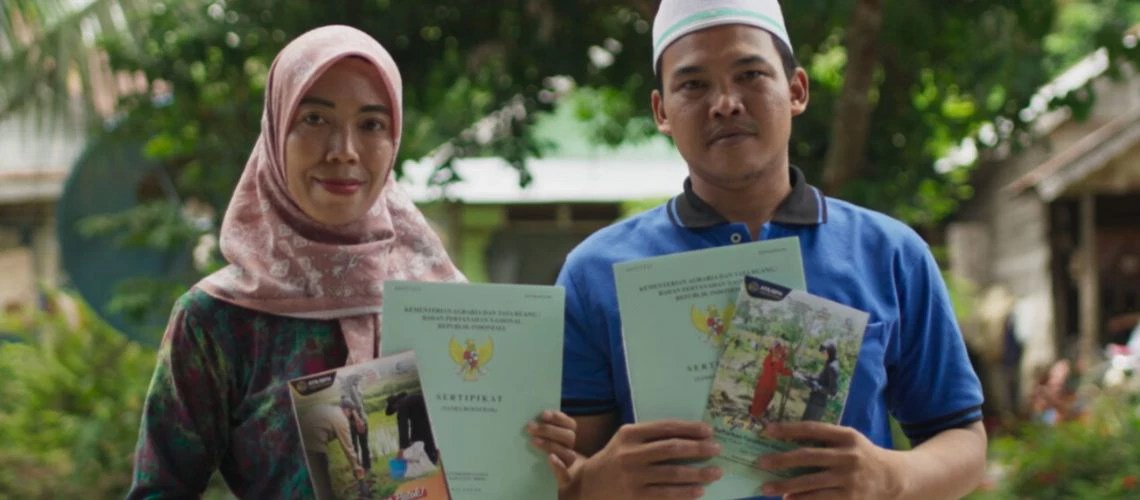
How stronger land systems can spur economic growth and jobs

Secure land access is fundamental to economic growth and job creation. Yet, we need to reform the ways in which we manage land if we’re to get ahead of the global jobs crisisImproving land systems can help optimize the use of critical resources to better meet the development and infrastructure challenges of today and the future. 

Continue reading

Rethinking water security in a water-insecure world

“Every time disaster strikes, you rush to bring relief. Why don’t you do more to prevent it?”

The words came from a teenage girl standing amid the devastation of the Odisha Super Cyclone in Eastern India in 1999. At the time, I was a member of the Indian Administrative Service, coordinating relief efforts 48 hours after the storm. Her question cut through the chaos and would shape my life’s work. Relief was necessary, but the real solution lies in building strong, adaptive water systems.

Continue reading

Financing Shortfalls Hinder Road Safety Progress in Low- and Middle-Income Countries

MARRAKECH, February 18, 2025 – Road safety financing faces a critical shortfall, hindering progress toward halving global road traffic fatalities and injuries by 2030. Each year, road crashes claim an estimated 1.19 million lives, leave countless others with permanent disabilities, and impose significant economic costs.

Continue reading

Information session on international financing options for reconstruction projects in Ukraine

Are you interested in contributing to Ukraine’s reconstruction and looking for financial opportunities? Then join our information session on international financing options for reconstruction on 13 February 2025. We will inform you about the opportunities that international financial institutions (IFIs) can offer you.

Bekijk deze pagina in het Nederlands

Informatiebijeenkomst internationale financieringsopties voor wederopbouwprojecten in Oekraïne

Share

Thursday 13 February 13:00 (CET) Register

Continue reading

How to close Africa’s energy access gap

What will it take to bring electricity to 300 million people in Africa who currently live without it? This is the goal we’ve set for Mission 300—to halve the number of people on the continent without reliable electricity by 2030. But setting a goal is just the spark. We need a full-blown power surge of bold reforms, investments, and an enabling environment for sustainable, scalable, and affordable energy solutions. 

Continue reading

Heads of State Commit to Concrete Plans to Transform Africa’s Energy Sector, with Strong Backing from Global Partners

DAR ES SALAAM, January 28, 2025 — Thirty African Heads of State and governments today committed to concrete reforms and actions to expand access to reliable, affordable, and sustainable electricity to power economic growth, improve quality of life, and drive job creation across the continent.  

Continue reading