“Credit: World Bank Group. All rights reserved”
Jobs in Africa
Reply

“Credit: World Bank Group. All rights reserved”
WASHINGTON, February 26, 2026 – Millions of young people across Eastern and Southern Africa stand to gain skills they need to thrive through a new regional program that is designed to support job creation at scale. By 2034, 18 million young people in the region are expected to receive better education and skills, unlocking opportunities in key economic sectors through the program that will also contribute to millions of new jobs.
Continue readingOver the past 15 years, even as incomes have risen and poverty has declined, nearly two-thirds of low- and middle-income countries have experienced setbacks in nutrition, learning, or workforce skills.
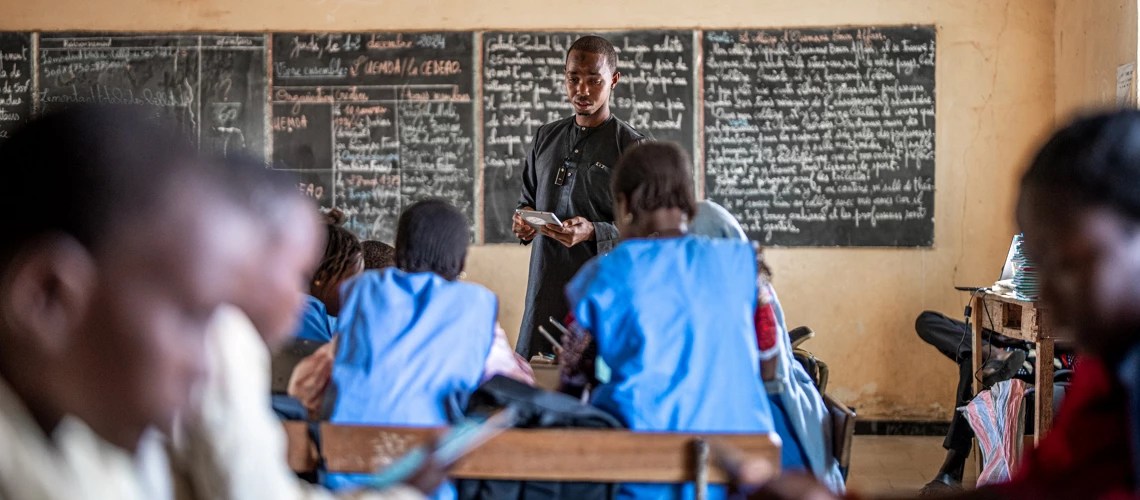
Among all low- and middle-income countries, gaps in these outcomes from what should be achievable are large, and the potential cost is cause for alarm: an estimated 51 percent loss in future earnings. Behind this number are children growing up with fewer opportunities to thrive, families struggling to secure a stable future, and communities at risk of losing hard-won social gains.
Continue reading
You are receiving this email because you signed up for our World Bank Live Updates. We want to let you know that we have a new event coming up. February 11, 2026 <a href="https://t.newsletterext.worldbank.org/r/?id=h2b08fbb1,eee1fdd,ef262e4&e=cDE9PGIgc3R5bGU9J2NvbG9yOg&s=moq4BV9sf59jrkGzm1tQd27yflhKkjicSn9DILXeFME#004370;font-size:16px;'>Making AI Work for All: You Ask, We Answer Making AI Work for All: You Ask, We Answer Location: Online 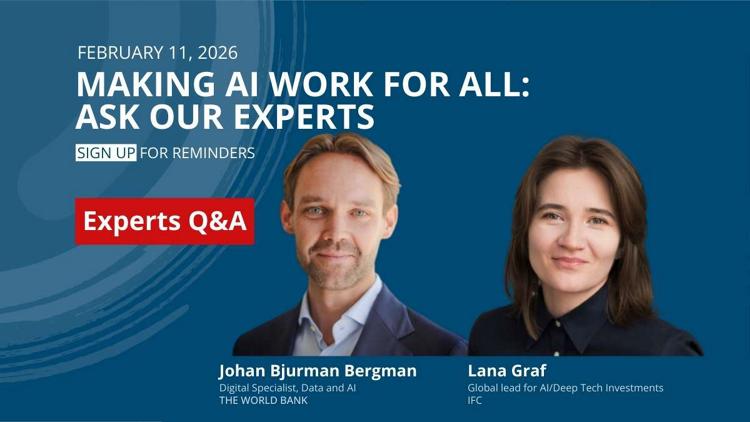 What is small AI, and how can it help developing countries tackle real-world challenges? In this live Q&A, two World Bank Group experts, Johan Bjurman Bergman and Lana Graf, will discuss how practical, affordable, and adaptable AI tools are improving health, agriculture, education, service delivery, and support for small businesses. What is small AI, and how can it help developing countries tackle real-world challenges? In this live Q&A, two World Bank Group experts, Johan Bjurman Bergman and Lana Graf, will discuss how practical, affordable, and adaptable AI tools are improving health, agriculture, education, service delivery, and support for small businesses.Submit your questions in advance to learn how governments are expanding access to AI foundations—skills, data, and computing infrastructure—and why partnerships with the private sector matter for scaling solutions. Sign up for an event reminder and join us live. Experts will answer questions in the chat during the session. World Bank Live Development Events Brought to You Live |
“Credit: World Bank Group. All rights reserved”
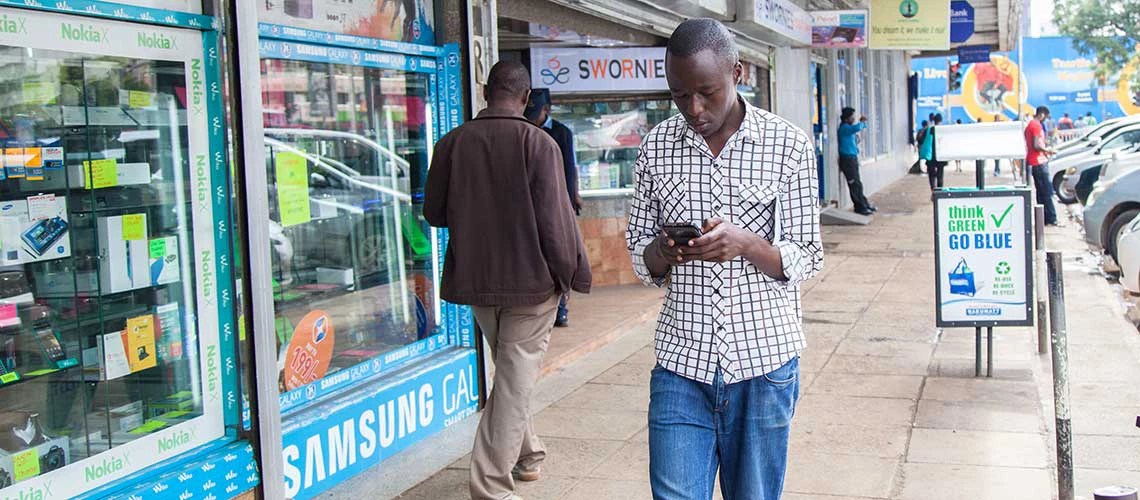
Jobs are the surest way to end poverty and give people hope for a better future. That’s why countries need to build economies that unlock opportunities for people and convert growth into local jobs.
Yet household survey data across dozens of countries reveal a stubborn obstacle: the world’s poorest people remain disconnected from the digital tools that now underpin labor markets, agricultural productivity, and economic mobility. Digital technologies cannot reduce poverty if they bypass the people who need them the most.
Continue readingWASHINGTON, Jan. 13, 2026 —The World Bank’s Board of Executive Directors today approved three projects to help the Indian state of Assam increase resilience to extreme weather events, improve governance and service delivery, and provide more than 4 million students with the skills they need to succeed in the workforce.

Assam, located in India’s northeast, is uniquely positioned as the gateway to Southeast Asia, offering strategic connectivity for regional trade and integration. At the same time, Assam faces challenges such as climate vulnerability, inadequate infrastructure, and multidimensional poverty, which hinder inclusive growth.
Continue reading
A real understanding of the impact of economic inclusion programs comes from seeing lives change—standing beside women building small businesses, young people stepping into formal jobs, and families beginning to plan for the future. These moments become possible and inevitable when governments and their partners invest the time and resources to design and deliver economic inclusion for the poor.
Continue readingBrazil’s Northeast is poised to play a pivotal role in the country’s progress and prosperity, according to a new World Bank report, “Routes to the Northeast: Productivity, Jobs, and Inclusion,” which outlines how the region can unlock its potential and create jobs by pivoting to a more dynamic growth model. Home to 54 million residents—80 percent of them of working age—, the region offers one of Brazil’s largest and most dynamic labor pools.
Continue reading Netherlands for the World Bank