
Article published on http://www.worldbank.org on July 13, 2016.
Soon the world will celebrate the one-year anniversary of the historic climate agreement  signed in Paris in December 2015. The agreement will be implemented through country-led greenhouse gas (GHG) emissions reduction commitments known as their intended Nationally Determined Contributions (NDCs), which to date have been submitted by 189 countries covering 95 percent of global GHG emissions.
Apart from signaling concrete commitments, these reduction targets also offer a clear signpost of the investment direction countries need to follow as the global economy steers towards a low-carbon, climate-resilient pathway. Estimates point to between $57 trillion and $93 trillion in new low-carbon, climate resilient infrastructure investment by 2030.[1] How developing countries evaluate and respond to their infrastructure needs will greatly determine their ability to meet GHG reduction commitments.
 examining Public Private Partnership (PPP) options for improving provision of water supply and sanitation services for the larger urban areas, as well as looking at the potential projects that have already been the subject of studies in Tanzania, both as set out below:
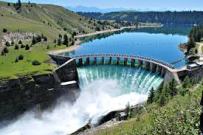 development in Myanmar are required to provide clear, consistent and comprehensive guidance on:
 contribute 25 percent of greenhouse gas emissions.
  from individual firms or consortia that specialize in identifying, investigating, and facilitating business model diffusion in emerging markets. The core goal of the assignment is to facilitate identification, market validation and adoption of 2-3 business models in the renewable energy sector through the facilitation of uptake by existing companies in Kenya and South Africa. Throughout the piloting process, CTP aims to generate concrete lessons learned and insights that will be applied by public or private institutions to do further business model diffusion pilots or to scale up validated pilots. This assignment will include activities to be designed and implemented over a 12-18 month period.
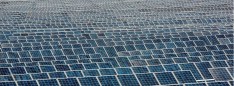 competitively priced, utility-scale solar photovoltaic (PV) power in Sub-Saharan Africa through a coordinated, packaged and largely standardised joint World Bank Group (World Bank, IFC, and MIGA) solution based on a templated Public Private Partnership (PPP) transaction. To date, three countries have signed up to the program and more countries are expected to follow shortly. In relation to Scaling Solar Madagascar, IFC intends to hire a firm to provide reliable on-site measured solar resource data for a site in Madagascar for a period of 1 year. The firm is to install, manage and maintain a solar resource measurement station at the site in order to provide bankable solar resource data.
 needs of consumers who rely predominantly on fuel-based kerosene lamps and candles by enabling them gain access to non-fossil fuel-based, low-cost, high-quality, safe, and reliable lighting products.
 The 2030 Water Resources Group, hosted at IFC, has
 Netherlands for the World Bank
You must be logged in to post a comment.