As part of the strategic partnership ‘Food for All’ between the World Bank Group and the
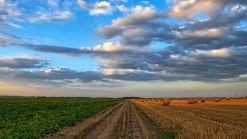
Netherlands, the Netherlands Enterprise Agency, IFC, and IUCN organized an event on GAFSP and the impact of Climate Smart Agriculture on October 28, 2016. Climate change affects companies in the agro-food and beverage sectors all around the world. They face increasing risks: from reduced productivity, new laws and policies, to reputation risks or volatile market prices. Effectively managing risks and opportunities of climate change is vital to secure long-term viability of companies and value chains. Integrating climate smart agricultural techniques and projects in business operations can help firms to become more climate-resilient and in the meantime reduce pressure on forests and other ecosystems and the services they provide. Especially in developing countries, climate change implies challenges to food security and sustainable food production and trade.
Author Archives: NL4WorldBank
Success story: SCOPEinsight, Cargill, and IFC strengthen cocoa cooperatives in Côte d’Ivoire
Since SCOPEinsight was founded in 2010, they have pioneered in developing innovative, universally-applicable assessment tools that measure the level of
farmer professionalism in emerging markets. SCOPEinsight believes farmer professionalism is the key to structural transformation of the agricultural sector, and by providing business intelligence they aim to increase transparency in the agricultural market, lower investment risks, and increase business opportunities for stakeholders in and around the agricultural value chain.
Mythbusters: Overcoming macho tendencies in funding toll roads- PPP
I love the TV show “The Big Bang Theory.” It gives a sympathetic view of geeks, where the nerdy guy gets the beautiful girl—I just wish it had been made when I was in high school. I was the geek, without the chic. At the mercy of the big, macho kids, who seemed to have gone through puberty years before I even knew what the word meant.
How to provide sustainable water supply and sanitation to Indigenous Peoples
World Bank Water Blog: Submitted by Clementine Marie Stip On Mon, 11/28/2016
Extending the human right of access to water supply and sanitation (WSS) services to Indigenous Peoples represents the final step for many countries to reach universal coverage in Latin America and the Caribbean (LAC). As the 7th Rural Water Supply Network Forum is underway in Abidjan, Côte d’Ivoire, we must remind ourselves what “inclusion” means in the WSS sector. Poverty levels among Indigenous Peoples are more than twice those found among other Latin Americans, and they are 10 to 25 percent less likely to have access to piped water and 26 percent less likely to have access to improved sanitation.
eC2: Rooftop Solar PV Market Assessment for Turkey
Deadline: 12-Dec-2016 at 11:59:59 PM (Eastern Time – Washington D.C.)
The activity will assess the viability of a large-scale solar rooftop PV program in Turkey.
The activity would include: (i) review of existing policies and solar resources, and experience with rooftop solar PV programs globally; (ii) market assessments in the public, commercial and residential building markets; (iii) prefeasibility studies in the viable markets; and (iv) development of a roadmap, with recommendations on the policy, regulatory, institutional, programming and incentives needed to realize these markets.
Why gender equality in doing business makes good economic sense
Article published on http://www.worldbank.org on November 17, 2016.
Women today represent about 50 percent of the world’s population and, for the past two
decades, about 50 percent of the labor force. Yet there are stark differences in the outcomes they achieve: Women are only half as likely as men to have a full-time wage-earning job. The women who do have paid jobs earn as much as one-third less than men. Fewer women than men are involved in trade or own registered companies. And women are more likely to work in low-productivity activities or informal employment.
eC2: Experts for supporting implementation of the Procurement Framework
Deadline: 15-Dec-2016 at 11:59:59 PM (Eastern Time – Washington D.C.)
In order to support clients in preparing the Procurement Strategy for Development for the
Project (PPSDs), the World Bank intends to identify a global virtual pool of experts to scope and guide the Borrower for preparing the PPSD.
Consulting firms are invited to apply. Scoping and guidance of the experts will be sought by World Banks internal and external clients in the following areas:
Continue reading
eC2: ESMAP Consulting Opportunities
The Energy Sector Management Assistance Program (ESMAP) is a global knowledge and
technical assistance program administered by the World Bank. It provides analytical and advisory services to low- and middle-income countries to increase their know-how and institutional capacity to achieve environmentally sustainable energy solutions for poverty reduction and economic growth. Supporting over a hundred activities in countries around the world at any given time, ESMAP is an integral part of the Energy and Extractives Global Practice of the World Bank.
Recently they have published several consulting opportunities on the eConsultant2 website.
eC2: Study on Payment Infrastructure in East Africa
Deadline: 09-Dec-2016 at 11:59:59 PM (Eastern Time – Washington D.C.)
Cross-border payments in East Africa comprise a significant and growing part of regional
GDP. Agriculture related cross-border transactions alone surpass 60 million transactions and USD 900 million in the region annually. USAID estimates that 95% these transactions are made through the physical exchange of cash. The total size of the informal payments sector in the region remains unknown. However, the types of solutions available for cross-border transactions are becoming more varied. Person to Person (P2P) remittances through digital financial services already account for USD 1.3 billion per year within East Africa.
eC2: Building Resiliency to Climate Events in the Road Network of Paraguay
Deadline: 31-Dec-2016 at 11:59:59 PM (Eastern Time – Washington D.C.)
Description of the Assignment:
(i) Carry out a comprehensive vulnerability assessment in a selected road network to identify the spots or sections that are vulnerable to weather conditions and climate change and identify a set of actions that can be implemented through CREMA type contracts
(ii) Review the current road asset management system within the Ministry of Public Works to recommend a set of actions to internalize better risk reduction measures to climate events within the road project cycle.
(iii) Review current practices in the country and the sector to respond to climate related events and disasters with the objective to strengthen response measures in terms of processes, financing and human resources to reestablish connectivity and the conditions of the road network in light of the best practices globally and in the region.
(iv) Design a framework under which the results of the recommended actions to build resiliency in the road network would be measured against current practices in other sections
You must be logged in to post a comment.